


The complete guide
Motorized Curtain Tracks, A Practical Buyer's Guide
The problem with heavy curtains
Curtains look great and do a real job. They block light, keep heat in, and give you privacy. The trouble starts when the window gets wide or the fabric gets heavy. A lined blackout drape on a patio door can weigh more than a full shopping bag, and pulling it twice a day gets old fast.
There are other annoyances too. Tall windows mean reaching. Windows behind a sofa or a bed mean leaning. And the fabric itself takes a beating, because every pull means hands on the edge of the panel. Over a few years you can see it in the hemlines.
A motorized curtain track fixes the handling problem. The motor does the pulling, so you never touch the fabric unless you want to. That is the whole idea, and everything else is detail.
How a motorized track actually works
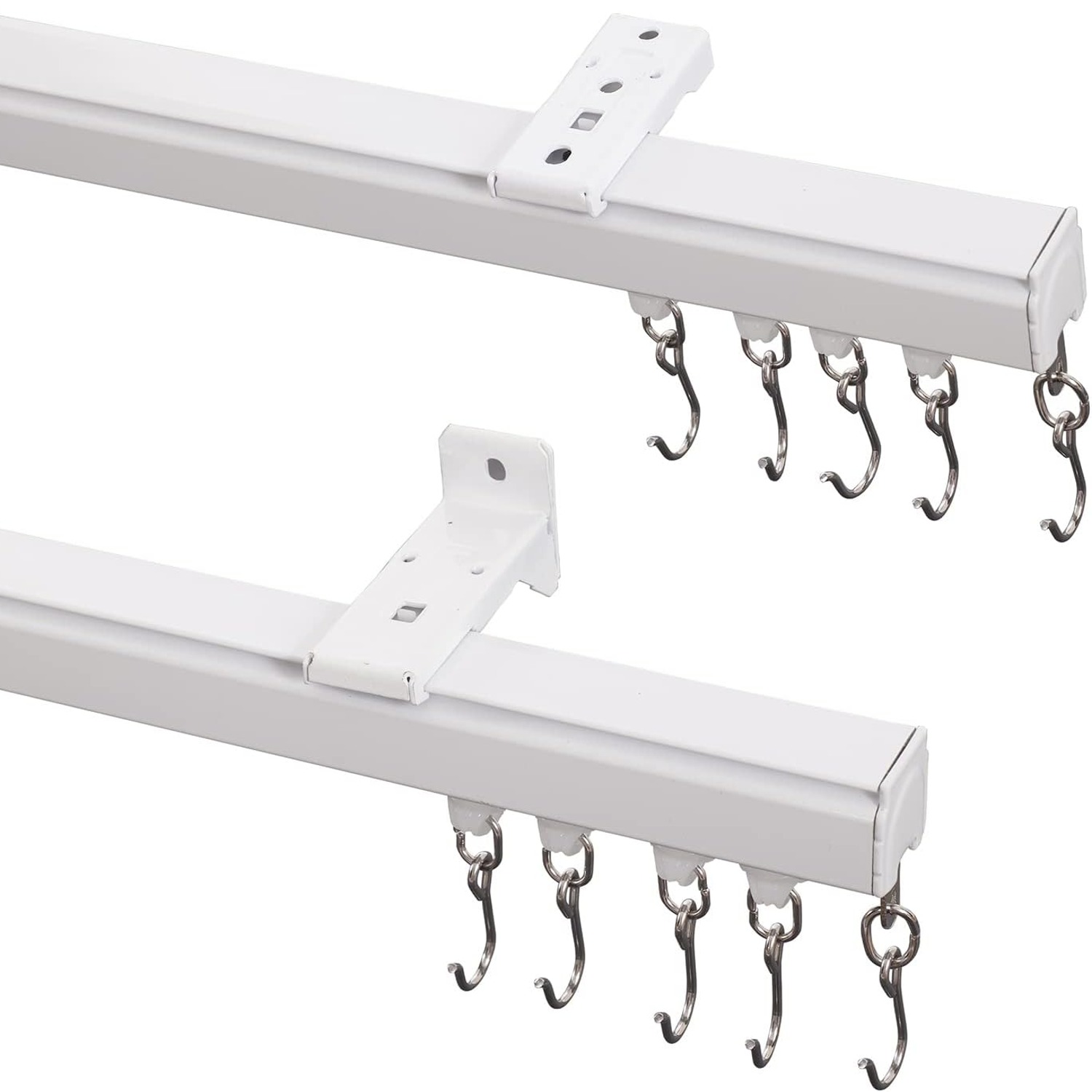
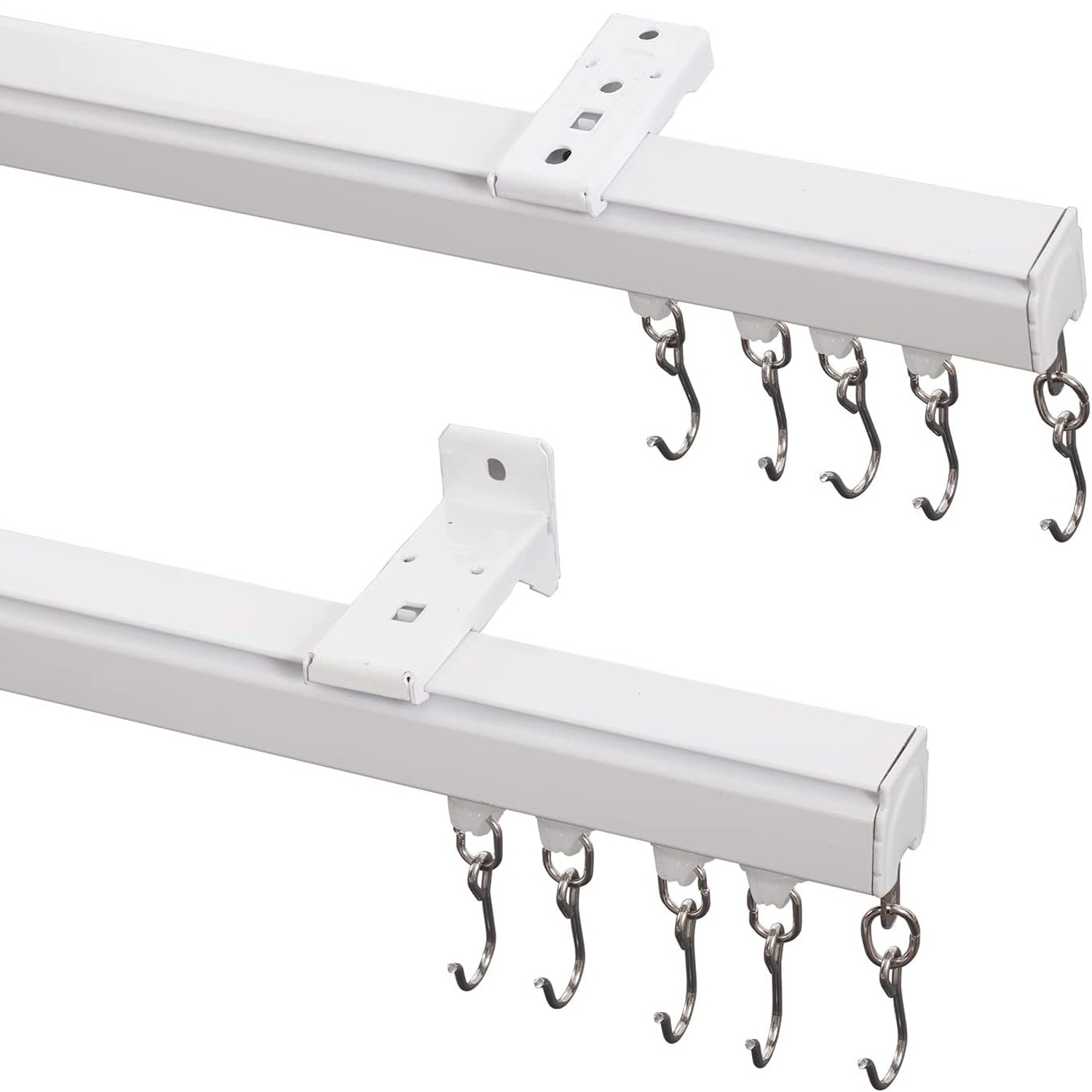
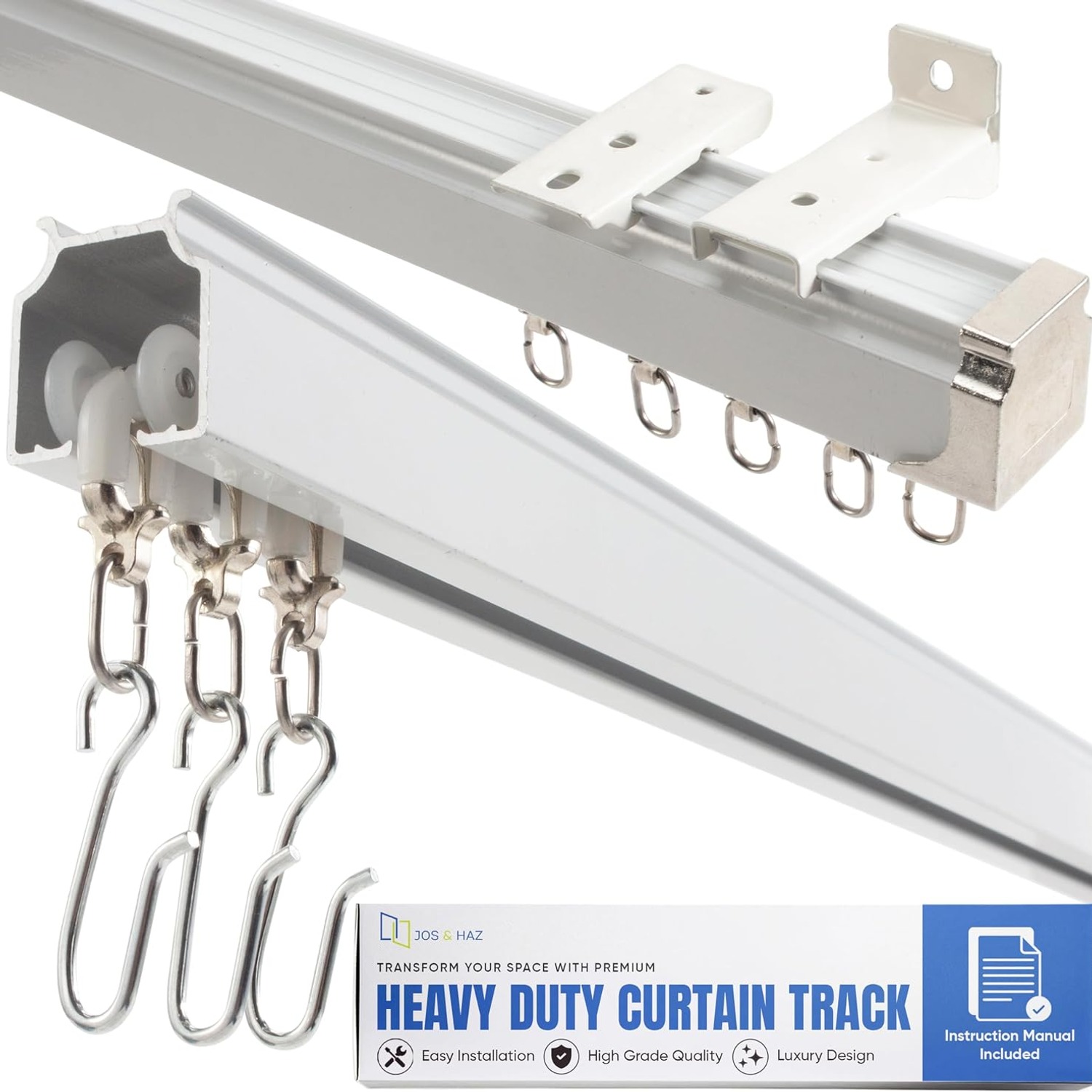
Inside the aluminum rail there is a belt. The motor drives that belt, and the belt pulls the lead carriers. Your curtain hooks clip into the carriers, so when the belt moves, the curtains move with it. The motor sits at one end, tucked in beside the drape.
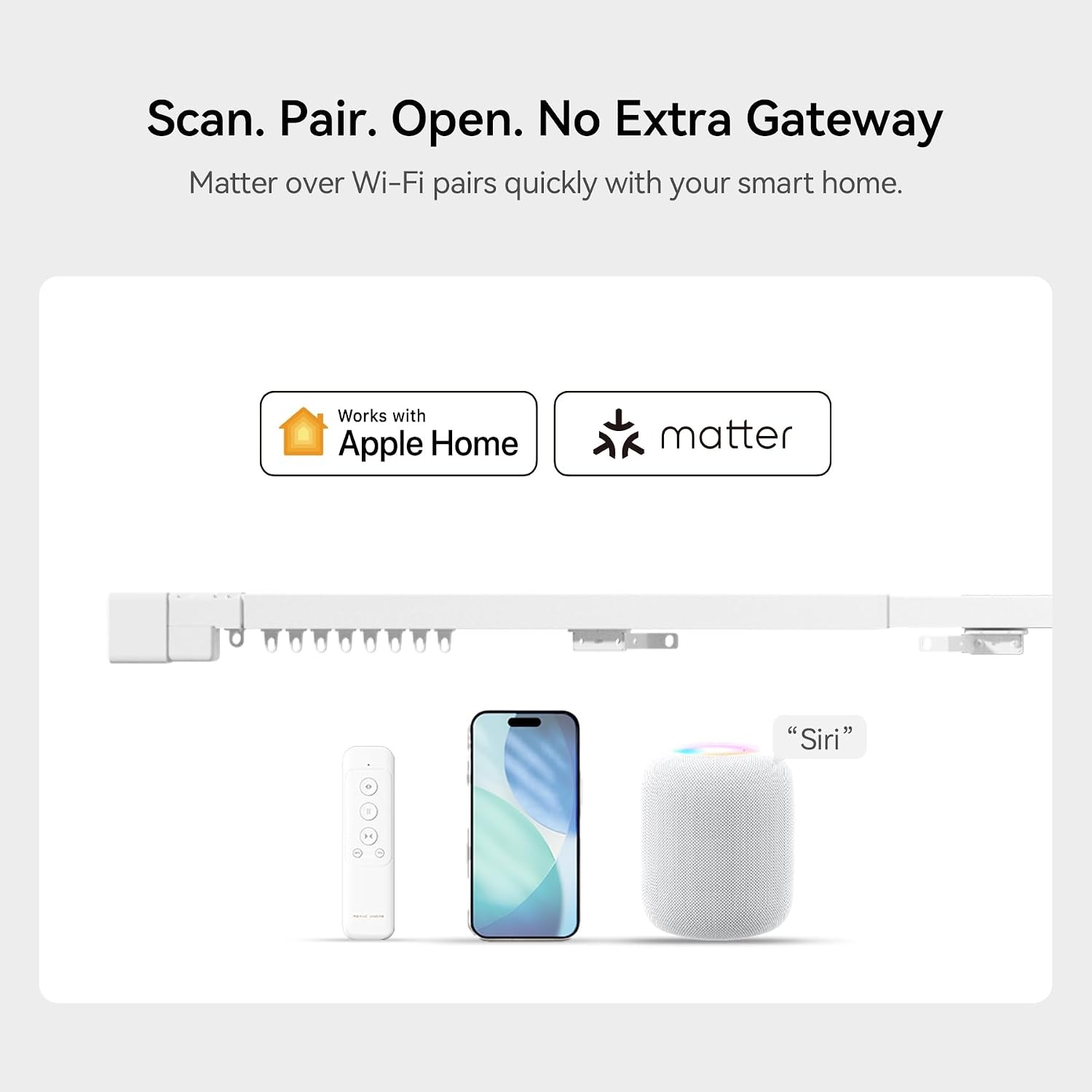
Control comes from three places on the Remac M1. There is a remote in the box, which most people end up keeping on the bedside table. There is an app, which is useful when you are on the sofa or away from home. And there is voice control through Apple Home, Alexa or Google Home.
The M1 is Apple Home Certified and uses Matter over Wi-Fi, which matters more than it sounds. Matter is the shared standard that lets one device join different smart home systems without a separate bridge. You scan a code, the device joins your 2.4 GHz network, and it shows up in your app. No extra hub to buy just to get it connected.
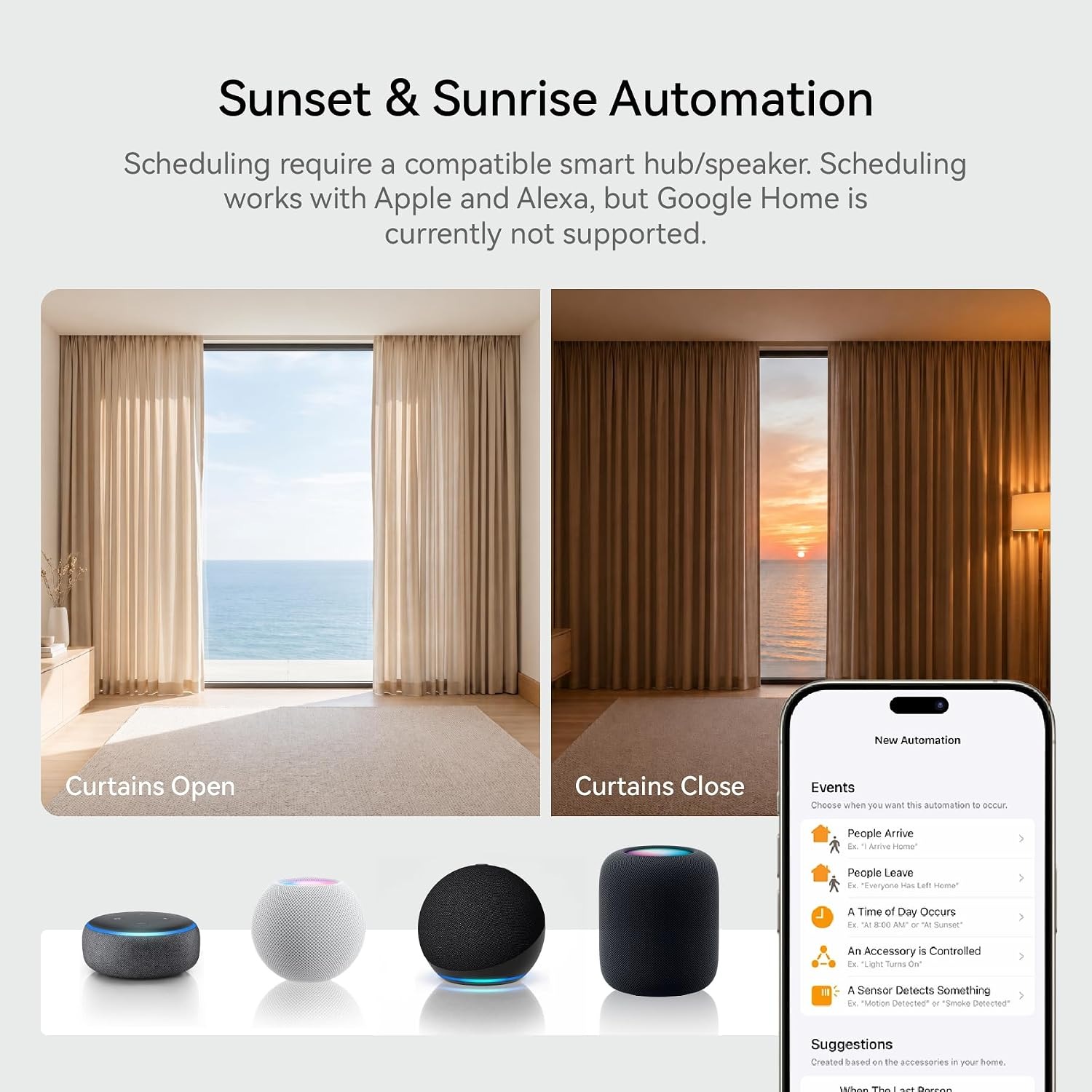
Scheduling is the one place to read the fine print. Setting the curtains to open at 7am or close at dusk needs a compatible smart hub or speaker. That works with Apple and Alexa. Google Home scheduling is not supported at the moment, though Google voice control is.
There is also Pull-to-Start. Give the curtain a gentle tug and the motor picks it up and finishes the job. It is a small thing that gets used a lot, because you often walk past a window with your hands full.
Who this suits
Wide windows are the obvious case. Anything past about two meters is tedious to pull by hand, and the wider it goes the more the fabric drags. Patio doors and bay-adjacent runs land in the same bucket.
Bedrooms are the second case, and the reason is the schedule rather than the width. Having curtains open gently at the same time each morning changes how it feels to wake up, especially in winter. Being able to close them from bed is just nice.
Then there is accessibility. If reaching overhead or pulling with force is difficult, a motorized rail is not a luxury. A remote on the arm of a chair does the job that two hands used to.
The M1 is also a sensible pick for anyone who wants a smart home that actually stays connected. Matter support means it is not tied to one brand's app, and if you switch phones or ecosystems later, the track comes with you.
Checking it fits before you order
This is the part people skip, and it causes most returns. Three checks, and none take long.
First, the heading on your curtains. This track takes hook and pinch-pleat curtains. It does not take grommet or eyelet curtains, rod-pocket curtains, S-fold or ripple-fold, or anything made for a decorative pole. If you are not sure, look at the top of your curtain. Little pockets with hooks in them means you are fine.
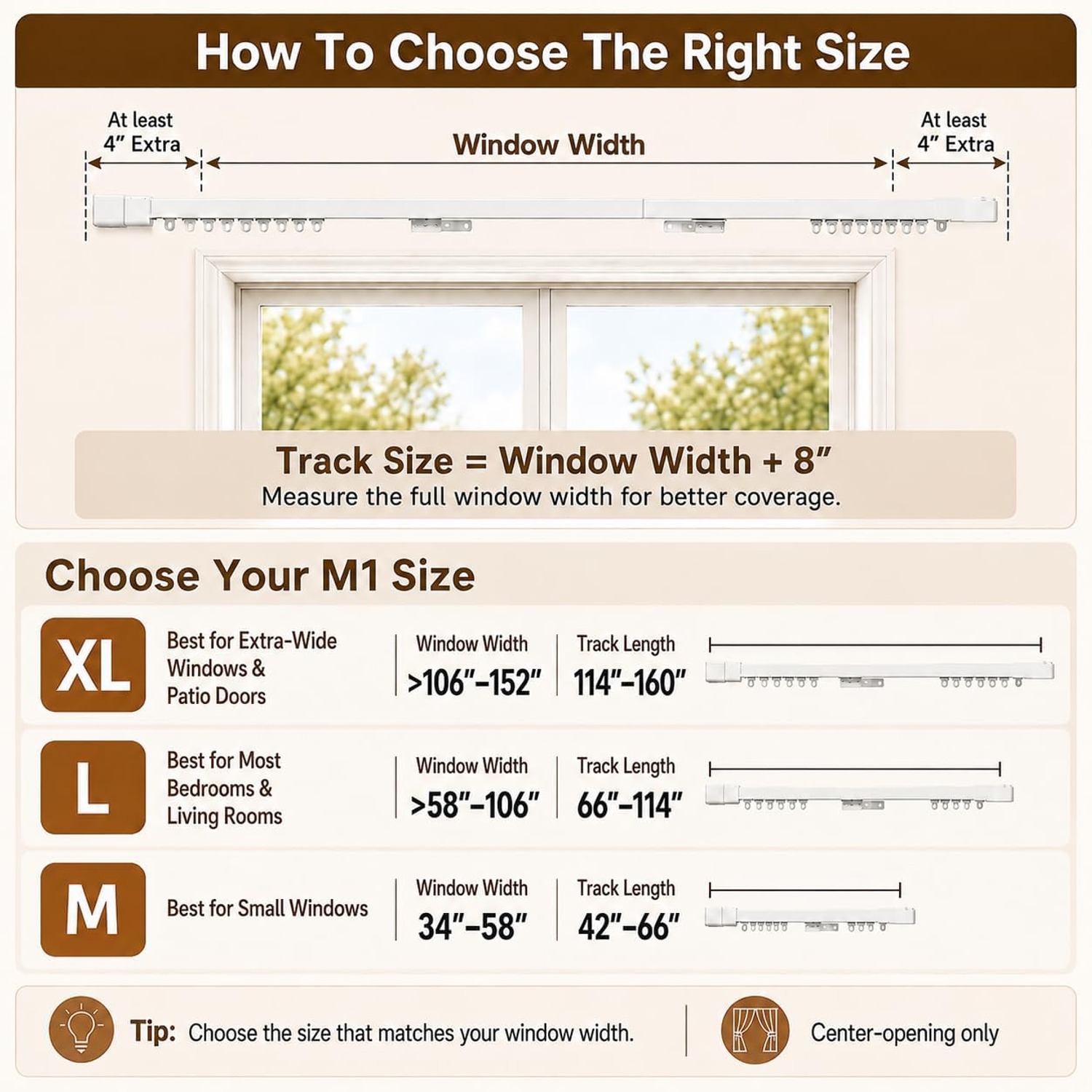
Second, the opening style. The M1 is built for centre-opening curtains, two panels that meet in the middle. One-way draw, where a single panel pulls across to one side, is not supported.
Third, the width. Measure your window, then add 8 inches to the total, which is 4 inches of overlap each side. That overlap is what stops light creeping around the edges. A 113 inch window becomes 121 inches, which sits inside this size range.
Weight is a fourth thing worth checking if your curtains are thick. The track moves finished curtains up to 66 lb, or 30 kg. Most lined and blackout panels sit well inside that, but heavy velvet on a very wide span can get close. Bathroom scales give you a good enough answer.
Installing it
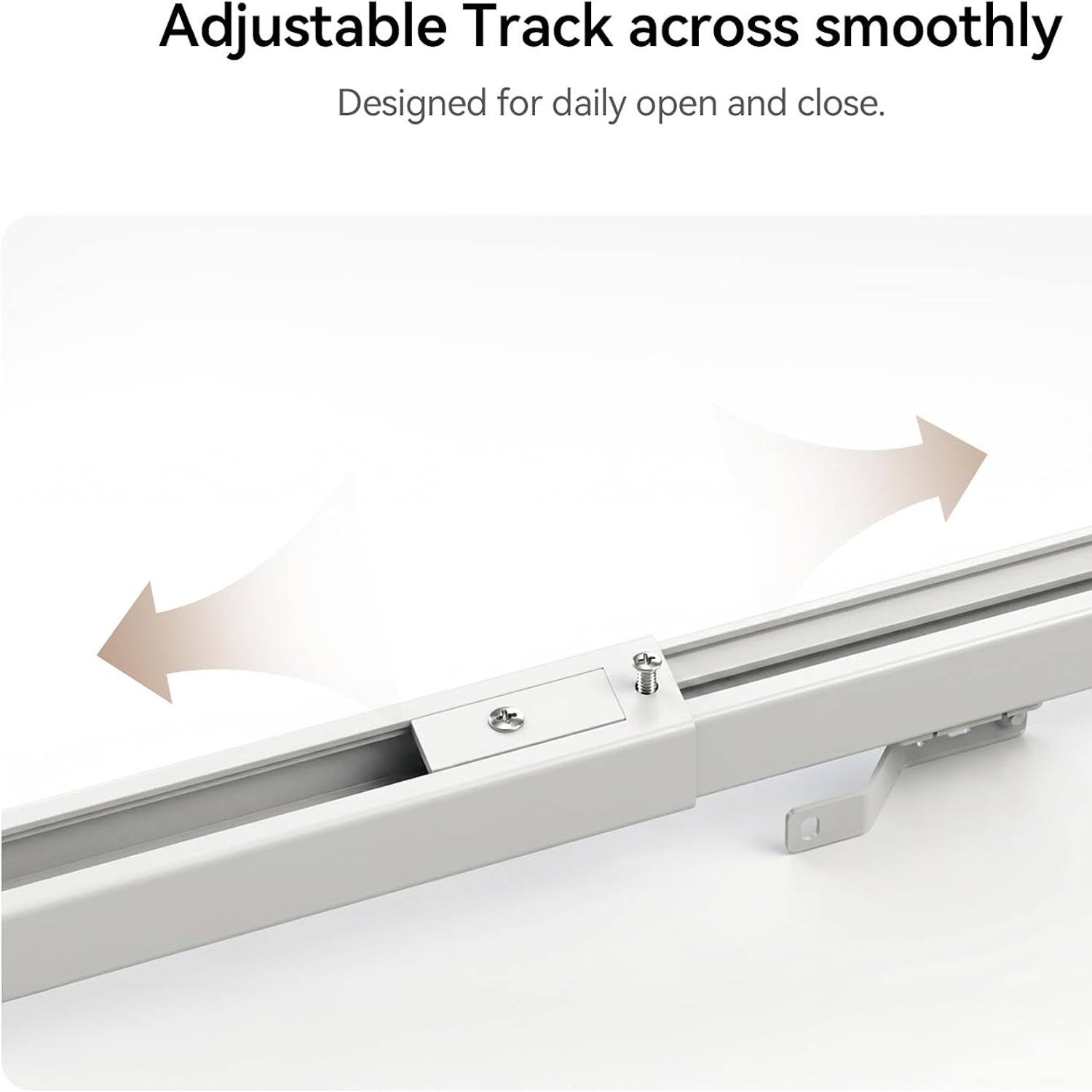
The telescopic rail is the time-saver here. Older motorized tracks often came cut to length, which meant measuring exactly, ordering, and waiting. This one extends within its range and locks. No saw, no splicing, no second-guessing your measurement by a centimeter.
You do still need to drill. Ceiling mounting brackets are included, and wall mounting is supported too. Ceiling mounting usually looks tidier and blocks more light at the top of the window. Wall mounting works better when the ceiling above the window is not solid or not accessible.
Fix into concrete, timber studs or properly reinforced points. Drywall alone will not hold a loaded track over time, and the failure tends to happen quietly over months rather than all at once. Use a stud finder, or get a tradesperson in if the ceiling construction is a mystery.
Two people make a long rail much easier. One holds, one marks and drills. Trying to level a long aluminum track alone while standing on a ladder is a recipe for a crooked line.
Take your time on the marking stage. If the brackets are level, everything else falls into place, and the curtains run smoothly from day one.
Living with it
Noise is the first thing people ask about, and the numbers here are reassuring. The motor is rated at 35 dB and the full system at 45 dB. In a bedroom that is a soft hum rather than something that jolts you awake. If you set a morning schedule, you tend to notice the light before you notice the sound.
Maintenance is light. Wipe the rail with a dry cloth now and then so dust does not build up in the carrier channel. Do not spray anything onto the motor housing. Twice a year, run the curtains by hand along a short section and check the carriers glide freely, and pull out any lint or pet hair.
One habit worth building, check nothing is leaning against the curtains before you run the motor. A chair back or a stack of boxes against the fabric puts strain on the belt. The track is strong, but there is no reason to test it.
Warranty on this model is 5 years on the motor and 3 years on the complete system. Keep your order confirmation somewhere you can find it.
The short version
A motorized curtain track takes the daily effort out of heavy drapes, and the Remac M1 does it without the usual hassles. The telescopic aluminum rail means no cutting. Matter over Wi-Fi means no extra hub to get connected. Remote, app and voice control cover every way you might want to use it, and Pull-to-Start covers the times you cannot be bothered with any of them.
Before you order, check three things. Your curtains have hook or pinch-pleat headings. They open from the centre. And your window width plus 8 inches falls inside this size range.
Get those right and the rest is a drill, a level, and a free afternoon. After that, your curtains move when you want them to, and you never pull a heavy panel again.