


The complete guide
How To Choose And Fit A Ceiling Curtain Track
The problem with long curtain runs
Short windows are easy. Buy a rod, fix a bracket at each end, done. The trouble starts once you go past about eight feet. A rod that length starts to bow under the weight of lined fabric, and adding a centre support solves the sag but creates a new problem, because the rings cannot pass it. You end up with a curtain that only opens halfway.
Room dividers make it worse. A divider curtain is usually heavy on purpose, since you want it to block light and sound. It also needs to travel the entire width of the room, with nothing in the middle to stop it. That combination rules out most rod systems before you even start.
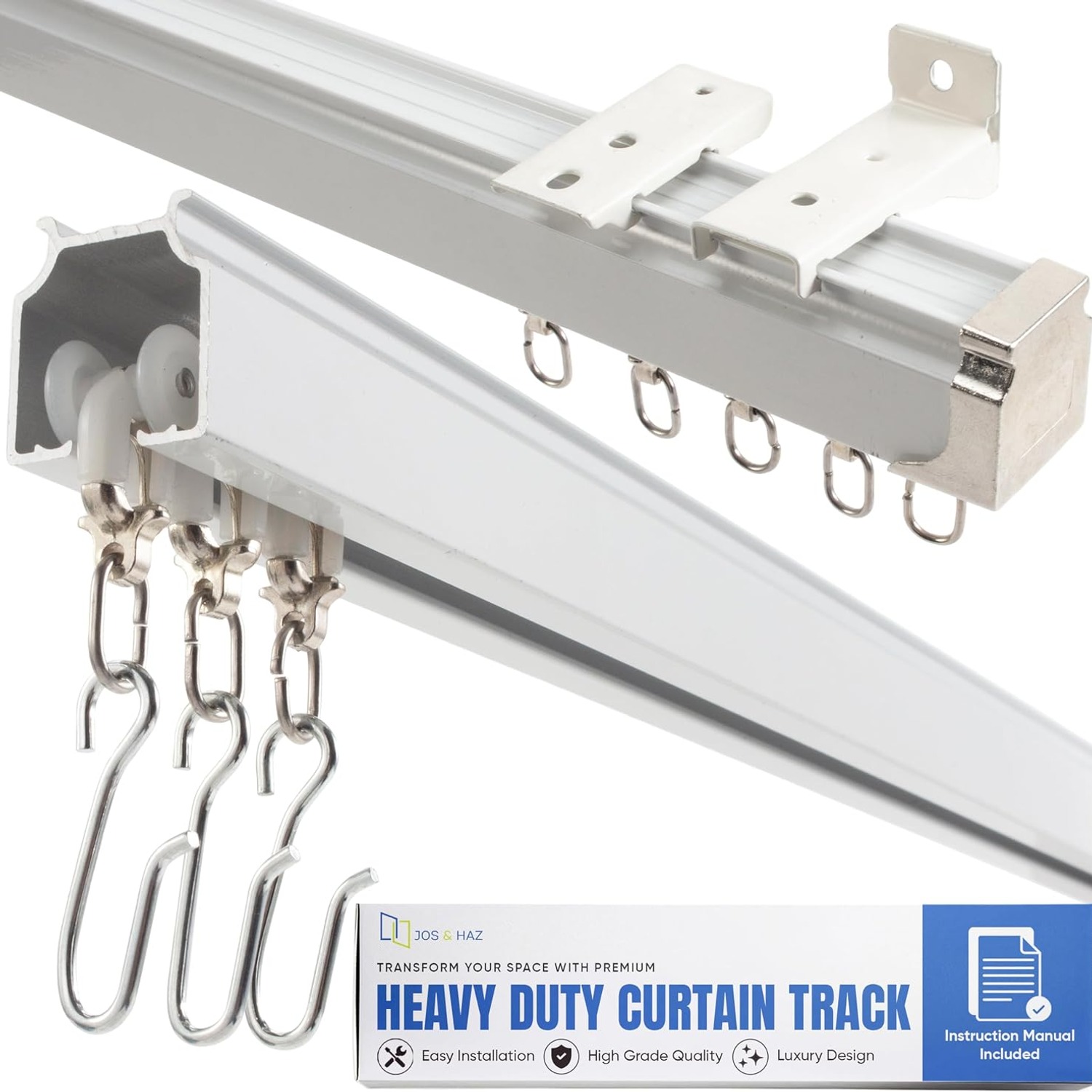
A ceiling curtain track works differently. The rail is supported by brackets spaced along its whole length, so weight is shared rather than hanging off two points. The rollers travel inside the channel, under the brackets, so nothing blocks their path. You can support an eighteen foot run at a dozen points and still slide the curtain from one wall to the other in one movement.
How this track works
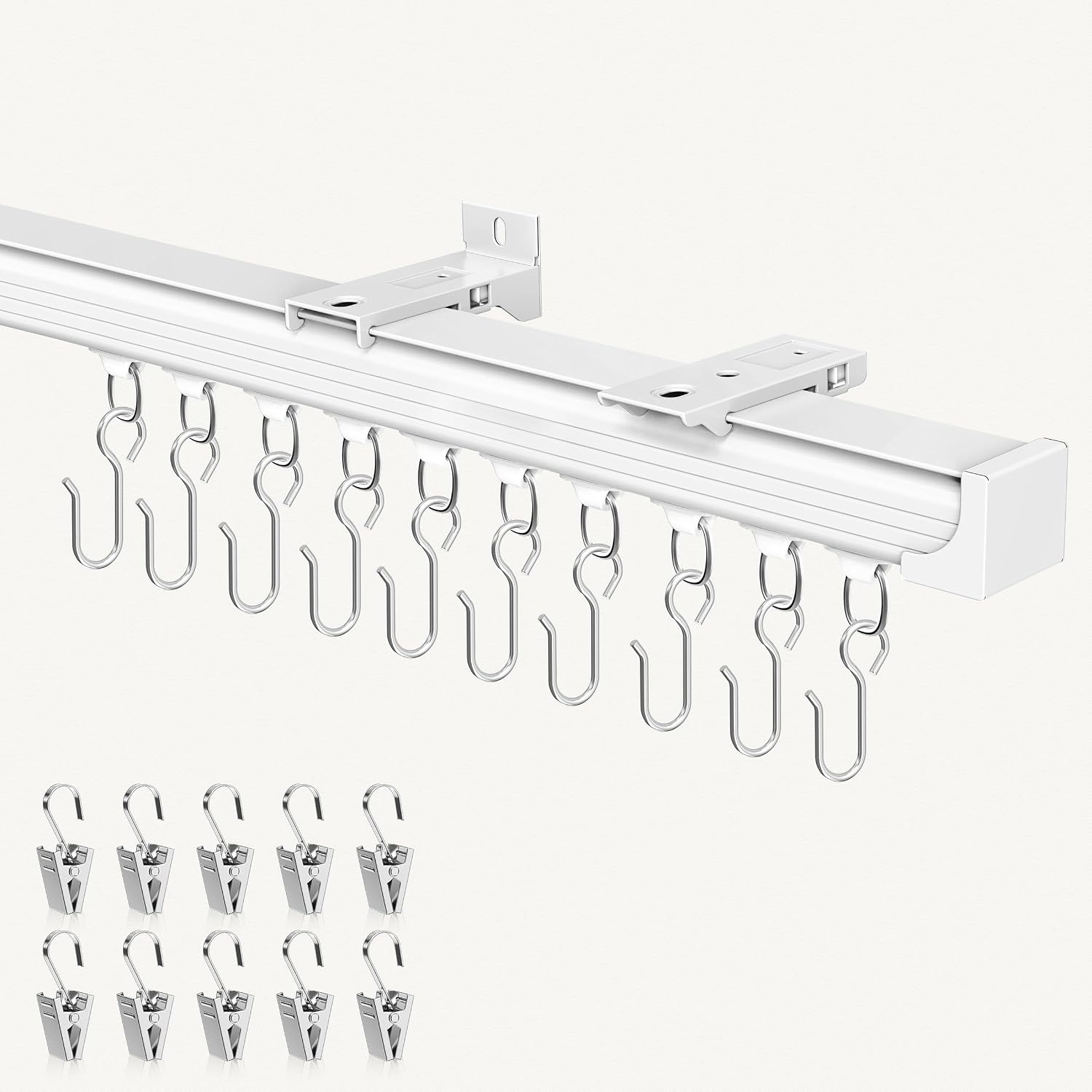
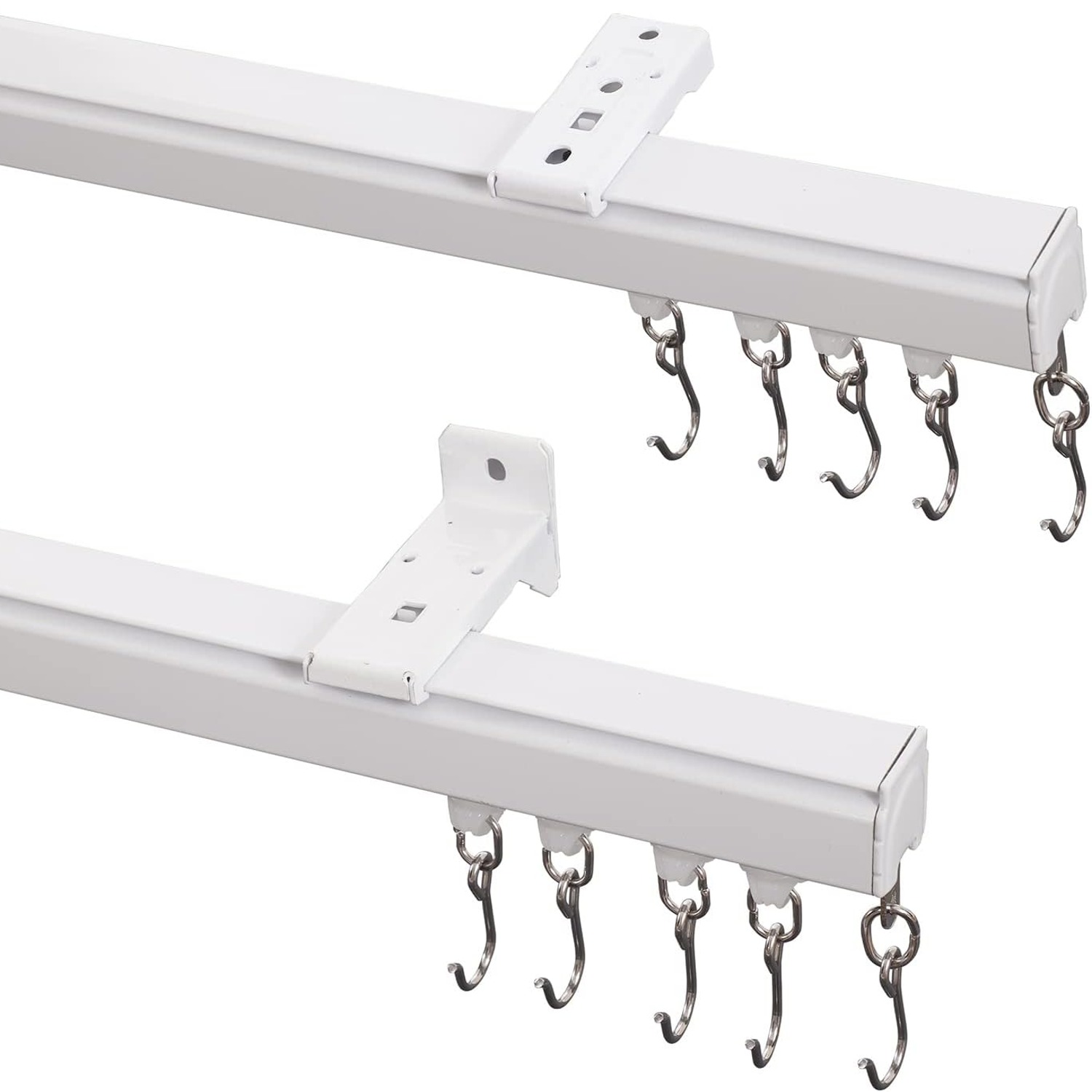
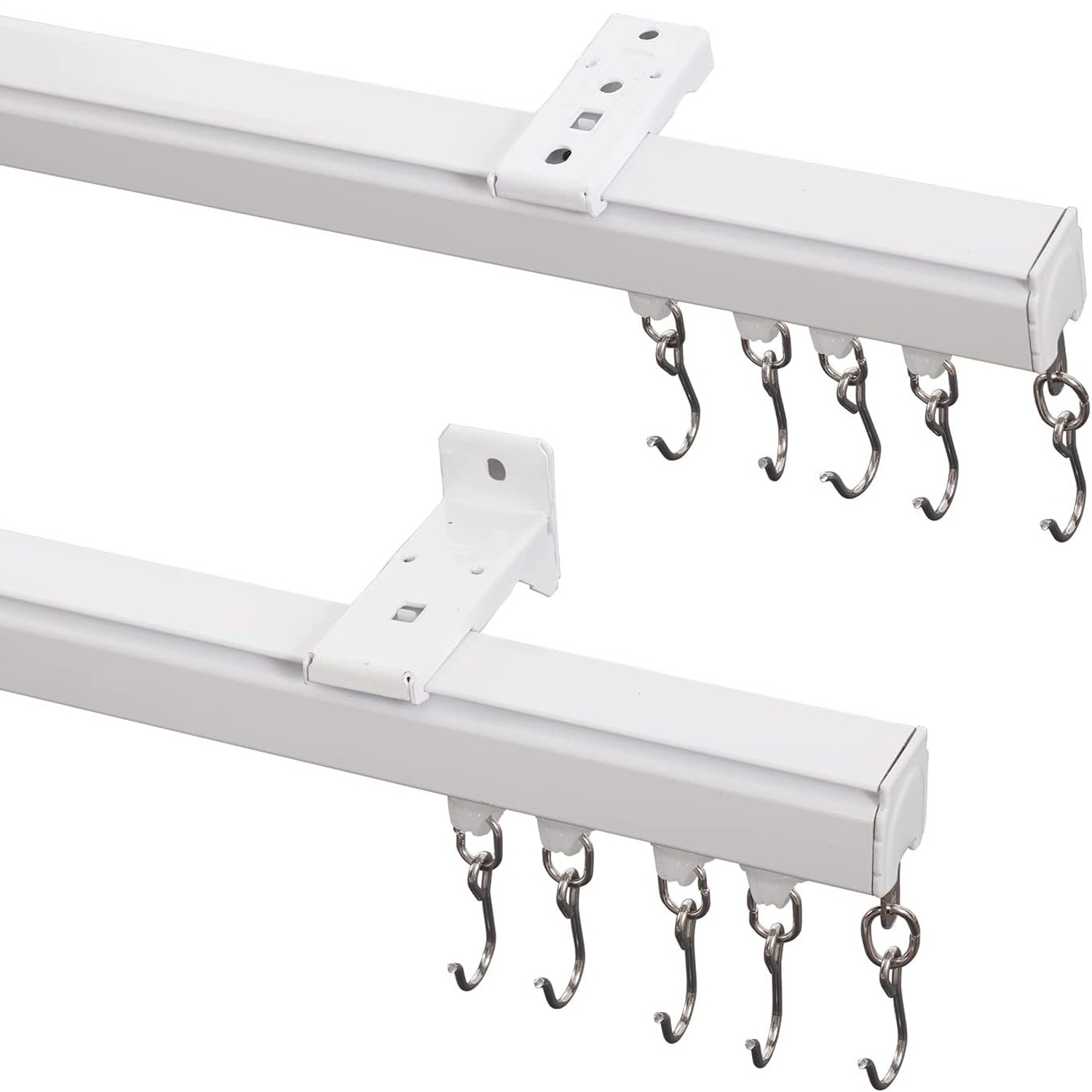
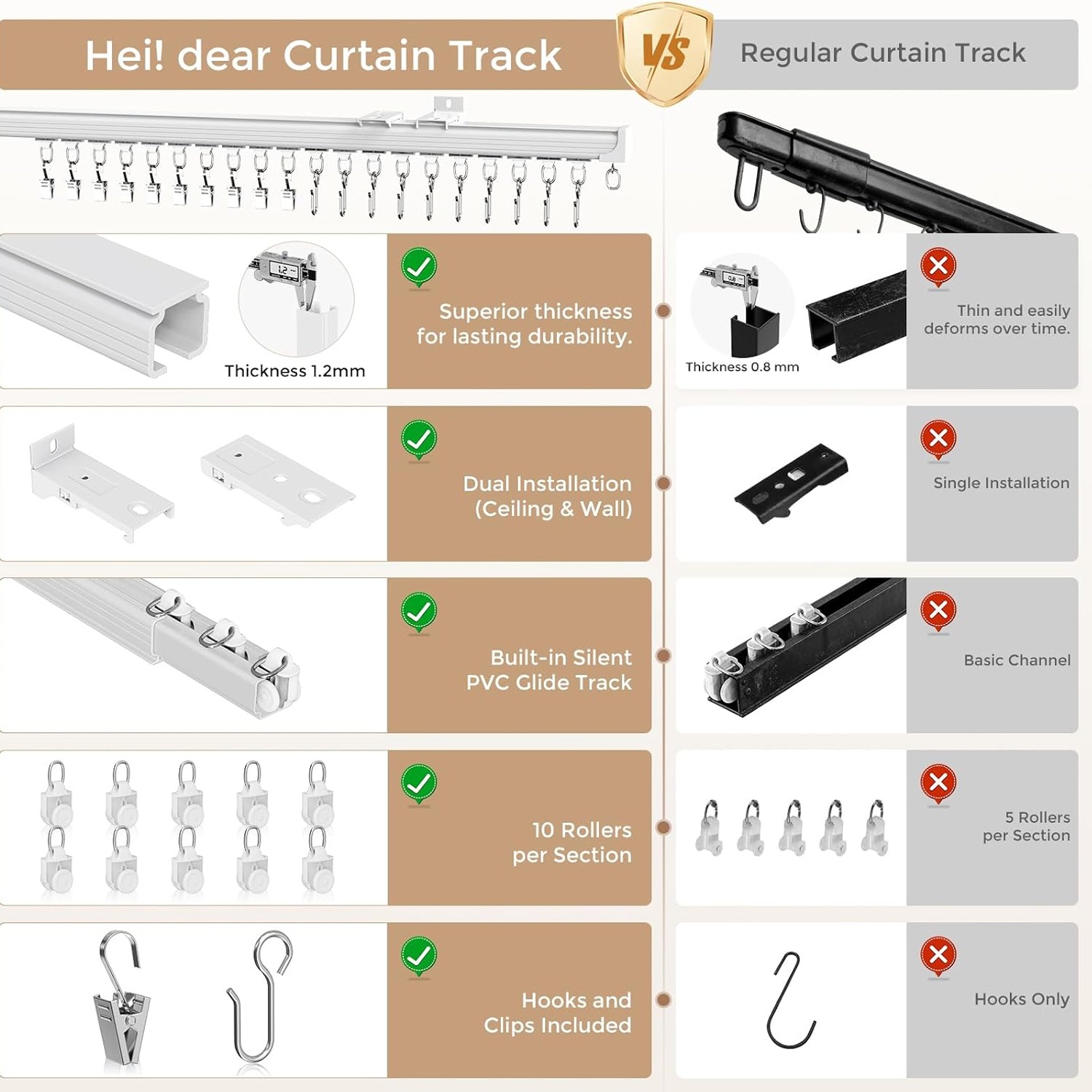
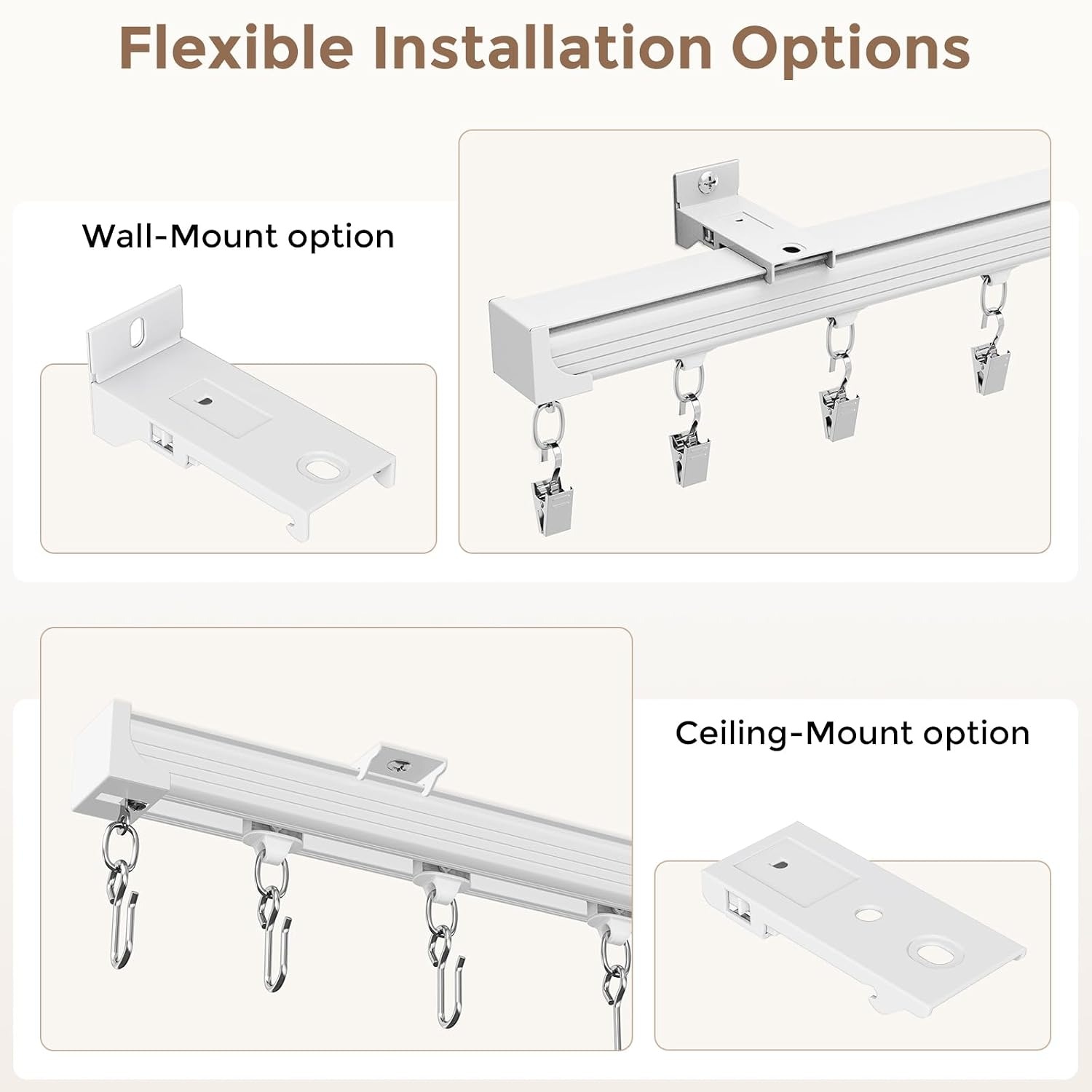
The kit arrives as six aluminum sections. Five connectors join them end to end, and two end caps close off the finished run. Twelve brackets hold the rail up, and you get both ceiling and wall versions so you can decide once you have seen the space.
Inside the rail sit sixty rollers. Each one is a small wheeled carrier that runs along the channel. You attach your curtain to the rollers using the clips or the hooks that come in the box, sixty of each. Clips bite onto plain fabric or a simple folded heading. Hooks drop into pleat tape or ring tops. Most people use one or the other, not both, but having both means you are not stuck if you change the curtain later.
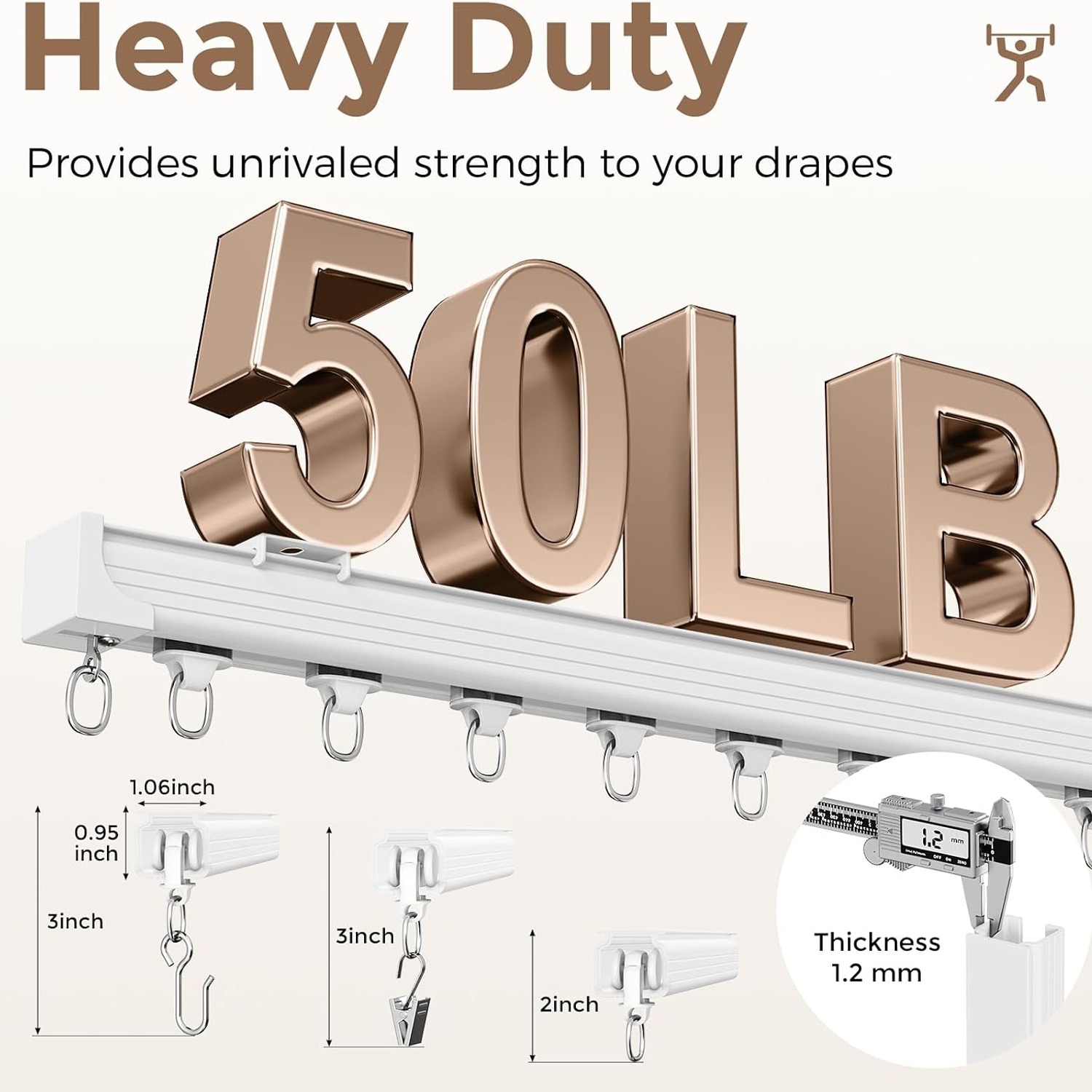
The whole assembly is rated to a maximum recommended weight of 50 pounds. That is the figure to check your curtain against. A pair of lined blackout panels for a wide opening typically lands well under it. A commercial-weight divider curtain in heavy canvas might get closer, so weigh it if you are unsure.
The listed rail length is 216 inches, which is eighteen feet. The kit is sold for a 15 to 18 ft range because a ceiling track saw is included. If your opening is sixteen feet two inches, you cut one section down and build the run to fit. That is a real advantage over fixed-length rods, which force you to round up and live with an overhang.
Who this suits
The obvious user is anyone with a wide window or a sliding door wall. Ceiling mounting lets the curtain start right at the ceiling line, which makes the window look taller and cuts the light leak that always creeps over the top of a wall-mounted rod.
The second group is anyone dividing a space. Studio apartments, open-plan basements, shared bedrooms, garage workshops. A curtain divider costs a fraction of a stud wall, takes an afternoon to fit, and comes down without leaving anything behind except a few screw holes.
Then there is the clinical and commercial side. Treatment rooms, physio clinics, salons and any space that needs a privacy screen. The 50 pound rating and the dense roller count handle the mesh-topped curtains used in those settings. If you are specifying for a regulated space, check your local requirements on fabric and fixings first, because those rules vary and this listing does not speak to them.
Bathrooms are the fourth case. Shower curtain use is listed among the specific uses for this product. Aluminum copes with a damp room better than mild steel, though you should still wipe it down now and then and keep the channel clear.
Choosing the right length and mount
Start with a tape measure and the full span you want to cover. For a window, that is the window width plus roughly six to twelve inches at each side, so the curtain can stack clear of the glass when open. For a divider, measure wall to wall and plan to run the rail the whole way.
Write that number down and compare it to the 15 to 18 ft range. If it falls inside, you are set. If it falls below fifteen feet, a shorter kit in the same range of sizes will suit you better and cost less. If it is more than eighteen feet, you need to look at a longer system.
Next, decide on the mount. Ceiling mounting gives you the cleanest look and the longest drop. It needs a ceiling you can actually fix into, which means finding joists or using proper cavity anchors in drywall. Wall mounting is the fallback when the ceiling is unsuitable, and it also works well above a window where you want the curtain to clear the frame and the sill.
Hold a section up and look at it from a few angles before drilling. It is a lot easier to change your mind at that stage.
Fitting it without drama
Mark a level line first. A laser level is ideal across this distance, but a long spirit level and a chalk line will do. An eighteen foot rail will show up even a small error, so this is the step worth slowing down for.
Fix the brackets along the line, spaced fairly evenly, and make sure there is a bracket close to every connector joint. Joints are the weakest point on a long run, and supporting them is what stops the sag people complain about on cheaper systems. Twelve brackets across eighteen feet works out to roughly one every eighteen inches, which is comfortable for heavy curtains.
If you are trimming, cut from the end of a section rather than the middle, then smooth the cut edge. A rough edge inside the channel will catch a roller every single pass, and you will notice it.
Load the rollers into the rail before you clip the final section up, since it is fiddly to add them afterwards. Fit the end caps last. They stop rollers escaping at the ends, which matters more than it sounds.
Keeping it working
Maintenance is light. Run a dry cloth through the channel every few months to clear dust and lint, which is the main thing that slows rollers down over time. Resist the urge to spray lubricant in there. Oil and silicone attract grit and turn a dusty channel into a gritty one.
Wipe the outside of the rail with a damp cloth when you clean the room. Skip bleach, solvents and scouring pads, all of which can mark the white finish.
Once or twice a year, push the curtain to one side and check the bracket screws. Heavy curtains and daily use can work a fixing loose, and a minute with a screwdriver prevents a much bigger job later.
The short version
This is an eighteen foot aluminum ceiling curtain track in white, built in six sections, rated to carry up to 50 pounds. It comes with sixty rollers, sixty clips, sixty hooks, twelve ceiling brackets, twelve wall brackets and a saw for trimming to an exact fit.
It suits wide windows, room dividers, privacy screens and shower curtains. Measure your span first, pick your mount based on what your ceiling is made of, space the brackets evenly with one at each joint, and keep the channel clean. Do those four things and you get a curtain that runs the full width of the room quietly, which is the whole point.