


The complete guide
How to Choose a Room Divider Curtain and Ceiling Track Set
When one room has to do two jobs
Open space sounds like a luxury until you live in it. A bed three steps from a desk. A partner reading at midnight while you are trying to sleep. Two kids in one bedroom, both wanting a corner that is theirs. A guest on the sofa with nothing between them and the kitchen.
Building a wall solves it. Building a wall also costs real money, needs permission in most rentals, and permanently takes away the openness you probably liked about the space in the first place.
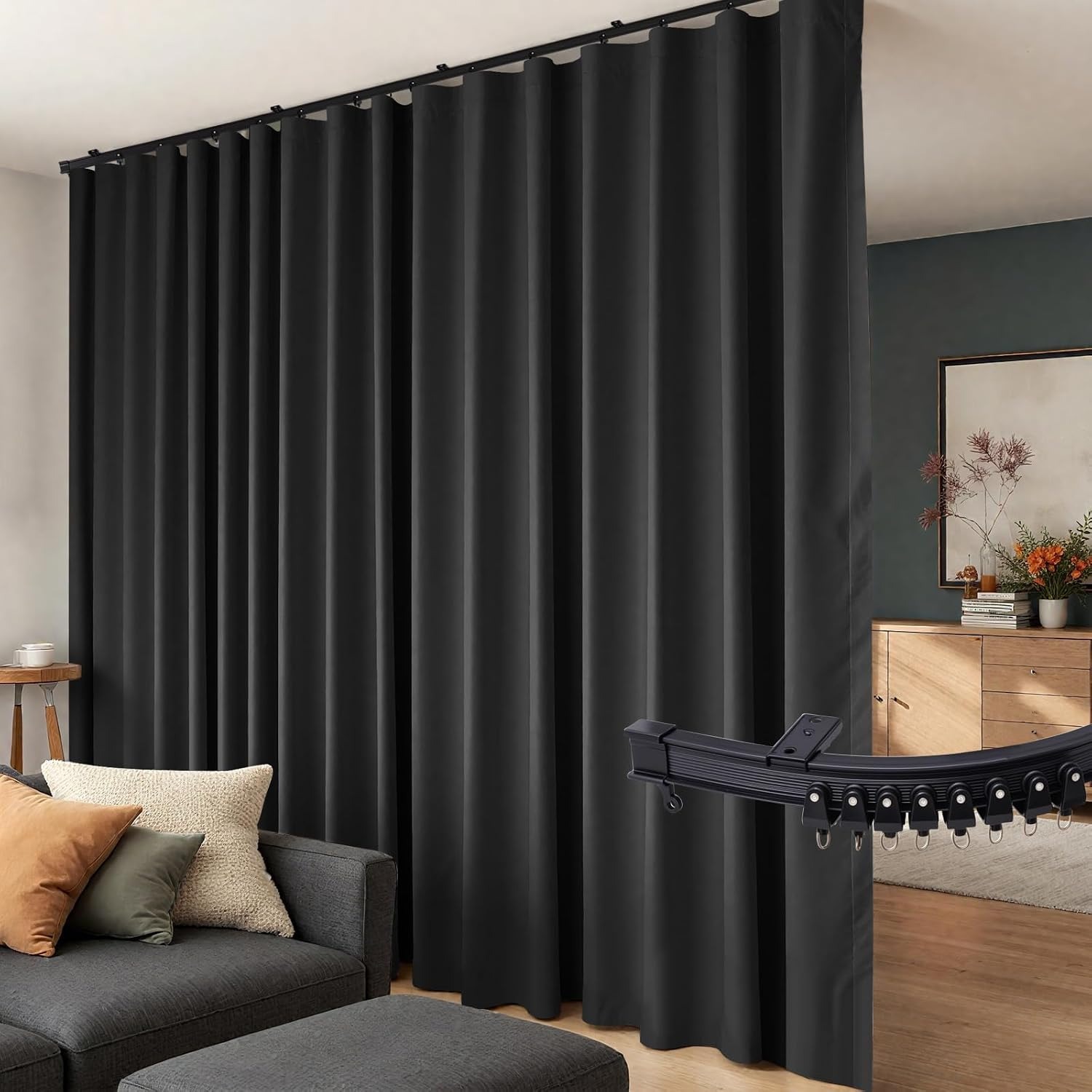
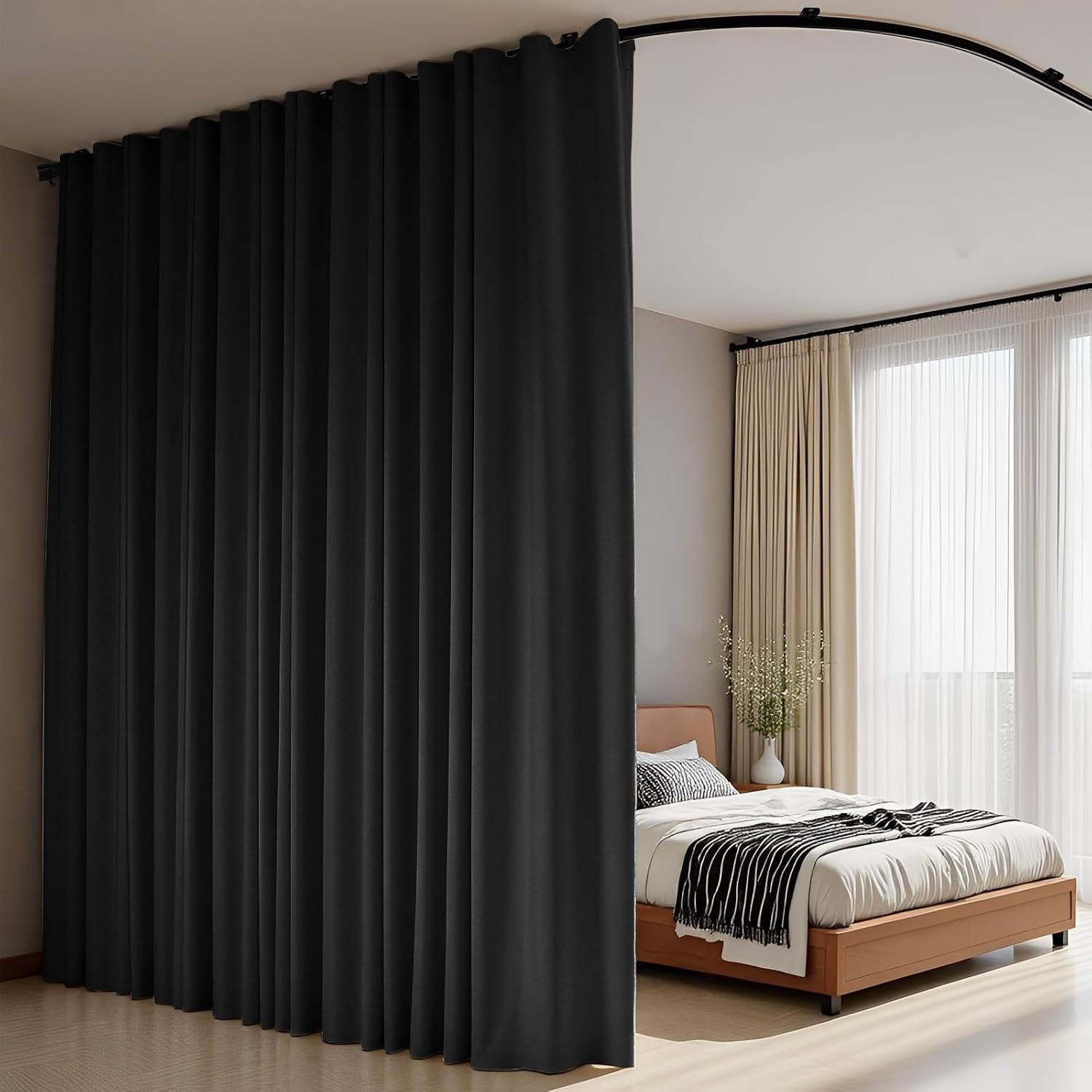
A room divider curtain sits in the middle. It gives you a real boundary when you want one and disappears when you do not. This set includes both halves of the job, a wide blackout panel and the flexible ceiling track it hangs from, so you are not buying a curtain in one place and guessing at compatible hardware somewhere else.
How the system works
There are three parts that matter.
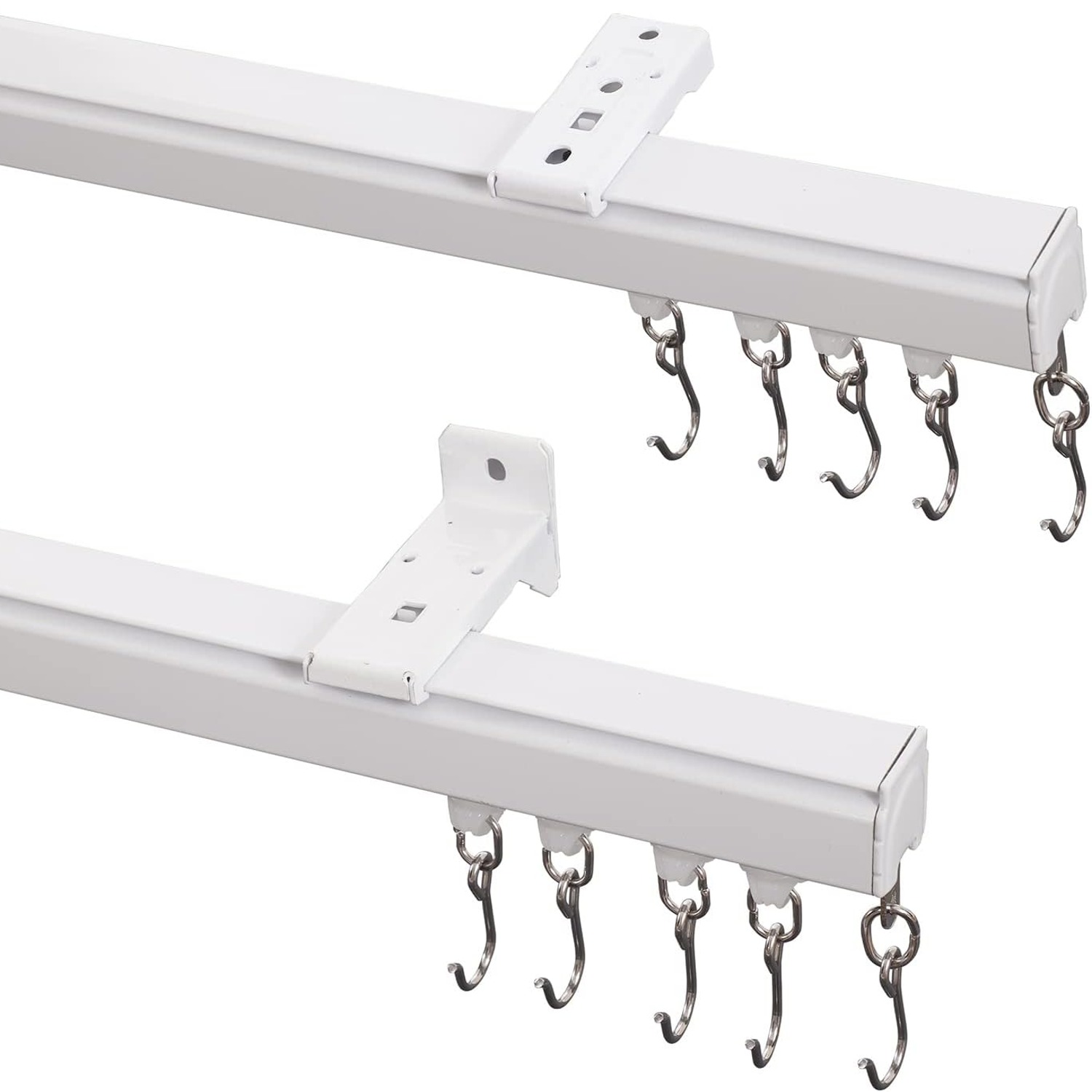
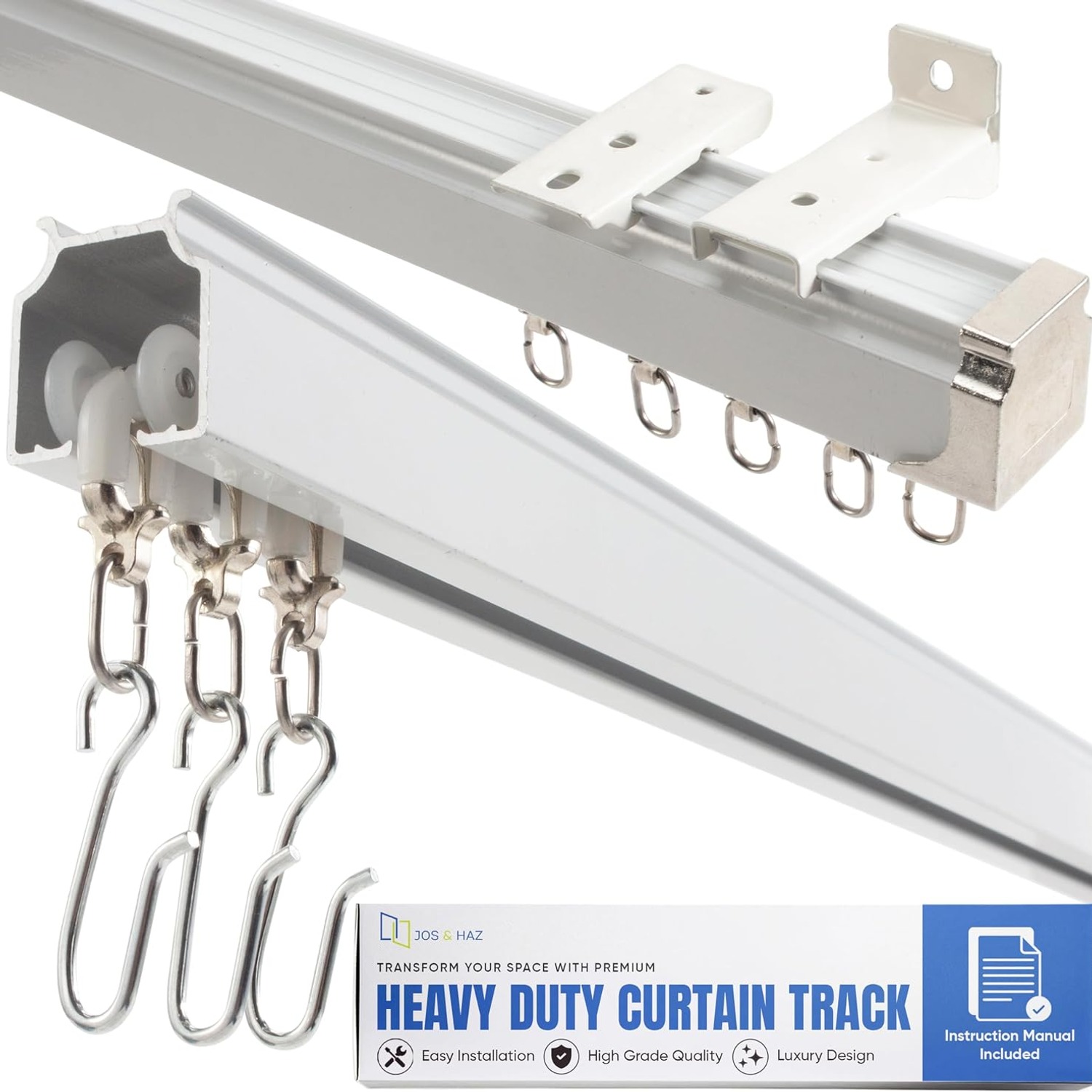
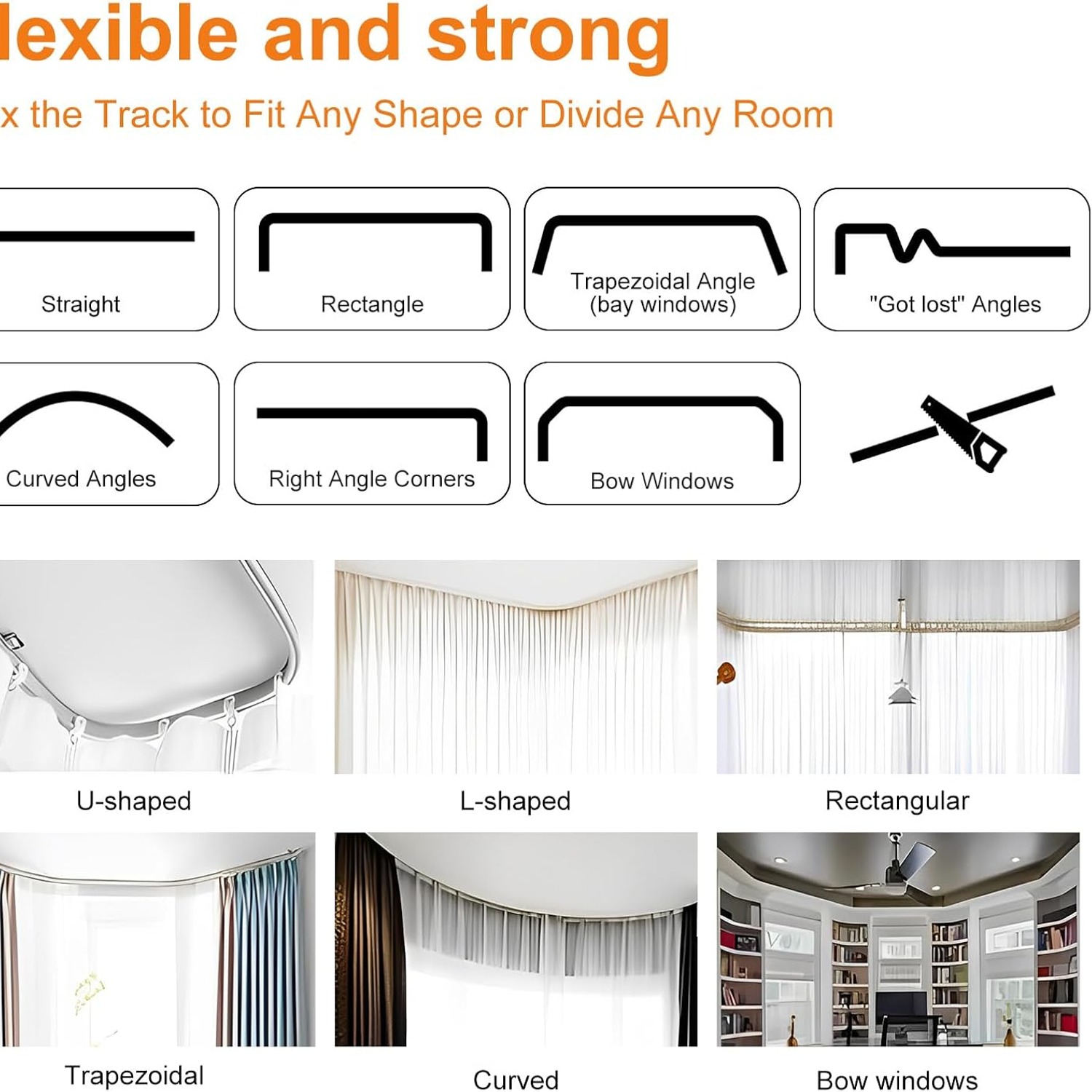
The track fixes to your ceiling using the supplied mounting brackets. Because it bends, you are not restricted to a single straight line across the room. You can shape it into an L to wrap a study corner, or a U to close off a bed on three sides. That flexibility is the main reason people choose a ceiling track over a tension rod, which can only ever go straight and only ever between two walls.
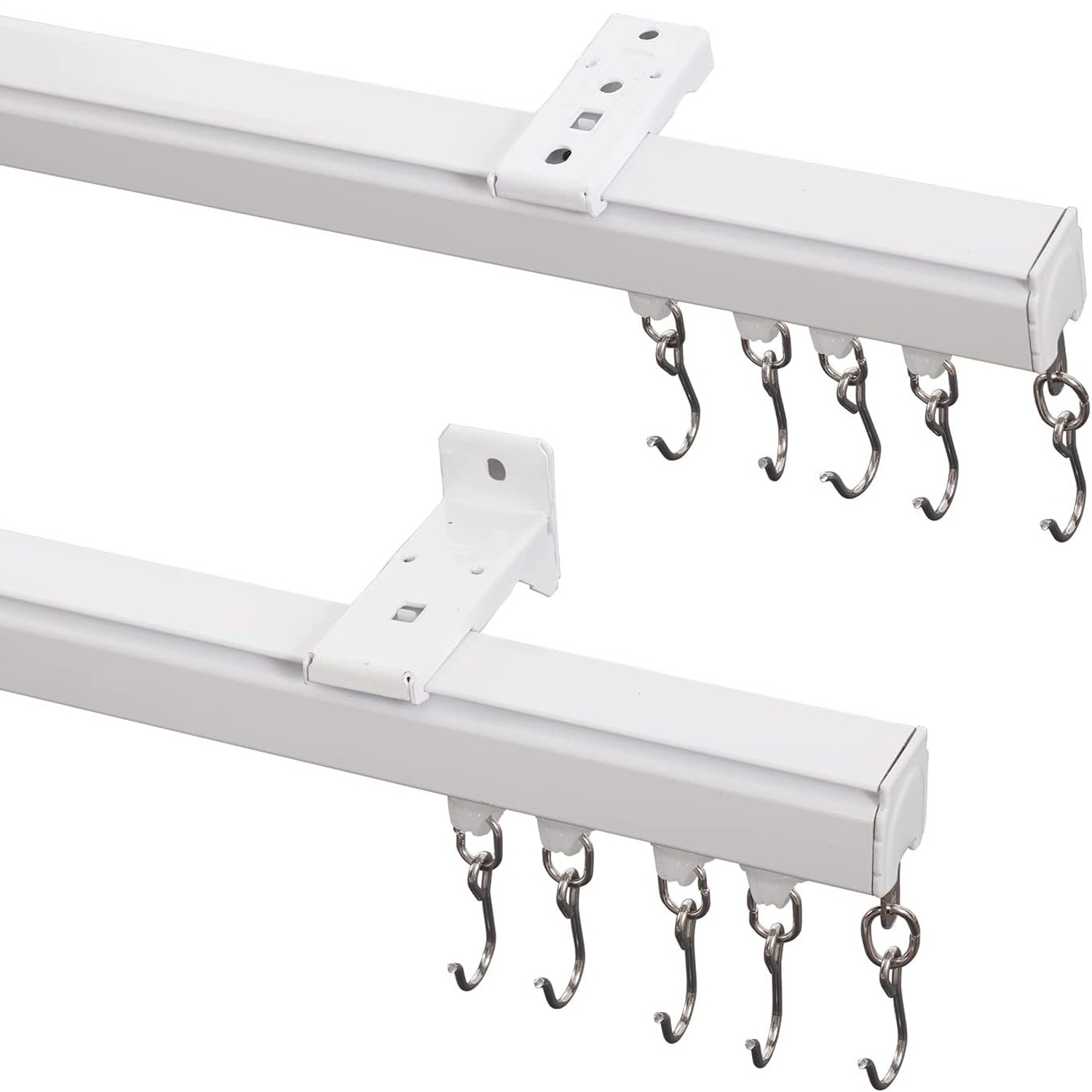
The pulleys ride inside the rail. They carry the curtain's weight and let it slide instead of dragging. A good glide matters more than people expect, because a divider gets opened and closed every single day, sometimes several times a day. Anything that sticks gets annoying fast.
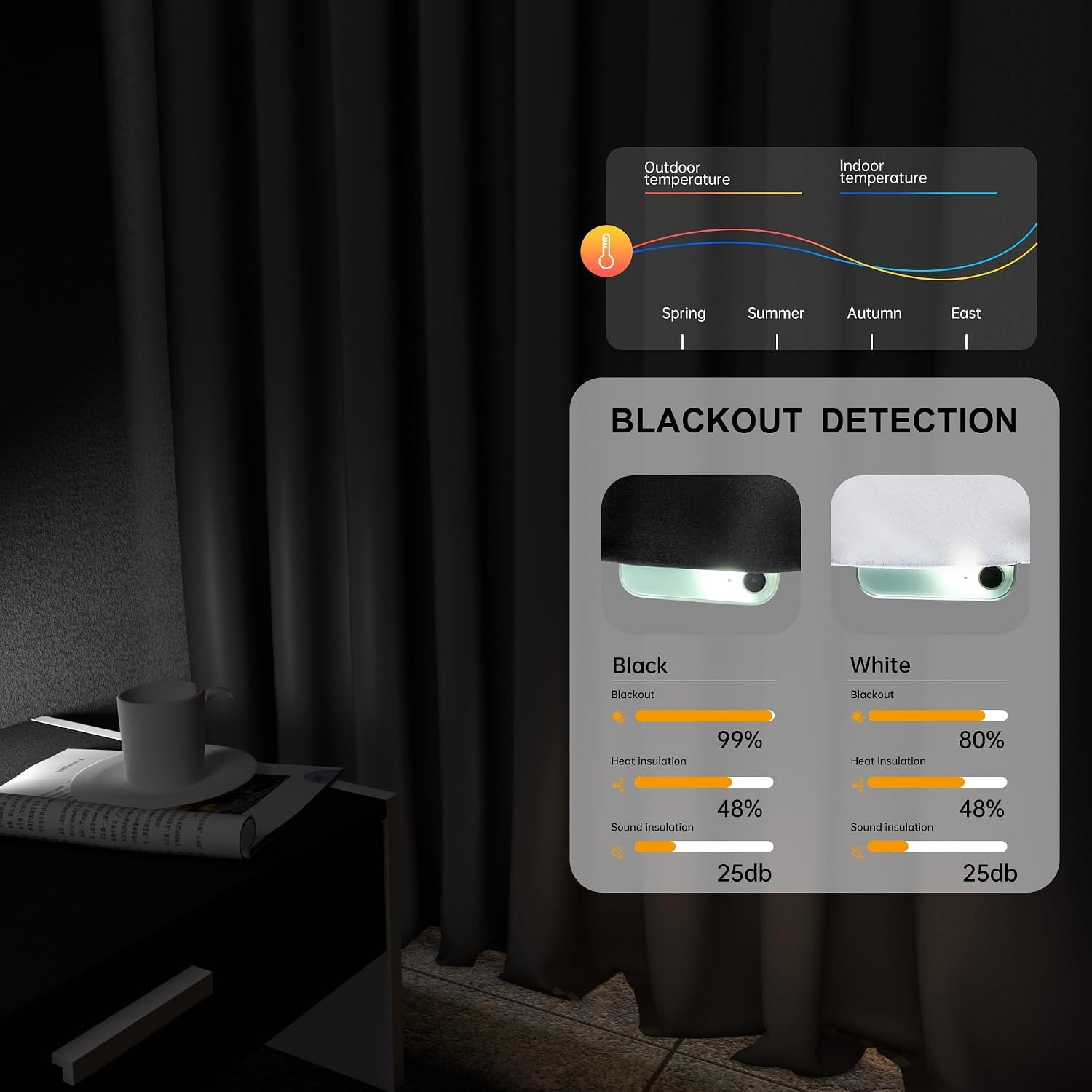
The curtain is the part you see. This one is a single panel, 100 inches wide and 84 inches long, knitted from 100% polyester with no lining and a stated opacity of 98%. The maker lists it as blackout, thermal insulated and noise reducing. In plain terms, it blocks most light, holds temperature a little better than a thin fabric, and softens the sound travelling across the room.
Who it suits
Studios and small apartments are the obvious fit. Carving a sleeping area out of a living area changes how the whole place feels, and you can open it all back up when friends come over.
Shared bedrooms are the second big one. Giving each kid a defined zone cuts down a lot of low-level friction. A privacy curtain for bedroom use also means one person can keep a lamp on without waking the other.
Then there are the less obvious uses. Home offices carved out of a living room, so video calls have a plain backdrop and no stray laundry. Dorm rooms where you cannot touch the walls but might get away with the ceiling. Treatment rooms, craft corners, a daytime nap space for a toddler. Anywhere one room has been asked to do two jobs at once.
Measuring before you buy
This is where most divider projects go wrong, and it takes ten minutes to get right.
Start with your ceiling height. The panel is 84 inches long. Measure from where the track will sit down to the floor. If that number is bigger than 84 inches, you will have a gap at the bottom. For a sleeping zone that is usually fine and even helps with airflow. If you want full coverage to the floor, you need a lower ceiling or a longer panel.
Next, measure the run. A 100 inch panel does not cover 100 inches of open space when it is drawn, because fabric needs some gather to hang properly rather than stretch flat and tight. For a wider opening, plan on two panels meeting in the middle.
Then think about stacking. When the curtain is open, all that fabric bunches up at one end of the track. Leave a clear space there, perhaps 12 to 18 inches, so the bundle is not pressed against a wardrobe door or a radiator.
Finally, find out what your ceiling is made of. Fixing into a joist is straightforward. Fixing into drywall alone needs proper cavity anchors rated to carry the load. If you are not sure, a stud finder or a quick look in the loft will tell you.
Getting the install right
Mark your line first, using a long straight edge or a chalk line. A divider that runs even slightly off-parallel to the wall will look wrong forever, and the eye picks it up instantly.
Space the brackets evenly. Closer spacing on curved sections keeps the rail smooth through the bend. When you shape a bendable ceiling track, work the curve gradually along its length rather than putting a sharp angle in one spot. A tight kink is where pulleys snag.
Thread the pulleys before you clip the rail fully home, because feeding them in afterwards is fiddly. Fit the end caps last so nothing slides off during the job.
Then hang the panel and test it. Draw it fully closed, push it fully open, repeat a few times. Any resistance now will only get worse. It is far easier to adjust a bracket on day one than six months later.
Looking after it
Polyester is forgiving, which is part of why it works so well here. Machine wash the panel warm at 40C on a normal cycle with similar colors, using a mild detergent. No bleach, no dry cleaning. Line dry it rather than putting it in the tumble dryer, since high heat can shrink or distort the fibers.
If creases have set in, a warm iron on a low setting relaxes them. A trick that saves ironing altogether is to hang the panel back on the track while it is still slightly damp. Its own weight pulls the folds out as it dries.
The track needs almost nothing. Wipe it occasionally and keep dust out of the channel. If the glide starts to feel gritty, clean it rather than oiling it, because oil collects more dust and makes the problem return worse than before.
One safety note worth repeating. The fabric is not listed as water resistant and the product is intended for indoor use. Keep it away from heaters, candles and hot lamps, and plan your track line so the curtain never hangs over a heat source.
Comparing the alternatives
A folding screen is portable and needs no tools, but it only blocks a narrow width, offers little darkness and falls over if someone bumps it.
A tension rod costs less, but it has to span between two solid walls, it cannot turn a corner, and the heavier the curtain the more likely it is to slip.
Bookcases make a solid partition and give you storage, but they are heavy, expensive, light-permeable at the top, and a serious problem in earthquake zones unless anchored.
A ceiling track sits above all of that. It carries weight properly, it bends to shape, and when you no longer need it you take it down and are left with a few screw holes instead of a renovation. That is the trade most people in a shared or small home are happy to make.
The short version
If you have one room doing two jobs, a blackout room divider curtain on a flexible ceiling track is one of the cheapest honest fixes available. This set gives you the panel and the hardware together, so there is no guessing about whether the parts match.
Measure your ceiling drop and your run before you order. Check what your ceiling is made of. Leave room for the curtain to stack when it is open. Mark your line carefully and take your time on the bend.
Do those four things and you will end up with two usable spaces where you had one, in an afternoon, without a builder.