
The complete guide
How to Choose and Fit Curtain Track Rollers
The small part that ruins a good curtain
Curtains fail from the top down. The fabric is usually fine, the track is usually fine, and the brackets have not moved in a decade. What gives out are the little plastic carriers hidden inside the rail. One cracks, then another, and soon you are pulling the curtain with two hands while the top edge bunches up in the middle of the window.
It is a cheap problem with a cheap fix, but plenty of people never get around to it because they assume the whole track needs replacing. It does not. A pack of curtain track rollers and twenty minutes on a Saturday morning restores the smooth pull you had when the curtains were new.
What a roller actually does
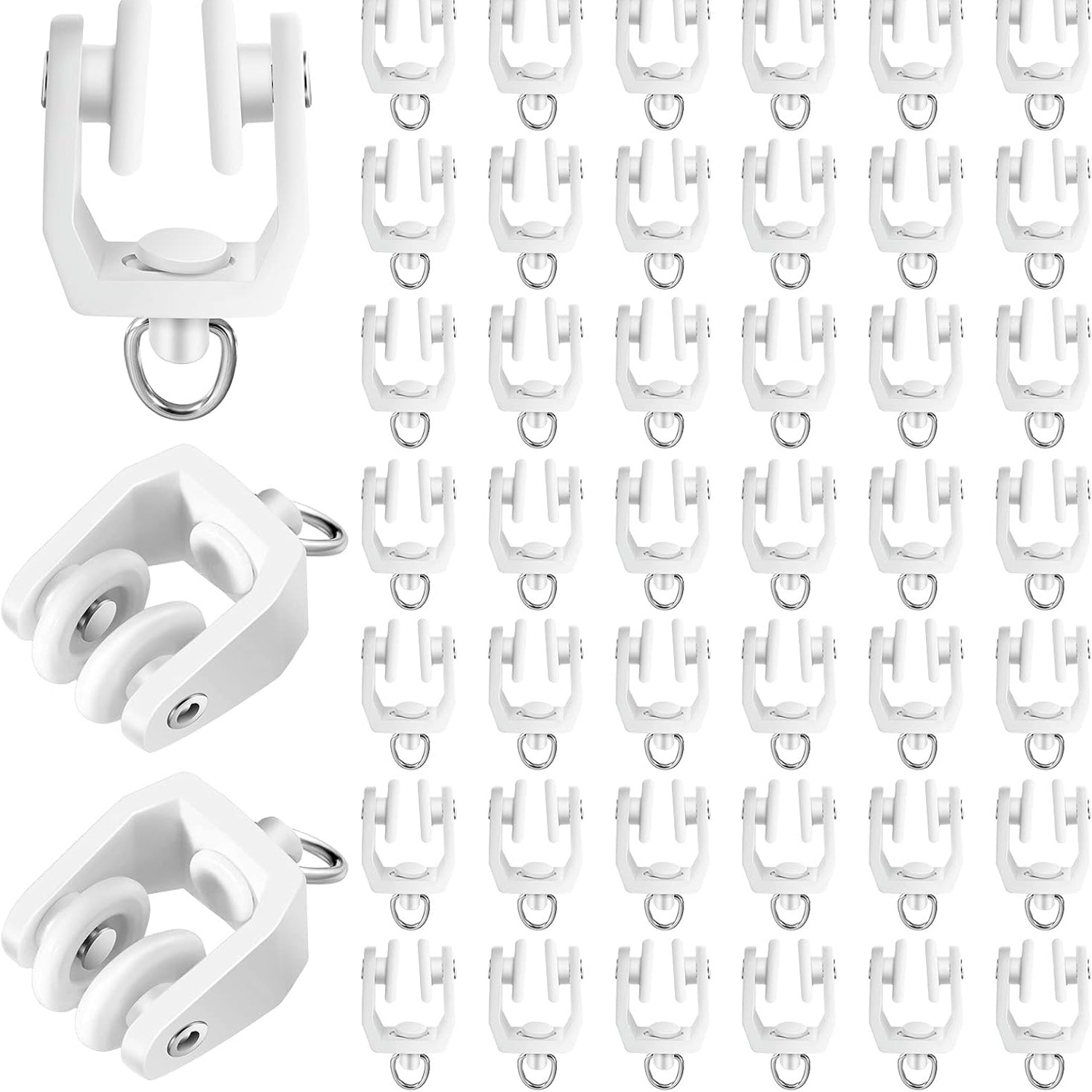
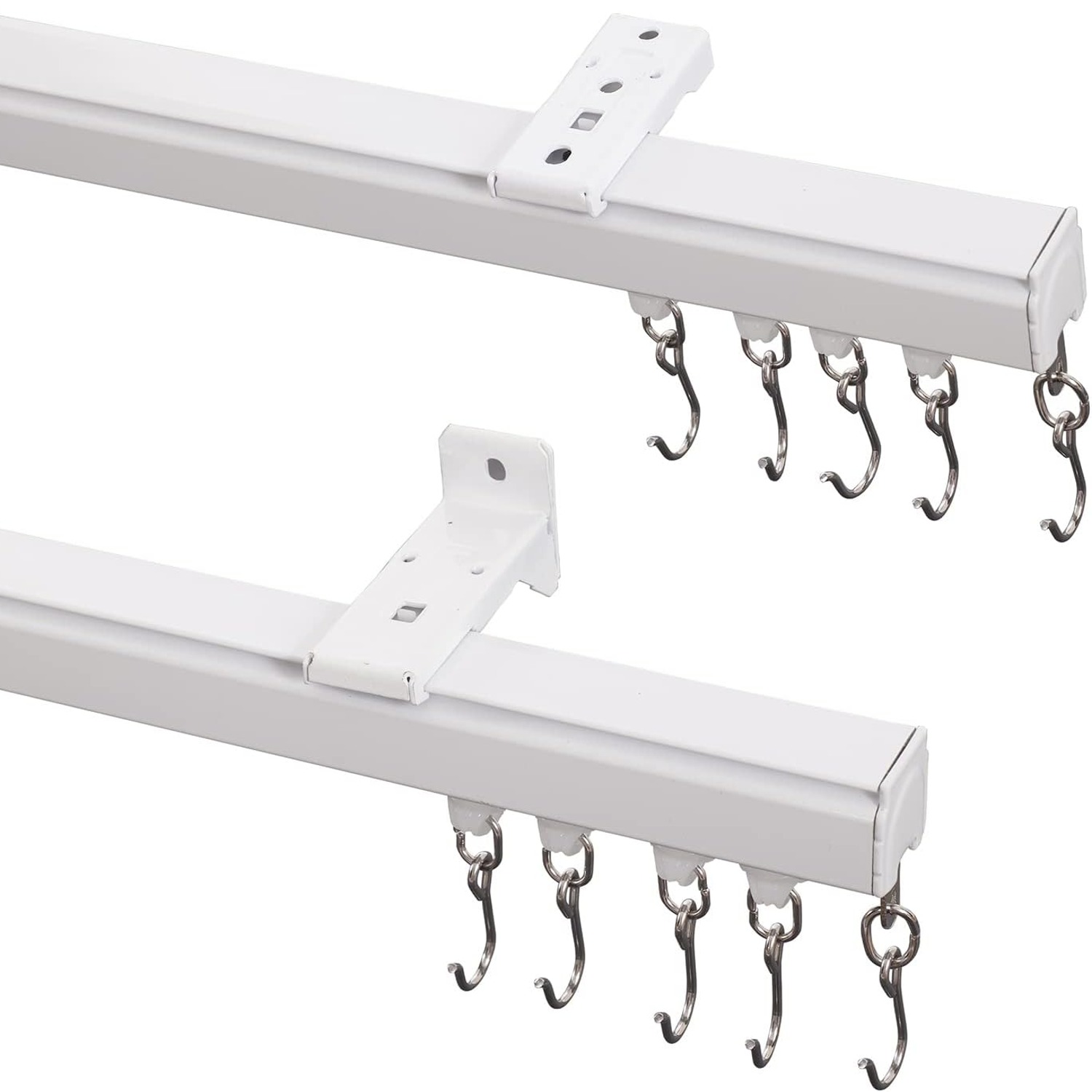
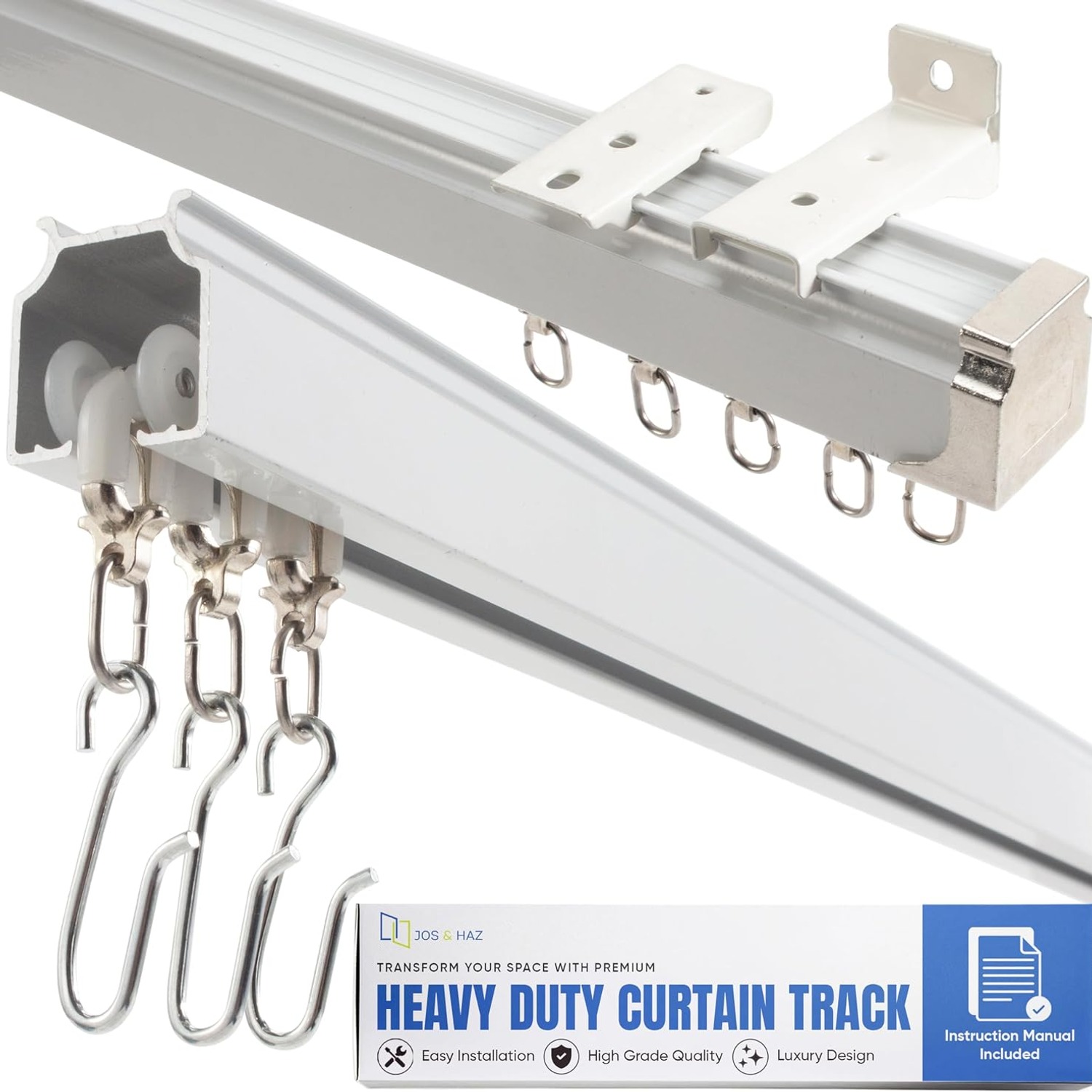
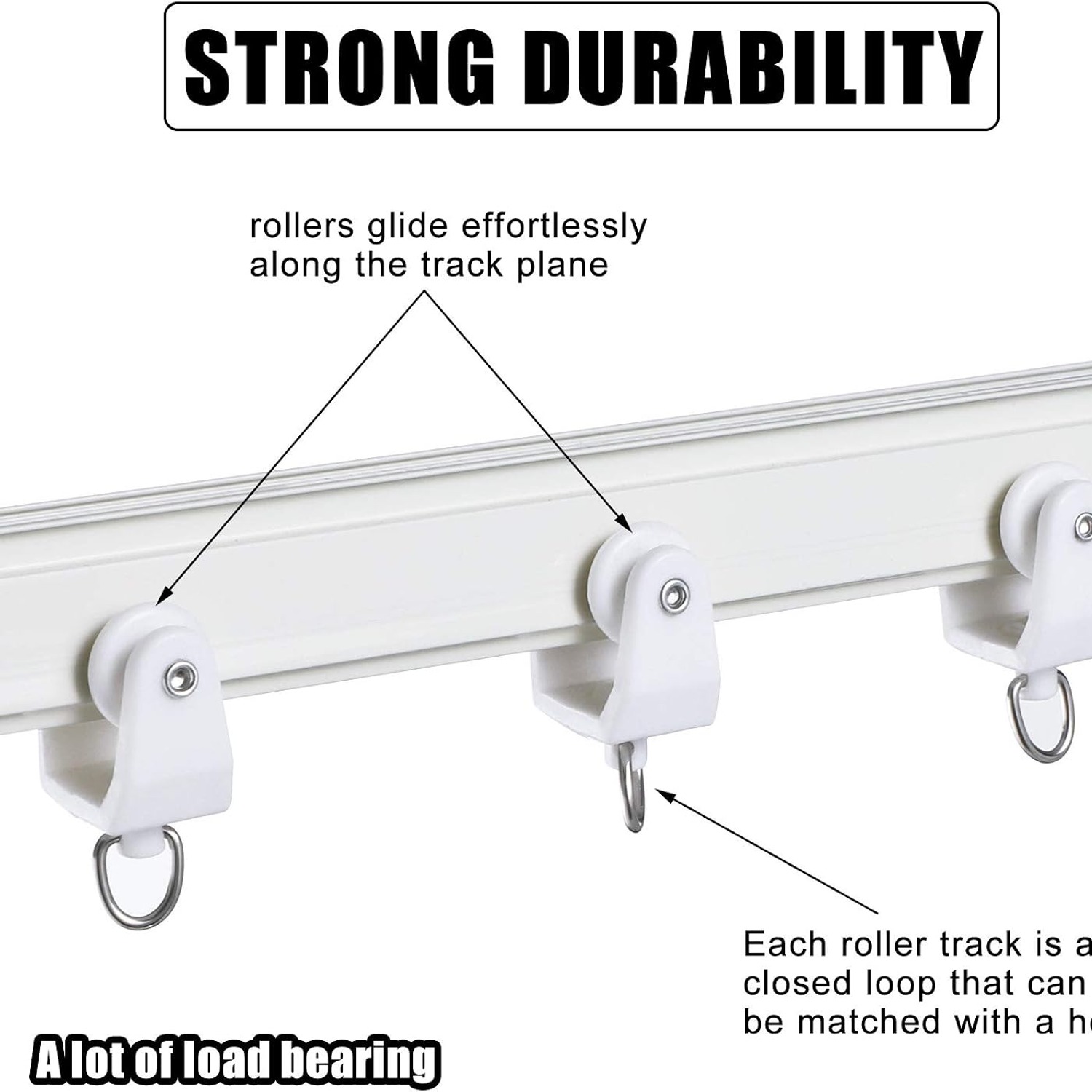
Inside most ceiling and wall tracks there is a narrow channel. A carrier sits in that channel and holds the curtain below it. There are two broad types. A glider is a flat plastic shoe that slides along the channel. A roller has a small wheel that turns as it moves.
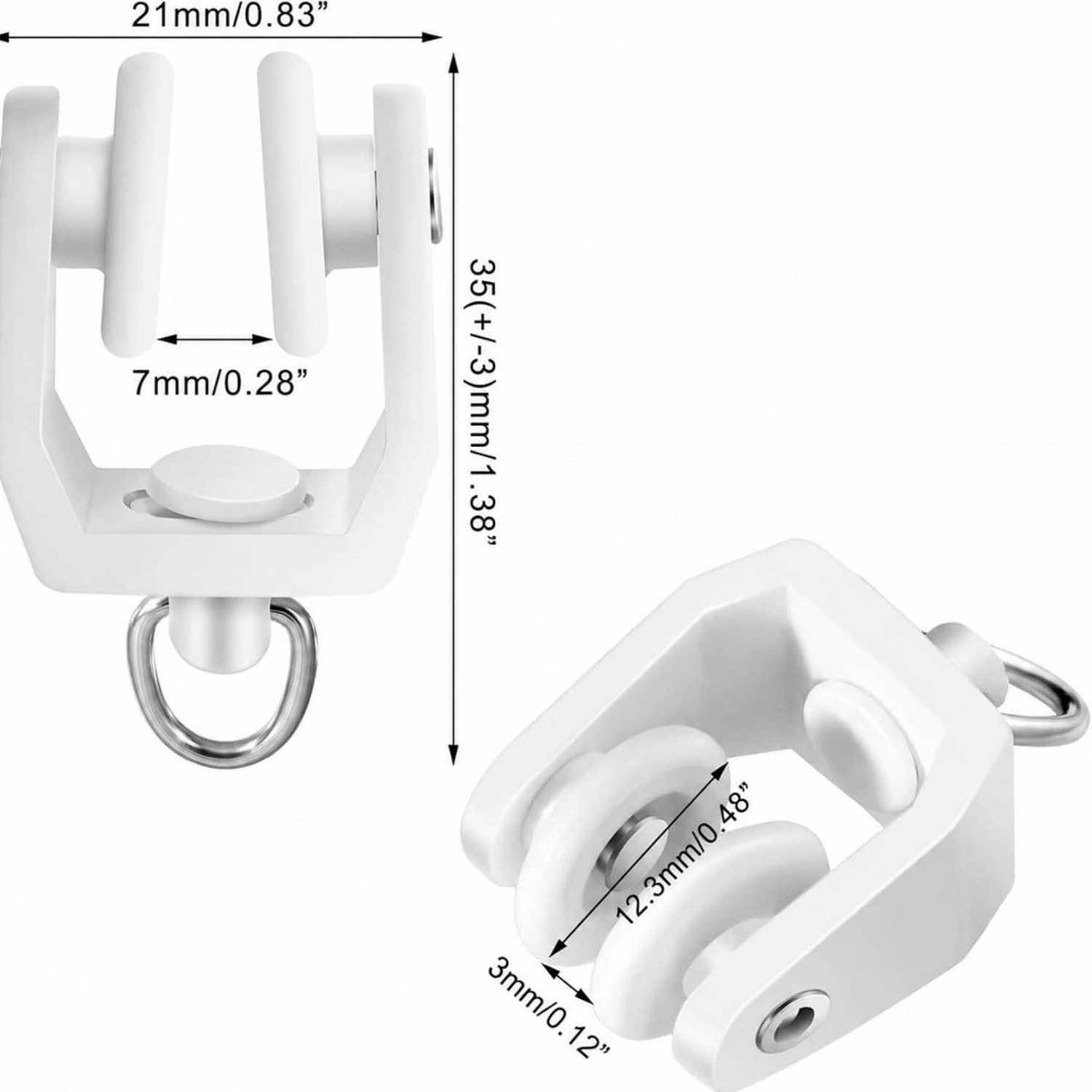
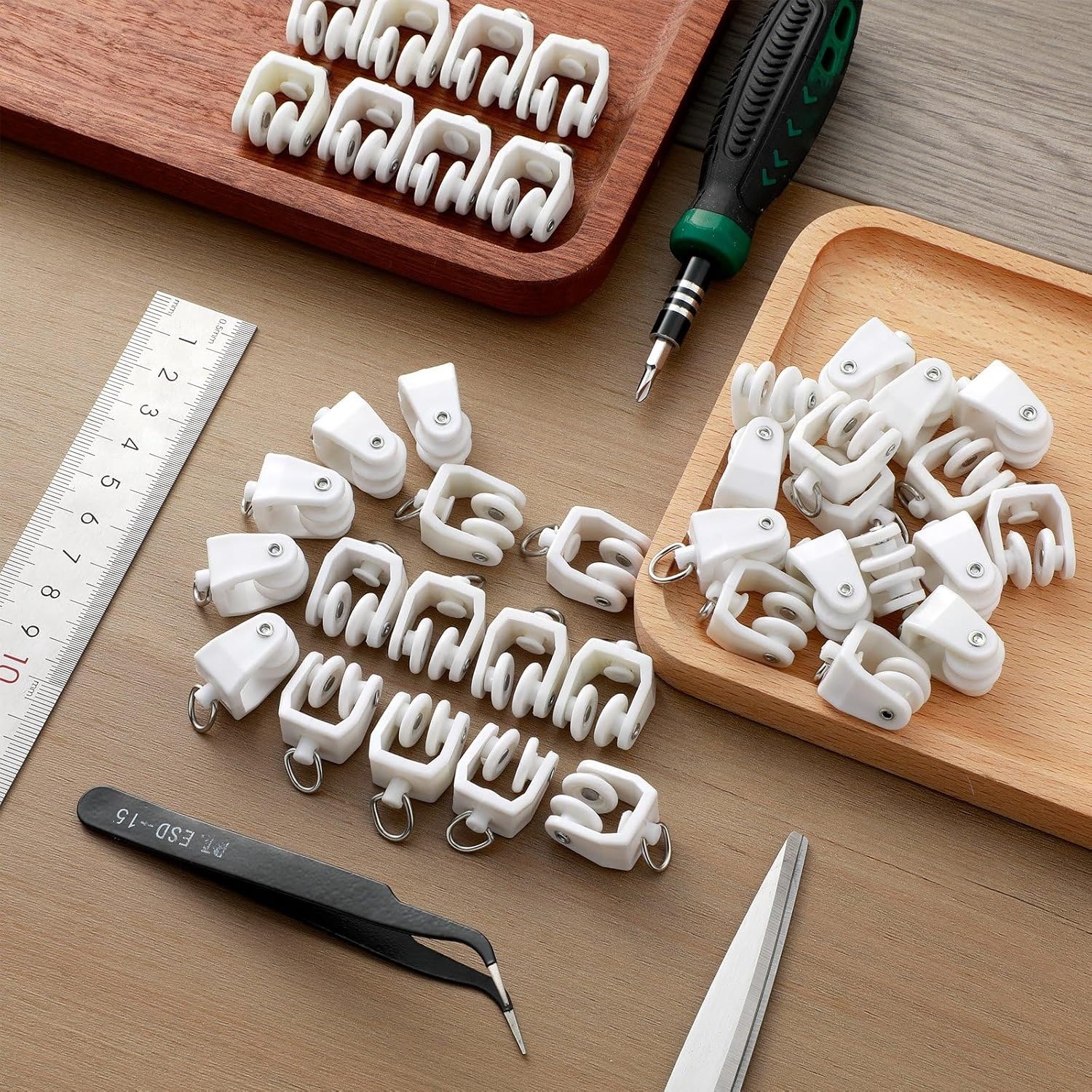
The rollers in this pack have a wheel of roughly 12.3 mm, sized to run in tracks up to 11 mm wide. Underneath the wheel there is a loop that takes a standard curtain hook. When you pull the leading edge of the curtain, each roller turns instead of scraping, so the whole curtain moves with less effort and less noise.
That difference matters more than it sounds. A dragging glider makes a grinding sound that carries through a quiet house. A rolling wheel is close to silent. In a bedroom with an early riser and a late sleeper, that is the whole argument.
Measuring before you buy
This is the step people skip, and it is the only step that really matters. Track widths vary between brands, and a roller that is a millimeter too wide will not enter the channel at all.
Take the measurement from the inside of the channel, not the outside of the rail. Pull one old carrier out of the end of the track and look at it. If the wheel measures around 12 mm and the channel it came from is about 11 mm, these rollers will suit. If your rail is a wide commercial track or a traditional metal corded system, you need a different part.
Approximate is the right word here. Small moulded parts carry a little variation, so a rail right on the edge of 11 mm may be tight. If you are unsure, pull out one old roller and compare it against the product photos before ordering.
Working out how many you need
A rough rule is one roller every 10 to 15 cm of curtain width. Tighter spacing gives neater pleats and spreads the weight, while wide spacing lets the fabric droop between hooks and look sloppy.
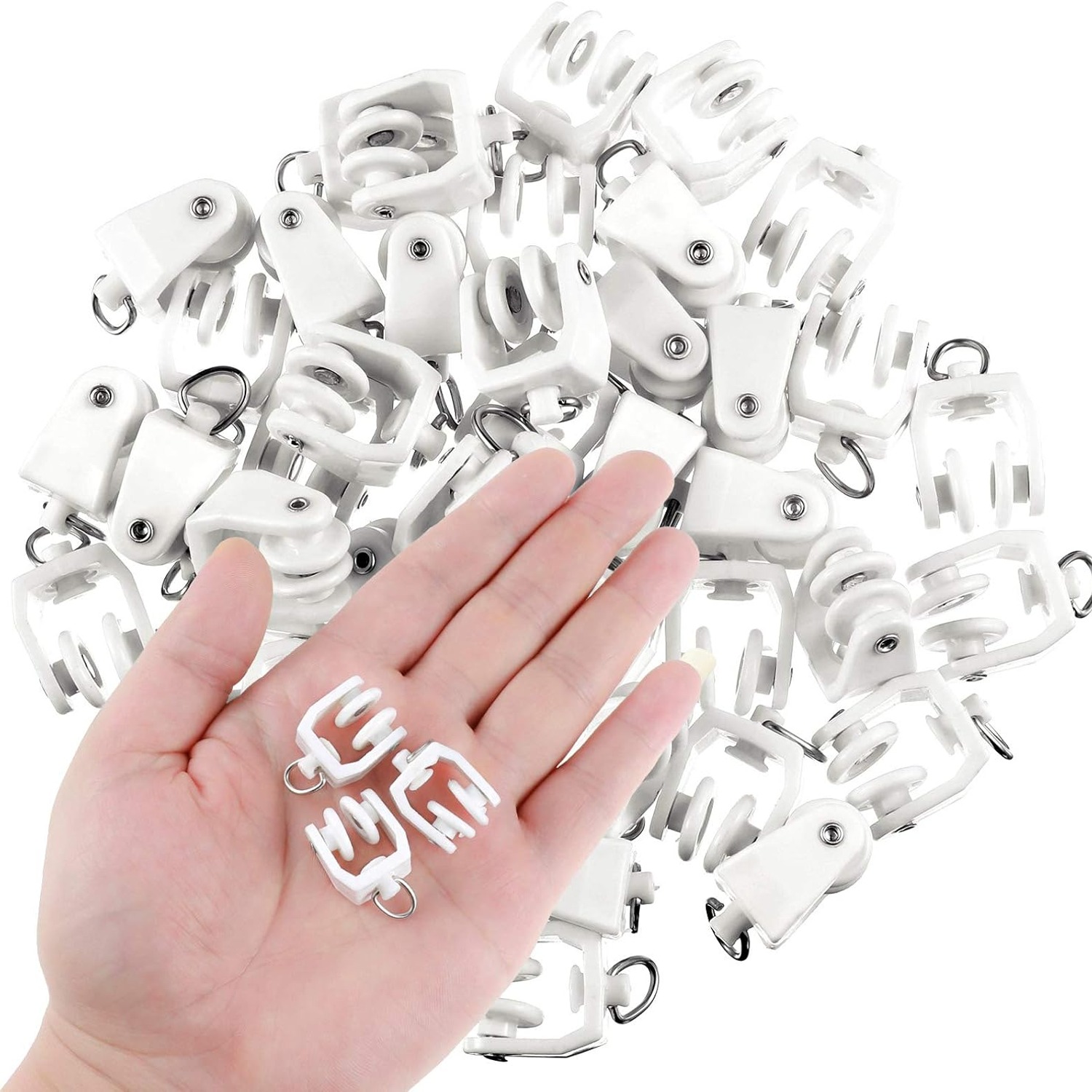
For a single window curtain of about 150 cm, that works out at roughly twelve to sixteen rollers. A pair of curtains on a wide living room window could use thirty between them. Fifty in a pack covers most homes with a healthy set of spares left in the drawer, which is exactly what you want for the next time one snaps.
If you are kitting out a whole property, buy on the generous side. The annoying part of this job is not the fitting, it is discovering you are four short with the curtain already down.
Where these rollers earn their keep
The obvious home is a bedroom or lounge window on a ceiling track. But flexible narrow track turns up in more places than most people expect.
Shower areas use it for curtains that need to curve around a corner. Caravans and campervans use it because it is light and bends to follow the van wall. Studio apartments use it to split a sleeping area off from a living area with a single hanging panel. Clinics and treatment rooms use it for privacy screens.
In all of these, a wheel handles curves better than a flat shoe. That is why the best ceiling curtain track parts for bendable rail tend to be small rollers rather than long gliders. On a curve, a flat glider wants to twist and jam. A wheel just keeps turning.
Fitting them without any fuss
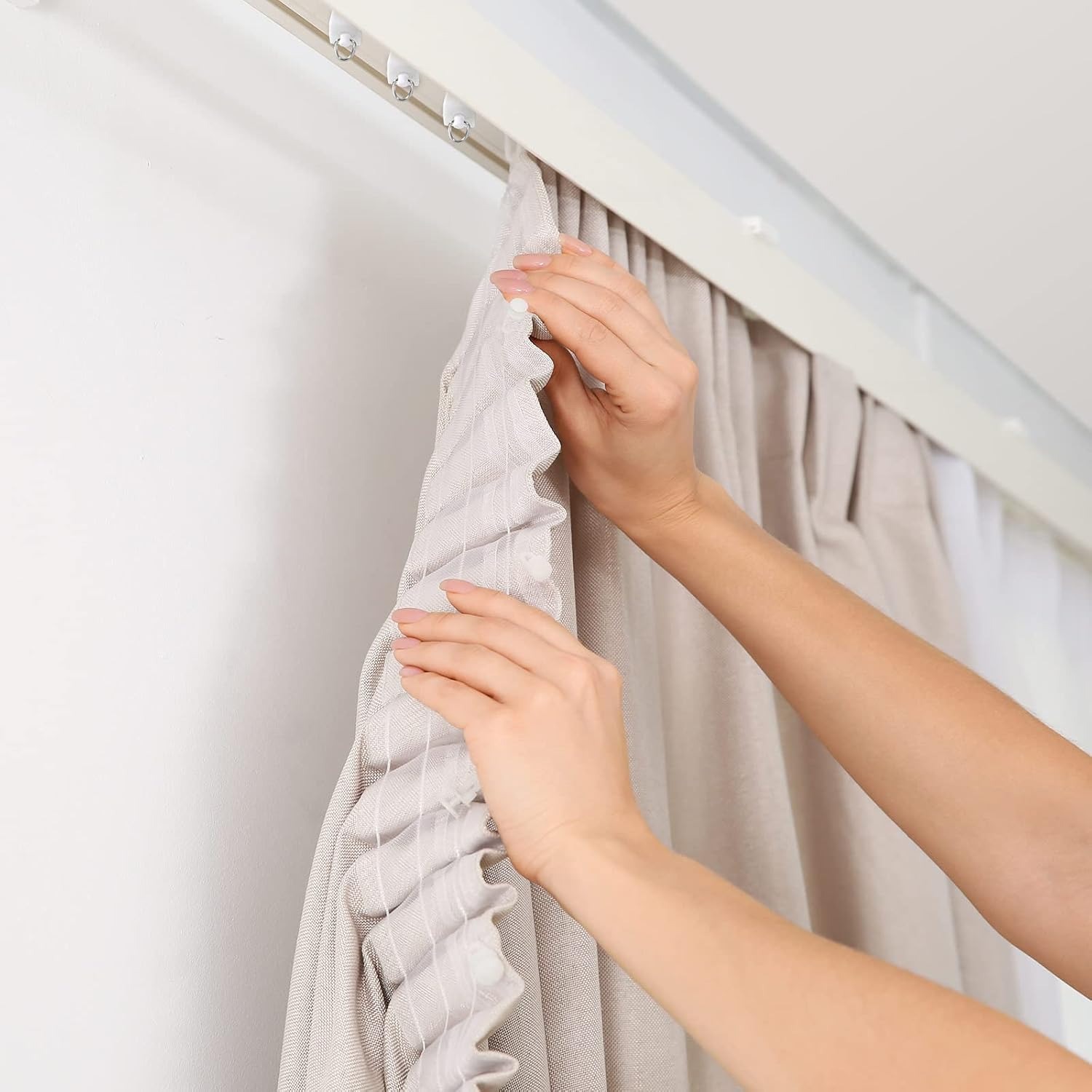
Start by taking the curtain down. Unhook it rather than pulling it off, since yanking stretches eyelets and breaks more carriers.
Next, find the end of the track. Most have a small end stop or cap that pops or screws off. With it removed, the old carriers slide straight out. Tip them into your hand and count them, because that tells you exactly how many new ones to feed in.
Give the inside of the channel a wipe before you put anything back. Wrap a cloth around a ruler and run it through. You will usually be surprised at how much dust comes out, and a clean channel is half the reason the new rollers feel so much better.
Feed the new rollers in one after another, all facing the same way, then put the end stop back. Hook the curtain on, starting at the end nearest the wall, and work along. Check the curtain runs the full width before you walk away.
Some tracks have a slot or gate in the underside instead of a removable end, which lets you clip rollers in anywhere along the run. Look underneath before you start unscrewing brackets.
Keeping them running
Plastic rollers need almost nothing, but two habits make them last much longer.
The first is cleaning. Dust and grit in the channel is the usual cause of a sticky curtain, not worn parts. A wipe through the track twice a year keeps the pull light.
The second is resisting the urge to spray something in there. Oil and silicone feel like an improvement for about a week, then they collect dust and turn into a sticky paste that is far worse than the original problem. Dry and clean beats lubricated every time with plastic in plastic.
If a roller does fail, pull it out and slot in a spare. That is the quiet benefit of buying fifty at once: a future repair costs you two minutes instead of another order.
Matching the roller to the curtain
Weight is worth a thought. These are household plastic rollers, well suited to standard lined and unlined curtains. A very heavy blockout drape across a wide bay puts real load on each carrier.
If your curtain is heavy, do two things. Space the rollers closer together so each one carries less, and make sure the track brackets are properly fixed into something solid. Most track failures blamed on carriers are actually a bracket pulling loose from drywall.
For sheers, voiles, and light panels, the opposite applies. You can space more widely and the curtain will still hang beautifully.
The short version
If your curtain catches, sticks, or sags in the middle, the carriers are the first thing to check. Measure your track channel, and if it is 11 mm or under these rollers will fit.
Count on one roller every 10 to 15 cm of curtain width, clean the track while you have everything apart, and keep the leftovers from the pack somewhere you will find them again. Fifty white rollers, a damp cloth, and twenty minutes is usually the whole job.