
The complete guide
How To Choose And Fit A Flexible Ceiling Curtain Track
The problem with straight rods
Most curtain hardware is sold on the assumption that every opening is flat, straight and wall-mounted. Real rooms disagree. Bay windows angle out in three directions. Shower recesses turn a corner. Caravan walls curve from floor to roof. A room divider often has to swing past a bed, a desk or a doorway rather than run in a clean line.
The usual workaround is to join several straight rods with corner connectors. It works, sort of. You end up with visible joints, curtains that snag at every corner, and a result that looks like a compromise because it is one.
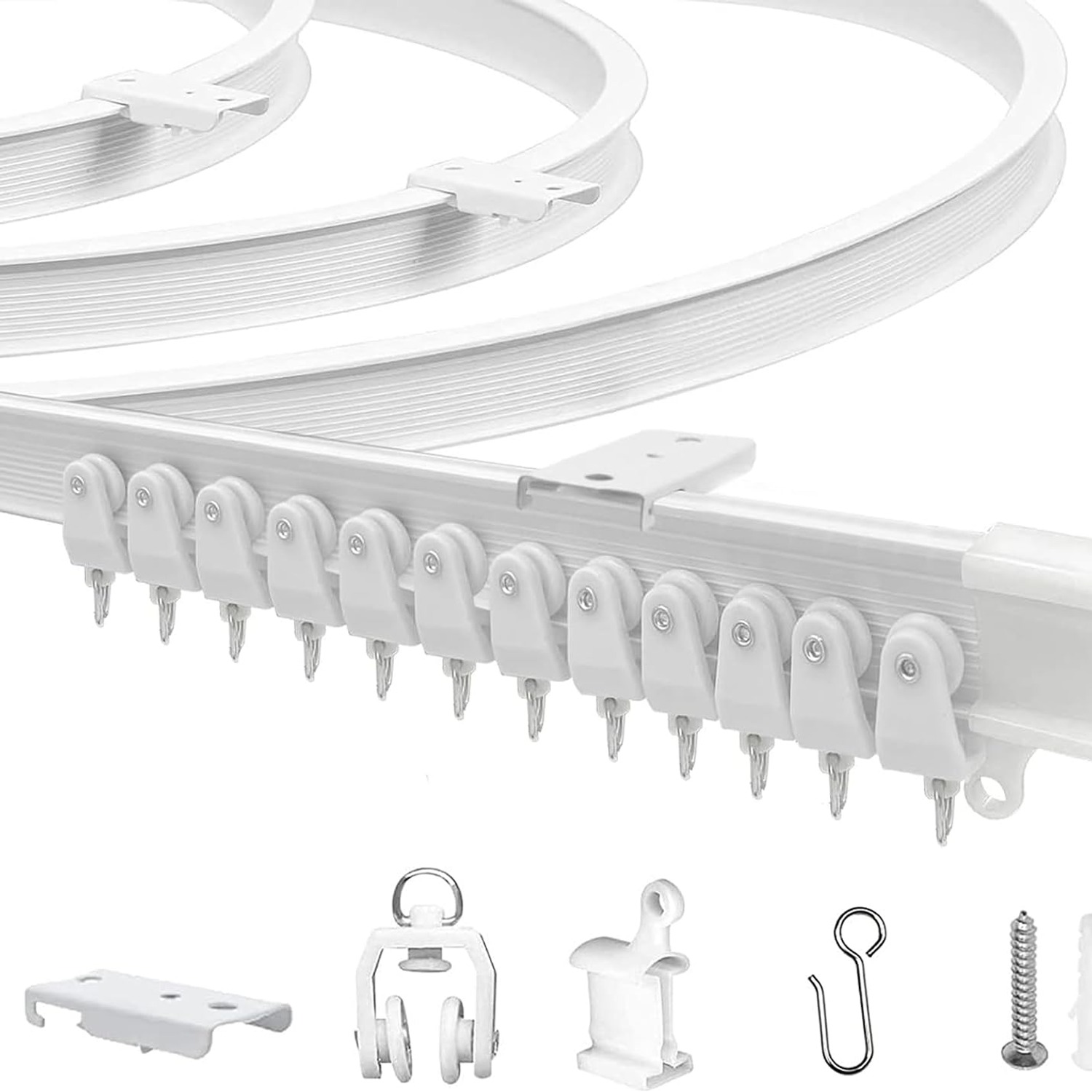
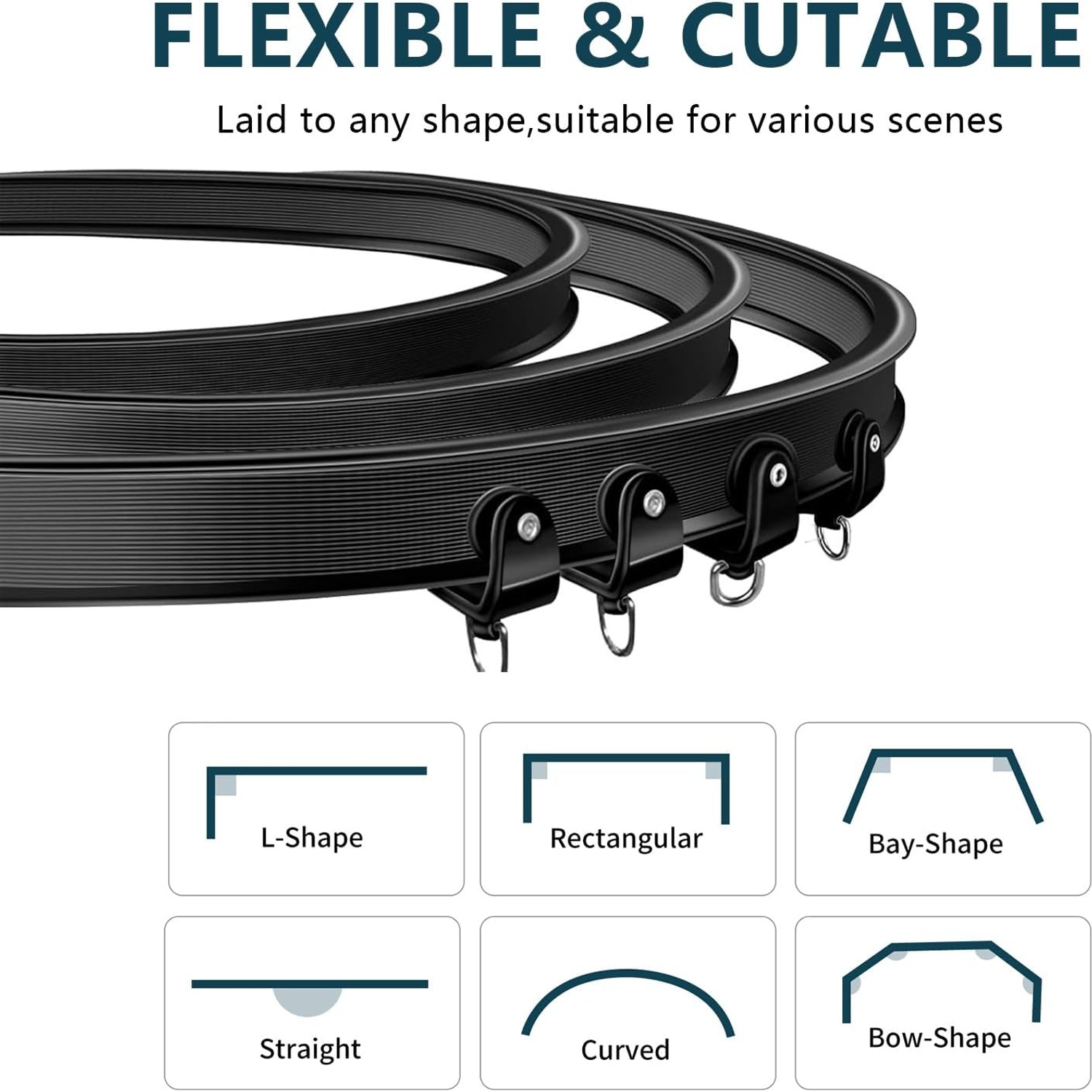
A flexible ceiling curtain track takes a different approach. The rail bends. You shape it to the path you actually need, fix it overhead, and the rollers travel around the curve without catching. One continuous run, no joints to fight.
How this track works
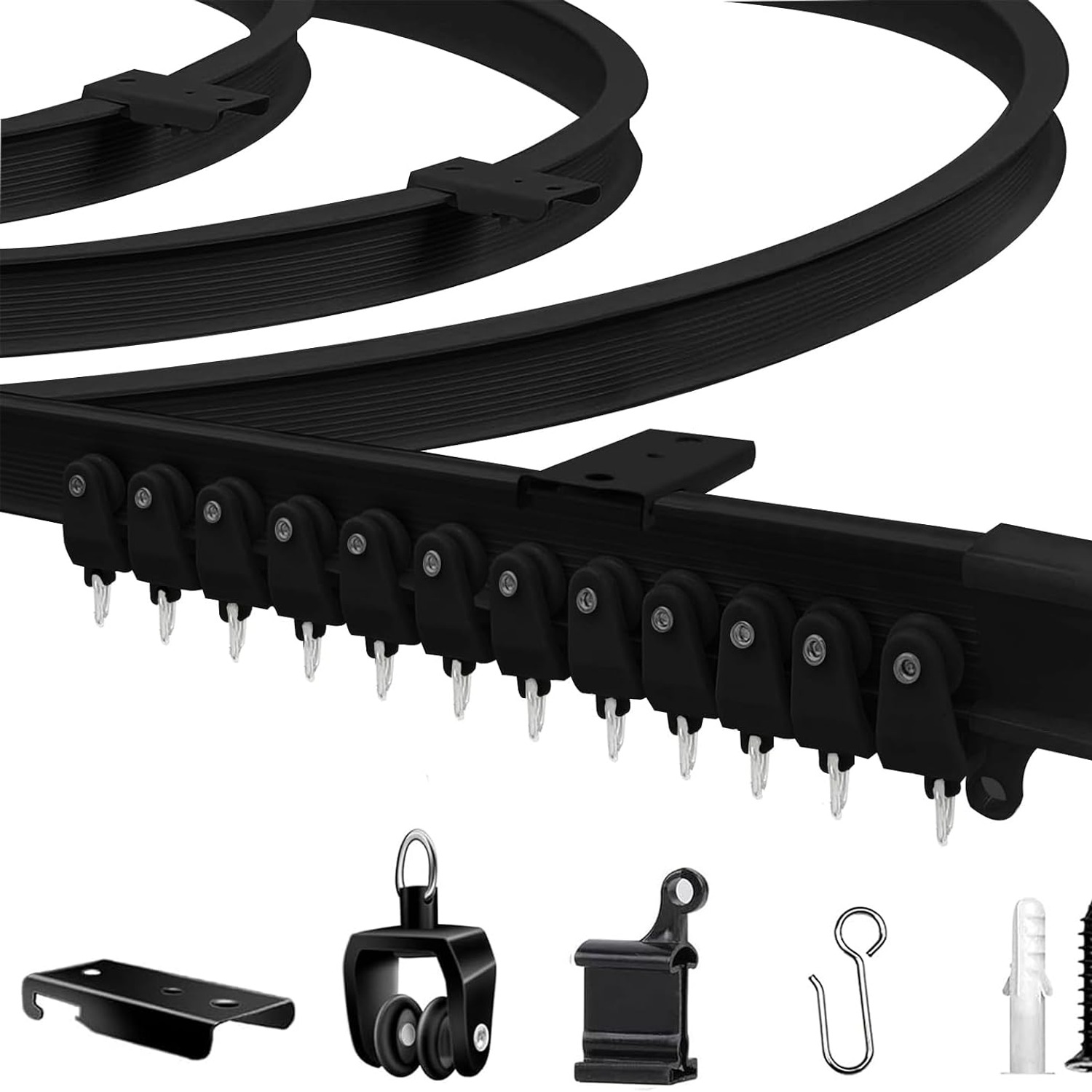
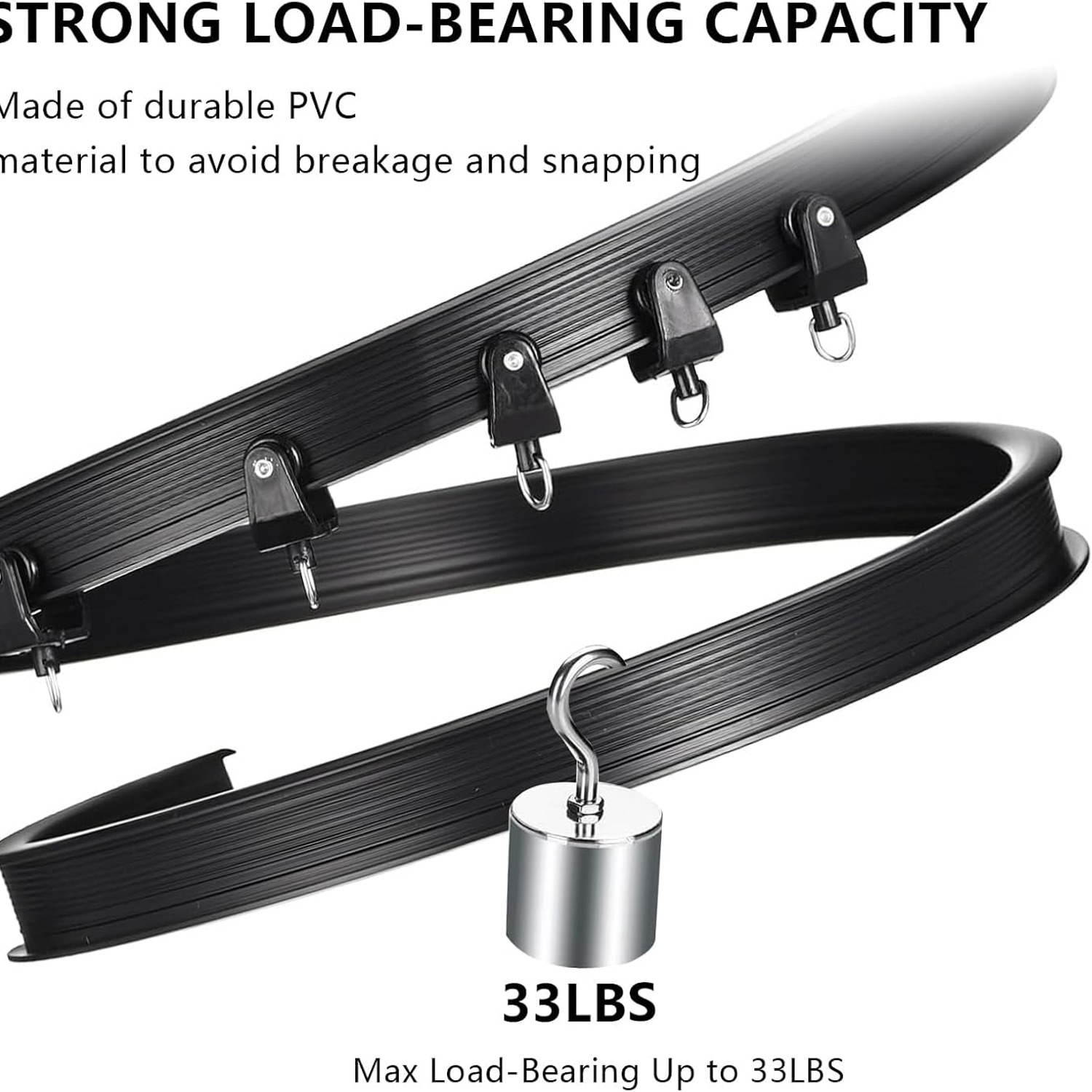
The rail in this kit is 9.8 ft, or 3 m, finished in black. It is built from PVC together with metal, plastic and stainless steel parts. The PVC section is what gives it the bend. You work the curve in with your hands, gradually, along the length rather than forcing a sharp angle at one point.
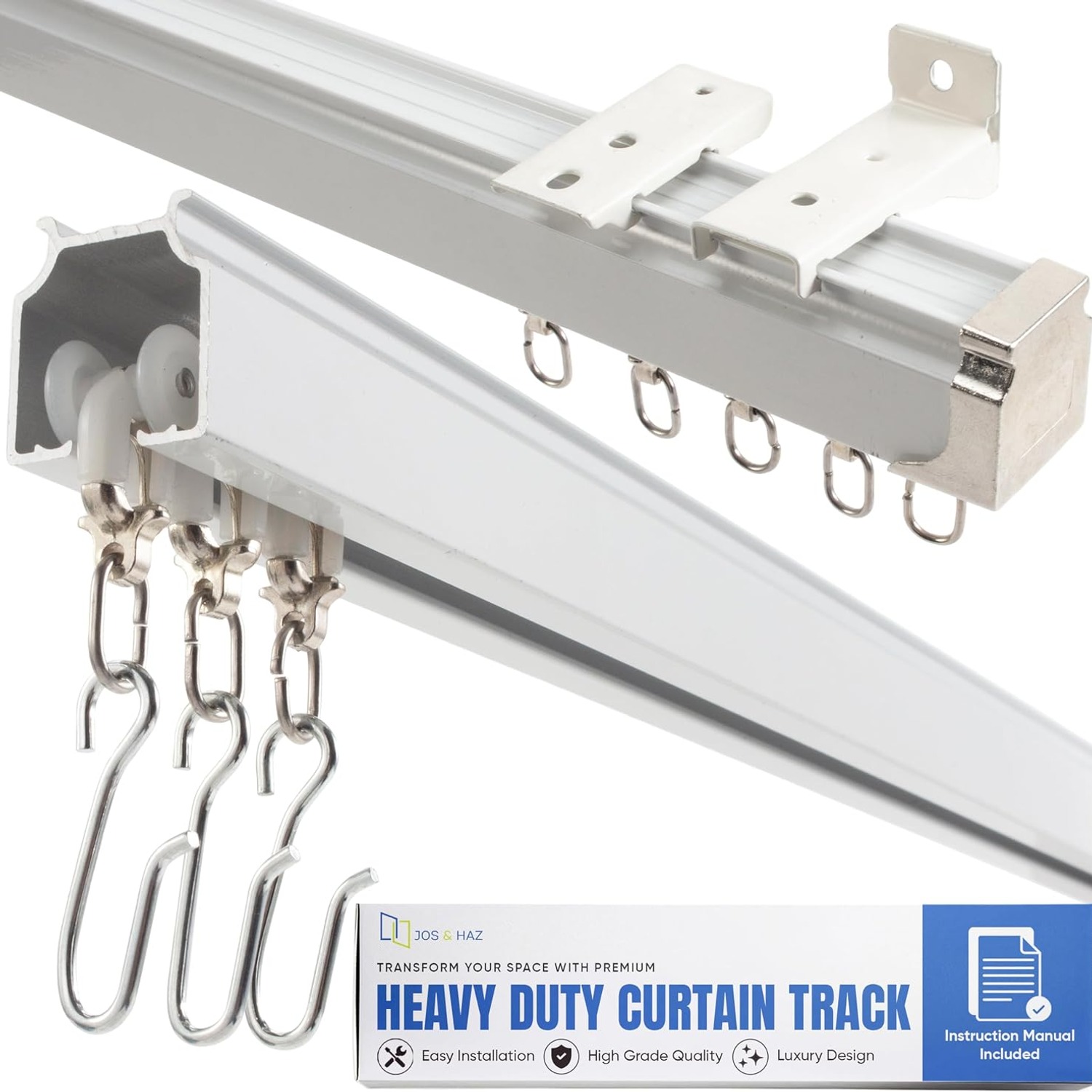
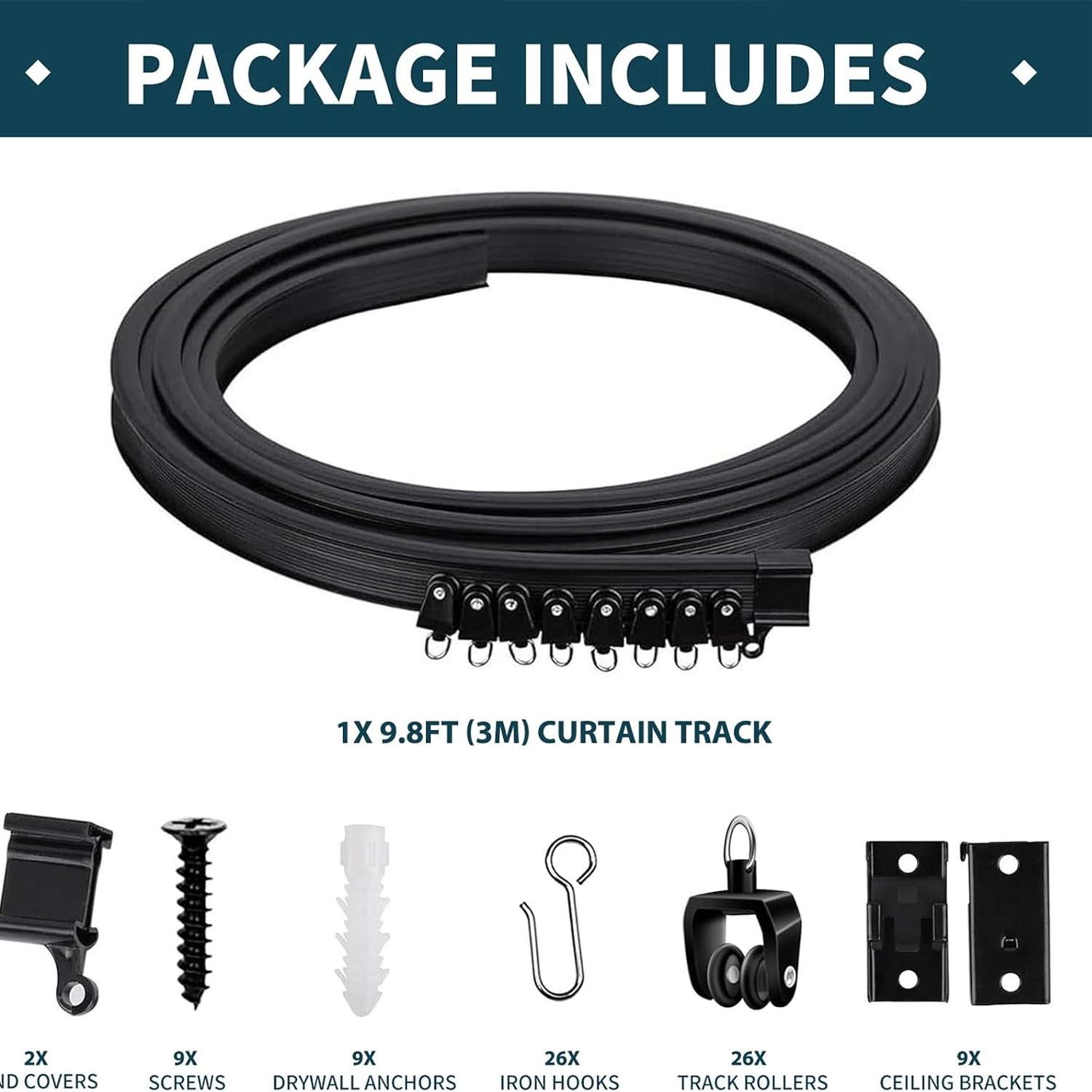
Inside the rail is a channel. Twenty-six rollers sit in that channel and slide along it. Each roller takes one of the 26 iron hooks supplied, and the hooks attach to your curtain header. Draw the curtain and the rollers carry it along, which is quieter and smoother than rings dragging across a metal pole.
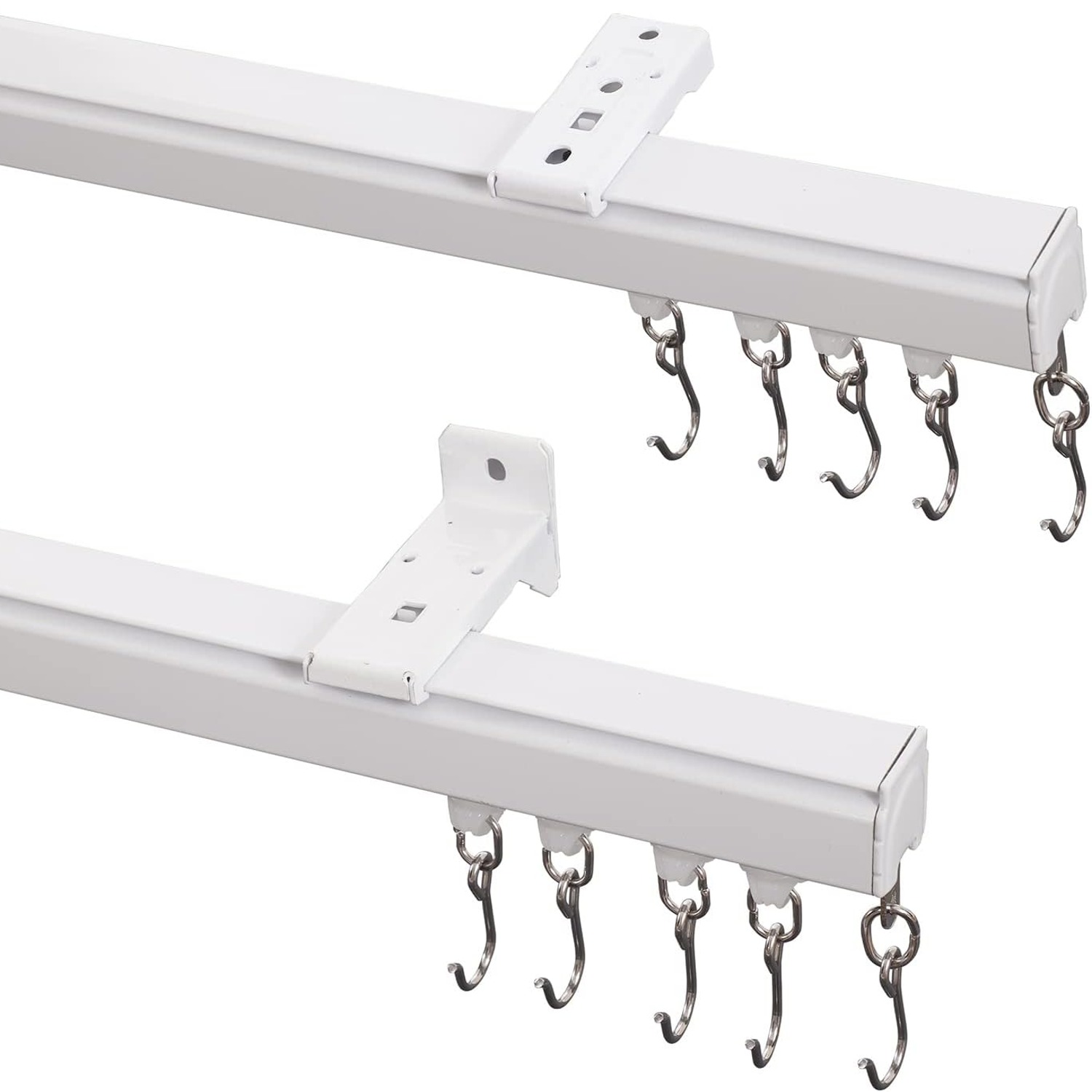
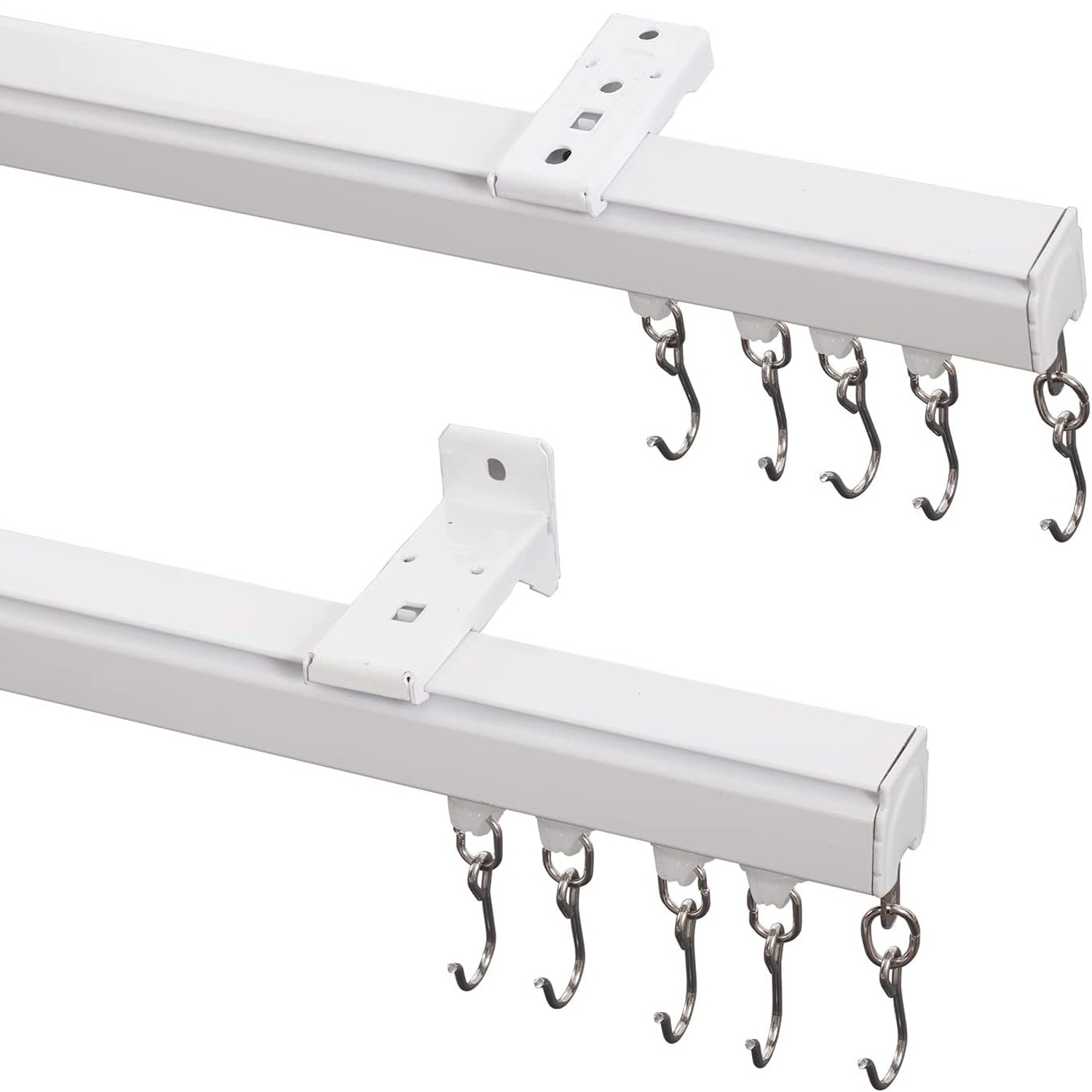
Mounting is overhead. Nine ceiling brackets hold the rail up, with nine drywall anchors and nine screws supplied to fix them. Two end covers finish the ends so the rollers stay put and the cut edge looks tidy.
One detail worth knowing before you order: clips are not included. If your curtain uses clip-on rings rather than a hook-friendly header, add clips separately.
Who it suits
Bathrooms. Shower is one of the listed uses. A corner shower or an awkward alcove is exactly the situation a bendable rail handles well, because a straight rod simply will not reach both anchor points.
RVs, campers and vans. Both RV and camper appear in the stated use list. Van conversions are full of curves, and a rigid rod rarely sits flush. People looking for the best RV curtain track usually land on a flexible system for this reason. Cut the rail short, bend it to the roof profile, done.
Room dividers. Running a track across a ceiling turns one room into two when you need it, then opens back up when you do not. Studio apartments, shared bedrooms and home offices all benefit. It is the cheapest partition you can install without building anything.
Bedrooms and bed canopies. Because the rail bends, you can run it around three sides of a bed for a canopy or a privacy screen. Plan the shape on the ceiling with masking tape first, then mark your bracket points along that tape line.
Clinics, offices and workshops. Privacy curtains in treatment rooms, screening in a workshop, a quick blackout in a small screening space. If you are in a commercial setting, check local requirements for curtain fabric and hardware before you fit anything.
Checking the numbers before you buy
Two figures matter most here.
The first is length. You get 9.8 ft (3 m). Measure your opening and add a little either side so the curtain can stack back clear of the glass. If your run is shorter, the rail cuts down with a fine-tooth saw. If it is longer, you need more than one kit, and you should plan where the join lands.
The second is weight. The maximum recommended load is 35 pounds. Most light and medium curtain panels sit comfortably under that. Heavy velvet drapes, multi-layer blackout sets or a very wide single panel can creep up on it. If you already own the curtain, put it on a bathroom scale. If you are buying one, the product weight is usually on the label.
Also check your ceiling. The supplied anchors are drywall anchors. A drywall ceiling is fine. A concrete ceiling needs masonry plugs and screws rated for the job, which you would buy separately. Finding joists with a stud finder and landing screws into timber gives you the strongest result of all.
Fitting it without drama
Measure twice. Mark your bracket positions on the ceiling in pencil, spaced evenly across the run. Nine brackets across 3 m works out to roughly one every 37 cm, which is close enough for most curtains. Tighten that spacing where the curtain is heaviest, and put a bracket near every bend.
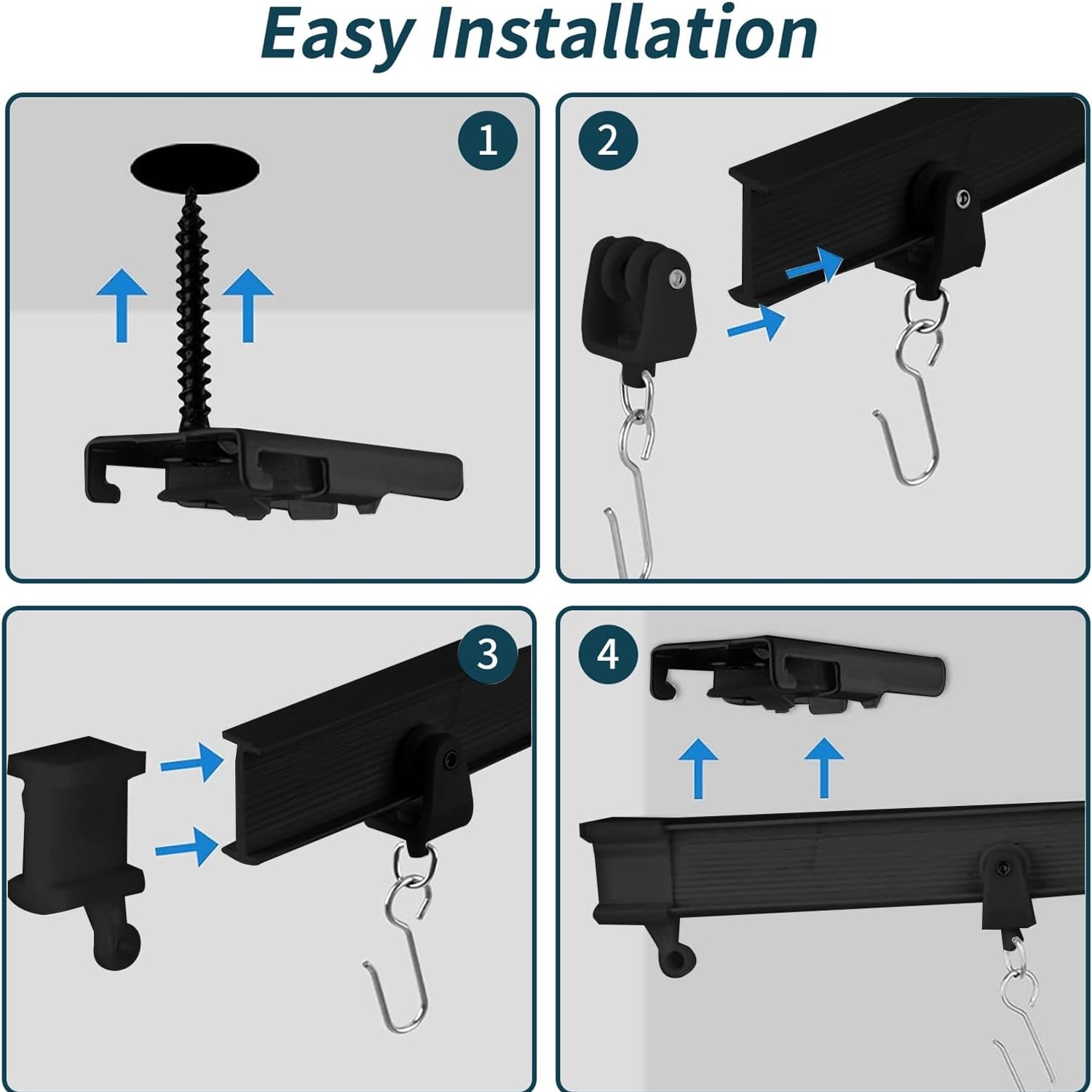
Shape the rail before you lift it. Lay it on the floor, work the curve in slowly with both hands, and compare it to your marked line on the ceiling. Gentle arcs beat sharp angles. A tight kink will narrow the channel and the rollers will stick there forever.
Cut to length next if you need to. Mark the line square, saw slowly, then clean up the edge so nothing catches.
Load the rollers in before you fit the end covers. This is the step people forget, and getting rollers in after both ends are capped is a nuisance. Slide all 26 in, fit the covers, then mount.
Drill your pilot holes, push in the anchors, fit the brackets, then clip the rail up. Hang the curtain last and run it back and forth a few times to find any tight spots.
Keeping it running well
Maintenance is light. The most common complaint with any ceiling mount curtain rail is a roller that drags, and the cause is almost always dust and lint in the channel. Run a dry brush or a vacuum nozzle through it every few months.
Wipe the outside of the rail with a soft, damp cloth and dry it off. Avoid solvents and abrasive pads, which mark the finish. In a bathroom, dry the track occasionally so moisture does not sit on the fixings.
Check the bracket screws once or twice a year. This matters more in an RV, where constant vibration loosens things that would stay put in a house. A quarter-turn on each screw takes two minutes.
If a roller breaks, you can pop the end cover off and swap it rather than replacing the whole run. Keep a spare or two from your original 26 if you did not use them all.
The short version
This is a 9.8 ft (3 m) black bendable rail that mounts to the ceiling and holds up to 35 pounds. It bends into L, U and rounded shapes, cuts shorter if you need it to, and arrives with 26 rollers, 26 hooks, 9 brackets, 9 anchors, 9 screws and 2 end covers. Clips are not in the box.
Choose it when your opening is not a straight line, or when you want a curtain overhead rather than on a wall-mounted pole. Measure your run, weigh your curtain, check what your ceiling is made of, and the rest is an hour with a drill.