
The complete guide
Flexible Ceiling Curtain Track Buyer's Guide
The problem with straight rods
Curtain hardware is mostly designed for a flat wall with a rectangular window in it. That covers a lot of houses, but it leaves a long list of jobs unsolved. Bay windows angle outward. Shower recesses sit in corners. Caravan and RV walls curve as they meet the roof. A studio flat might need a curtain to run across the room and then turn to screen off the bed. In all of those cases a rigid rod either does not fit at all, or it needs corner joints, extra brackets and a fair bit of guesswork.
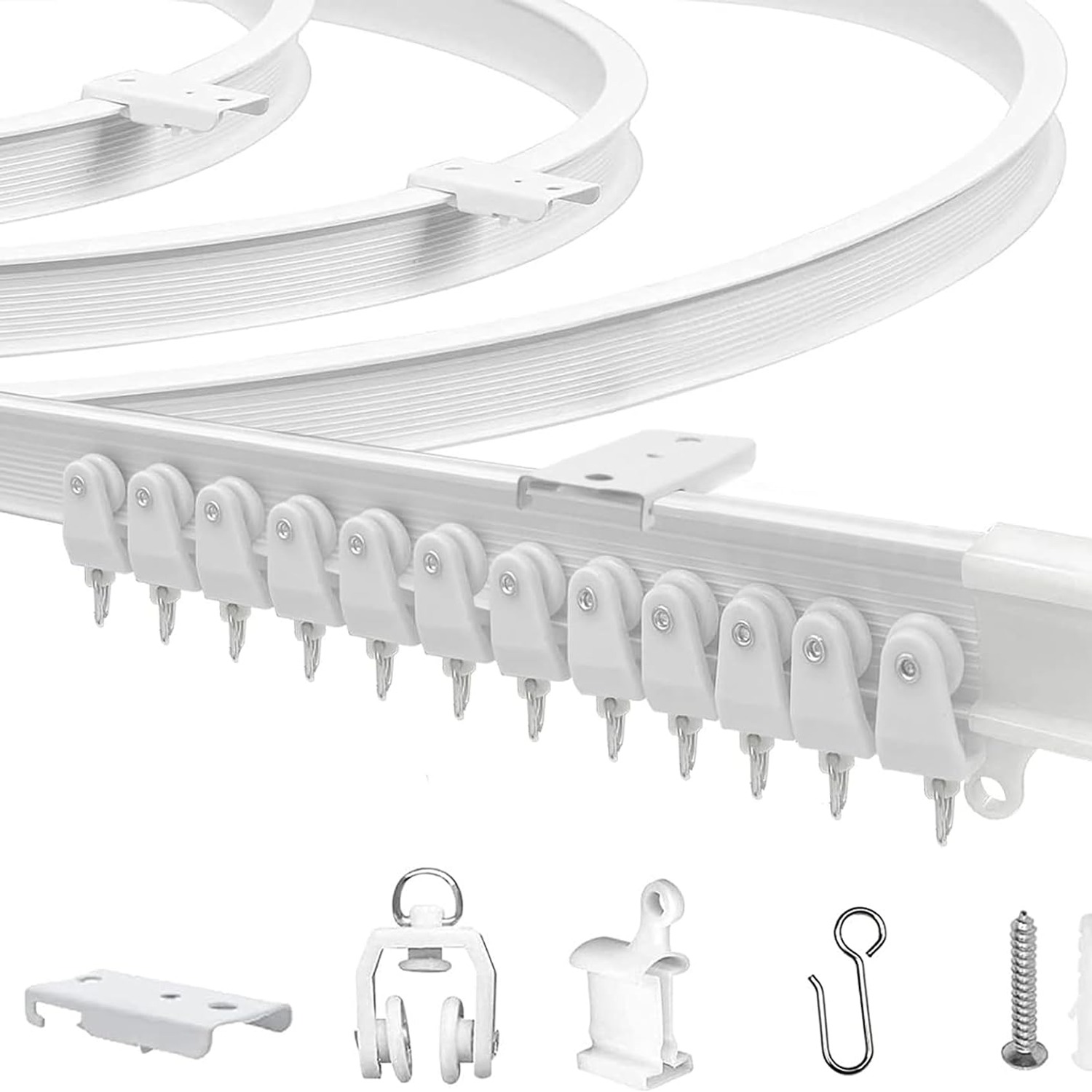
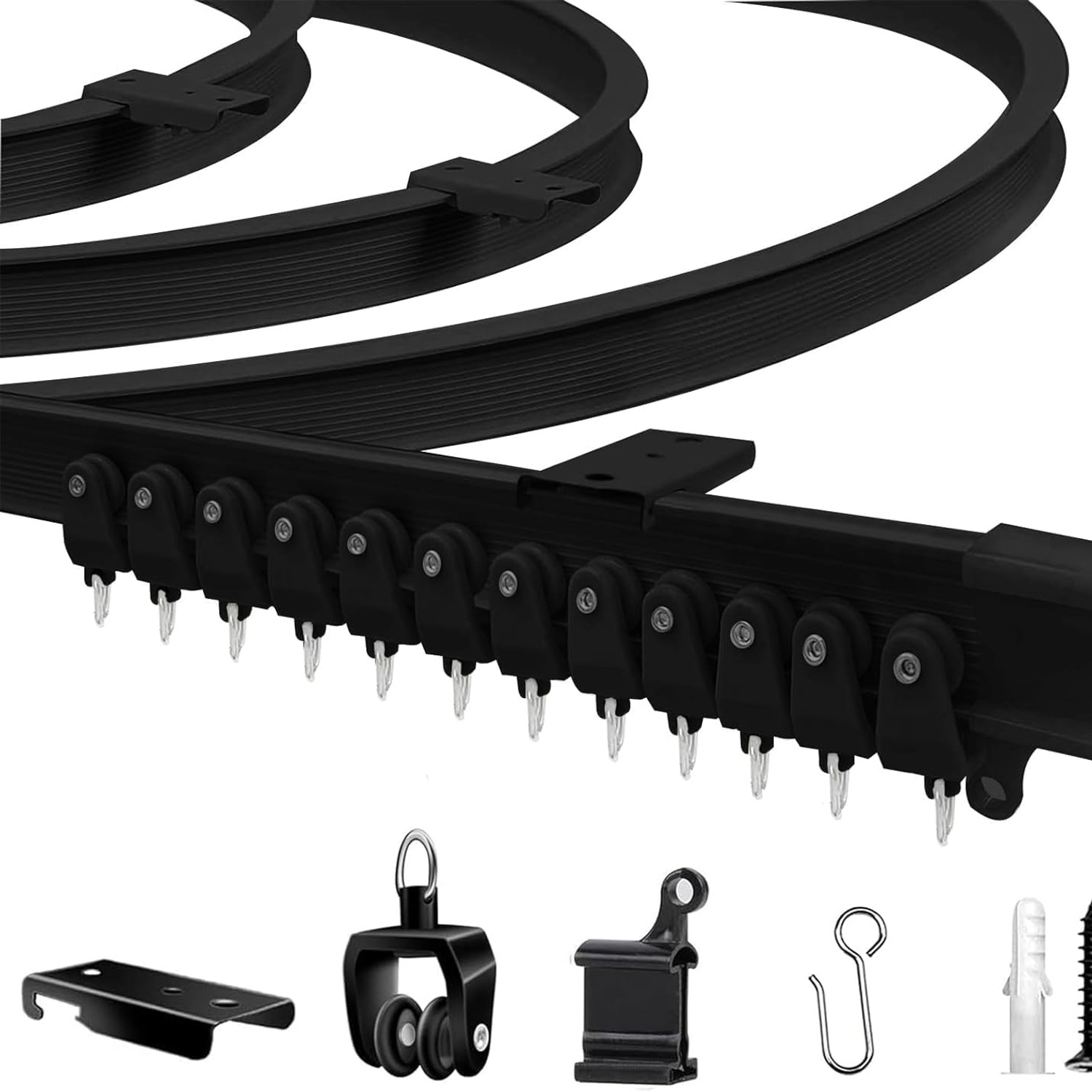
A flexible ceiling curtain track takes a different approach. Instead of a straight bar, you get a channel that bends. You shape it to the line your room actually has, fix it to the ceiling, drop rollers into the channel, and hang the curtain from hooks on those rollers. The curtain follows the bend because the track does.
That is the whole idea, and once you have used one it is hard to go back to fighting with corner connectors.
How this track works
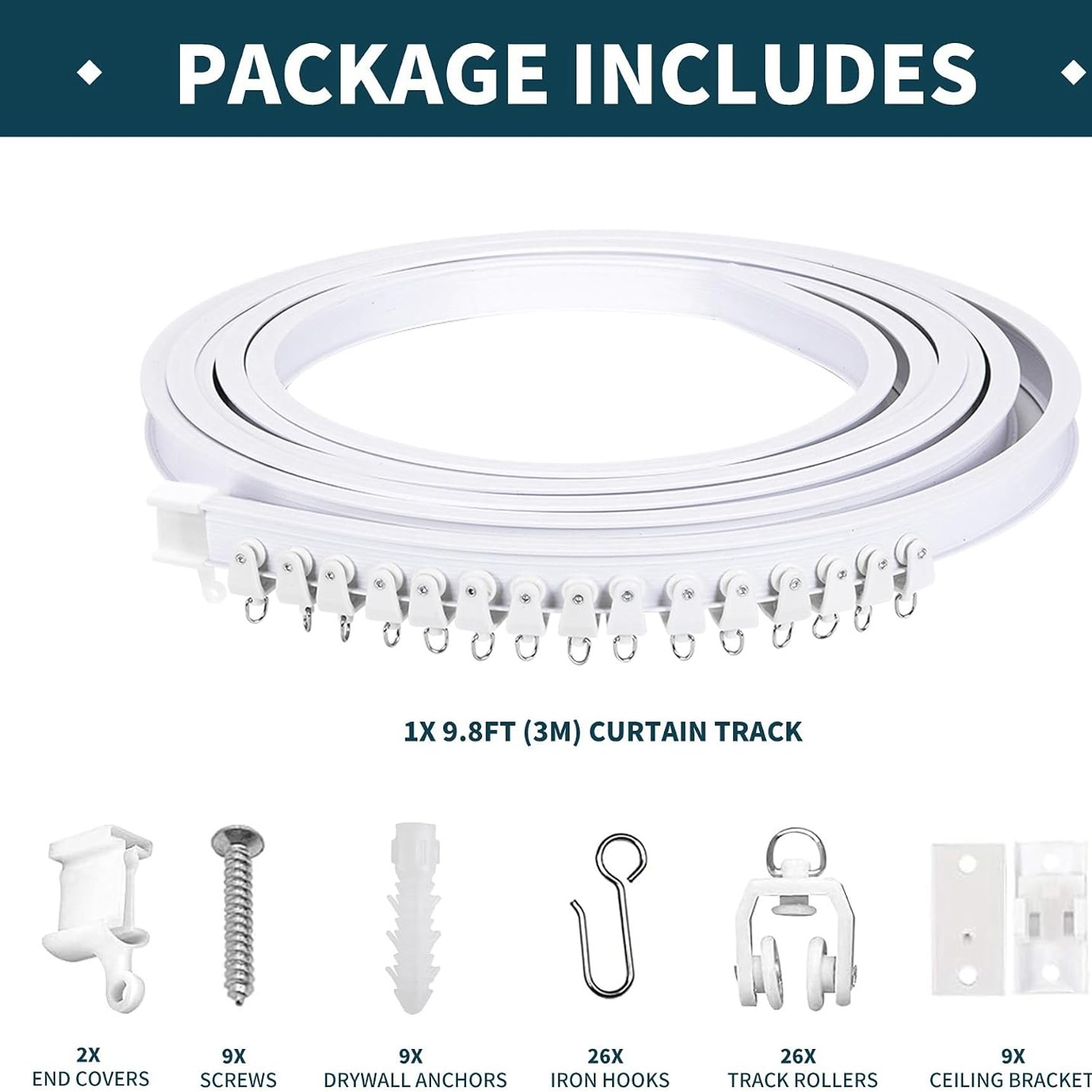
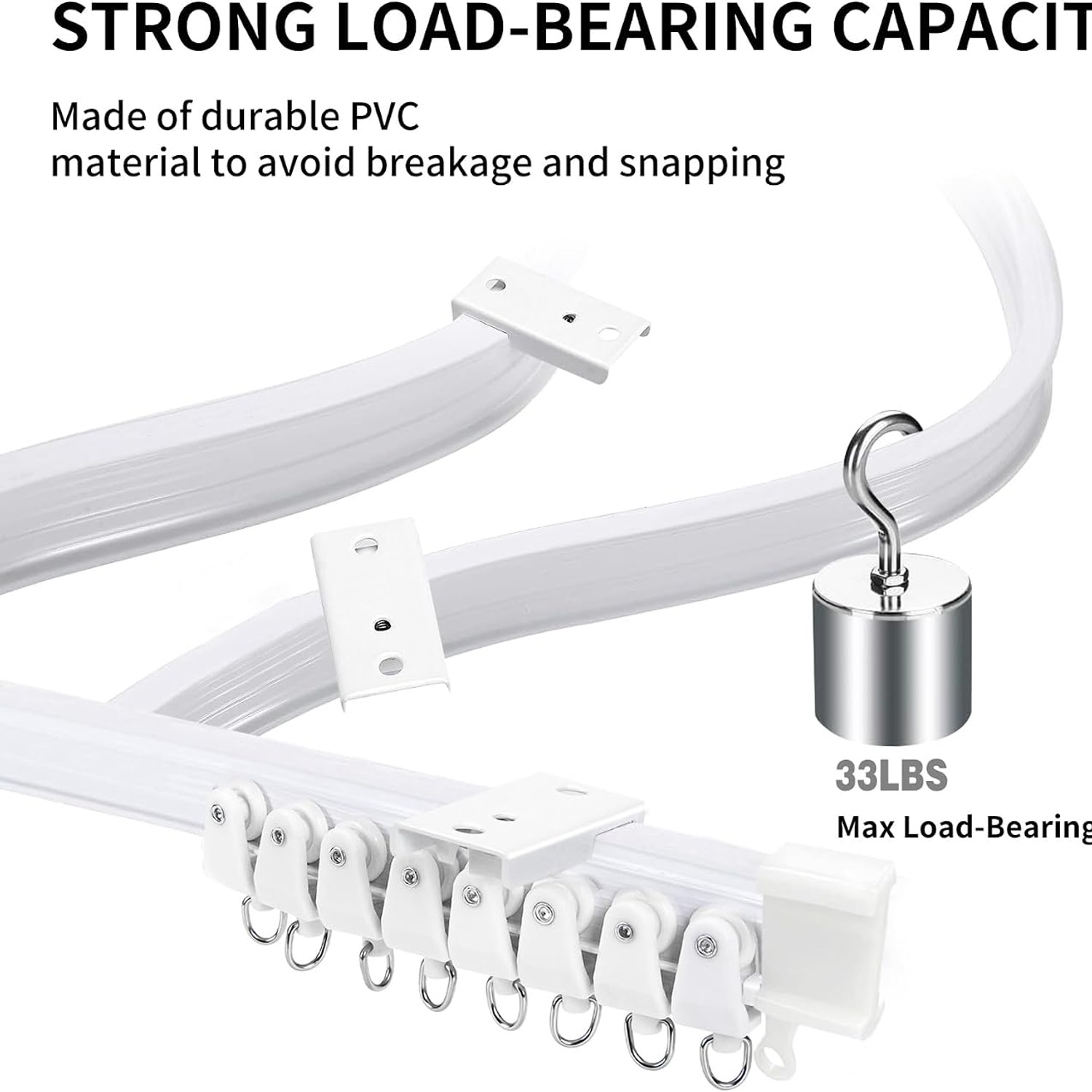
The track in this kit is 9.8 ft long, which is 3 meters. It is white, and it is built from PVC with metal, plastic and stainless steel parts. The PVC gives the channel its flex. The metal components handle the load and the fixing points.
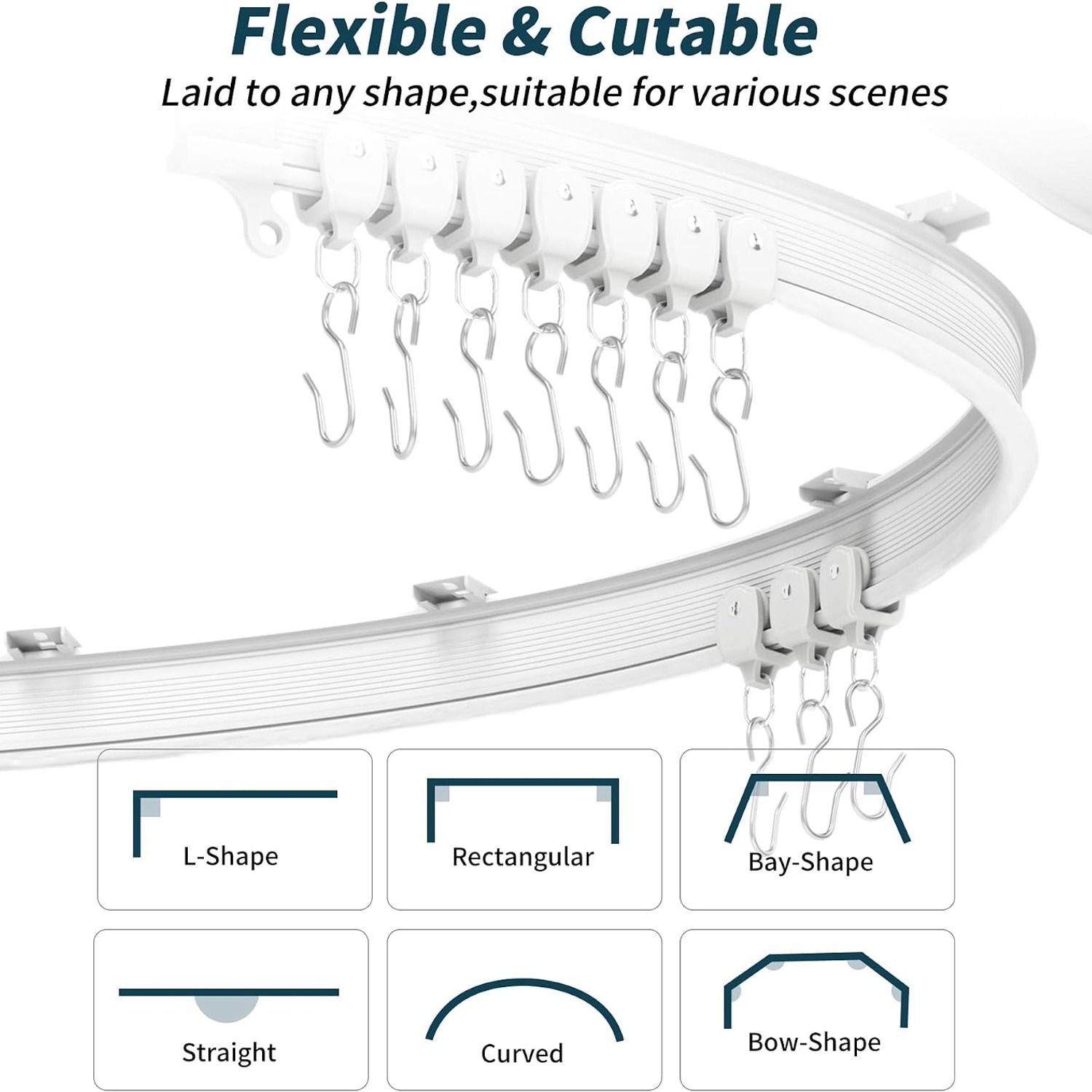
You can bend it into an L shape, a U shape or a gentle curve. You can also cut it shorter, which most people do, because very few single windows need a full three meters. A hacksaw or any fine-toothed saw will get through it cleanly.
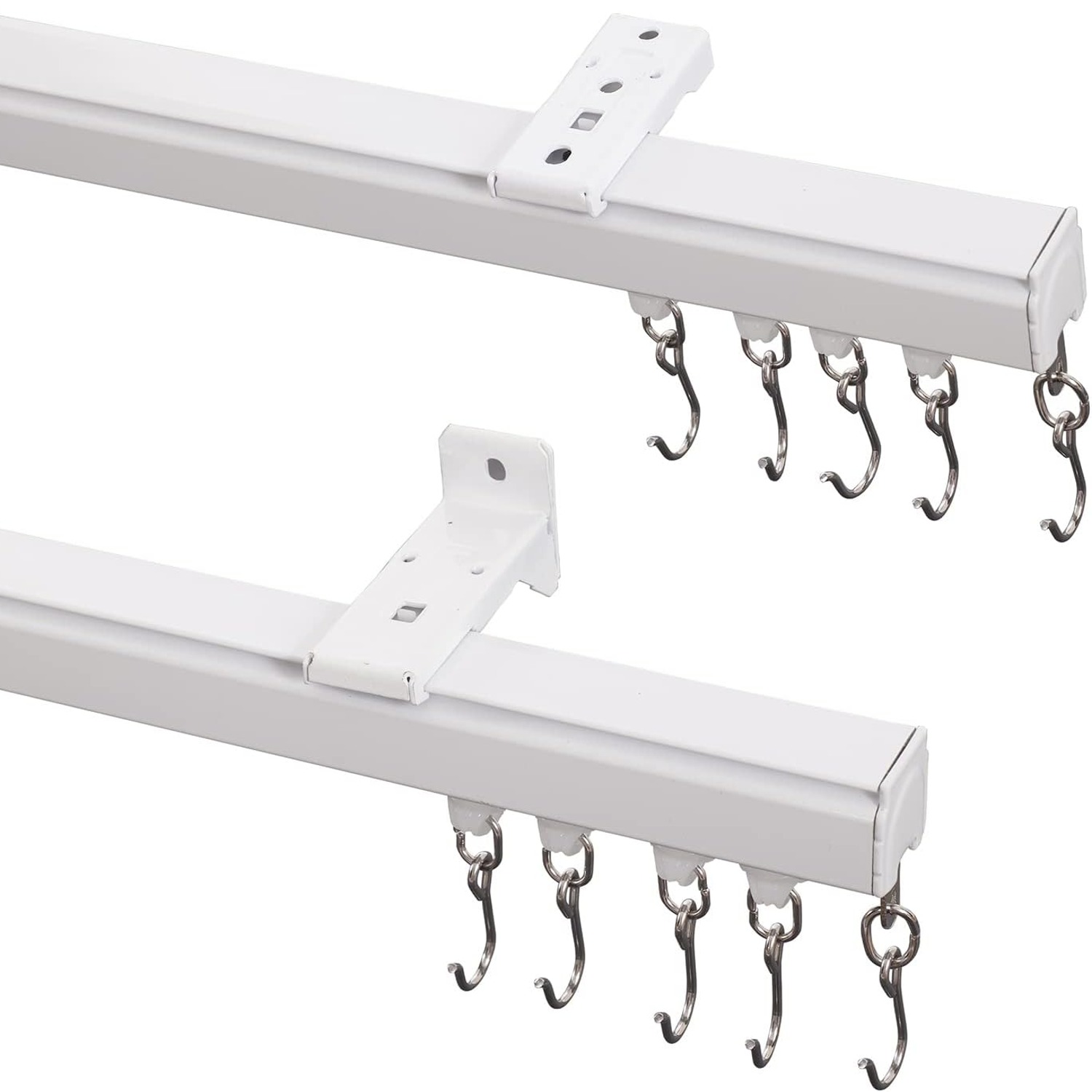
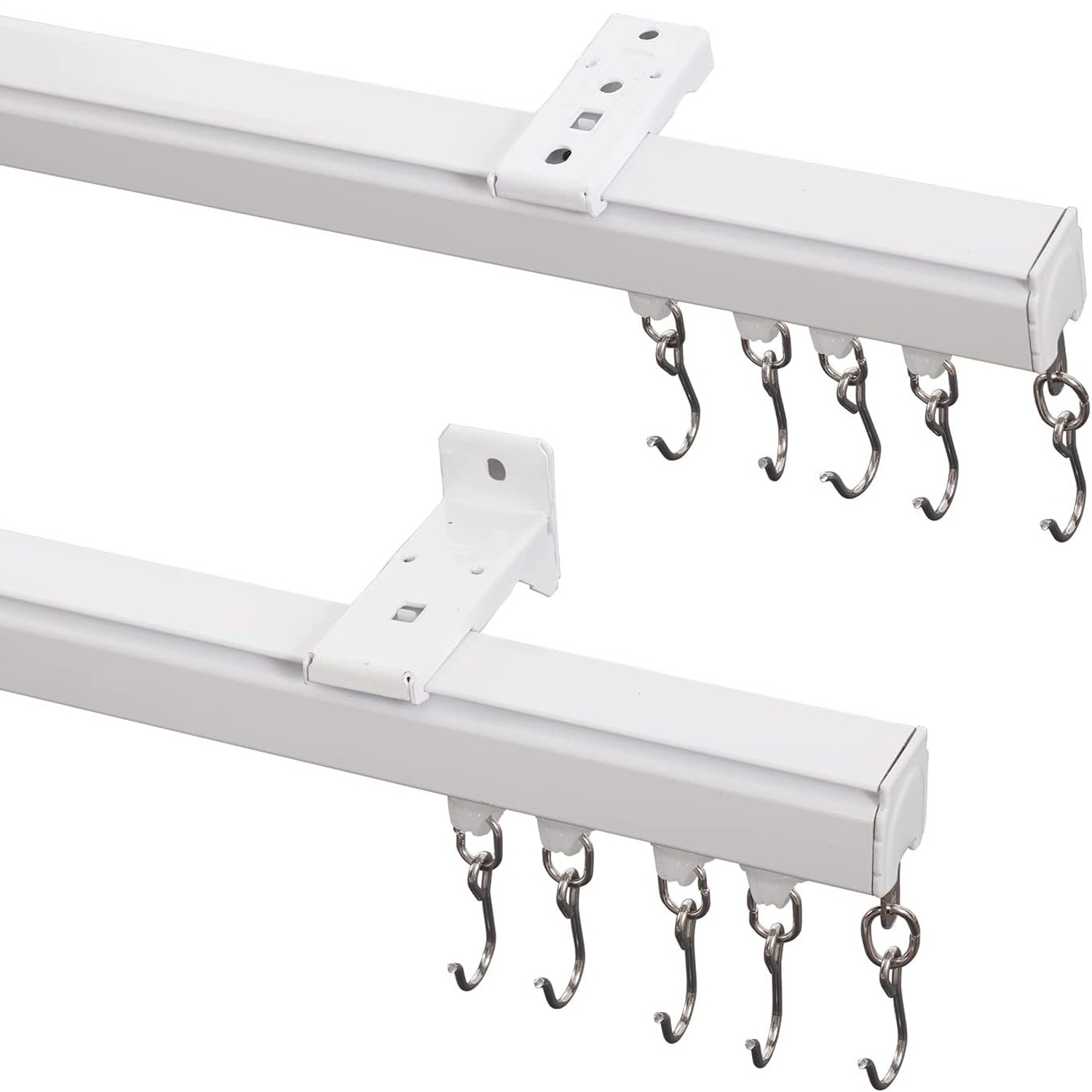
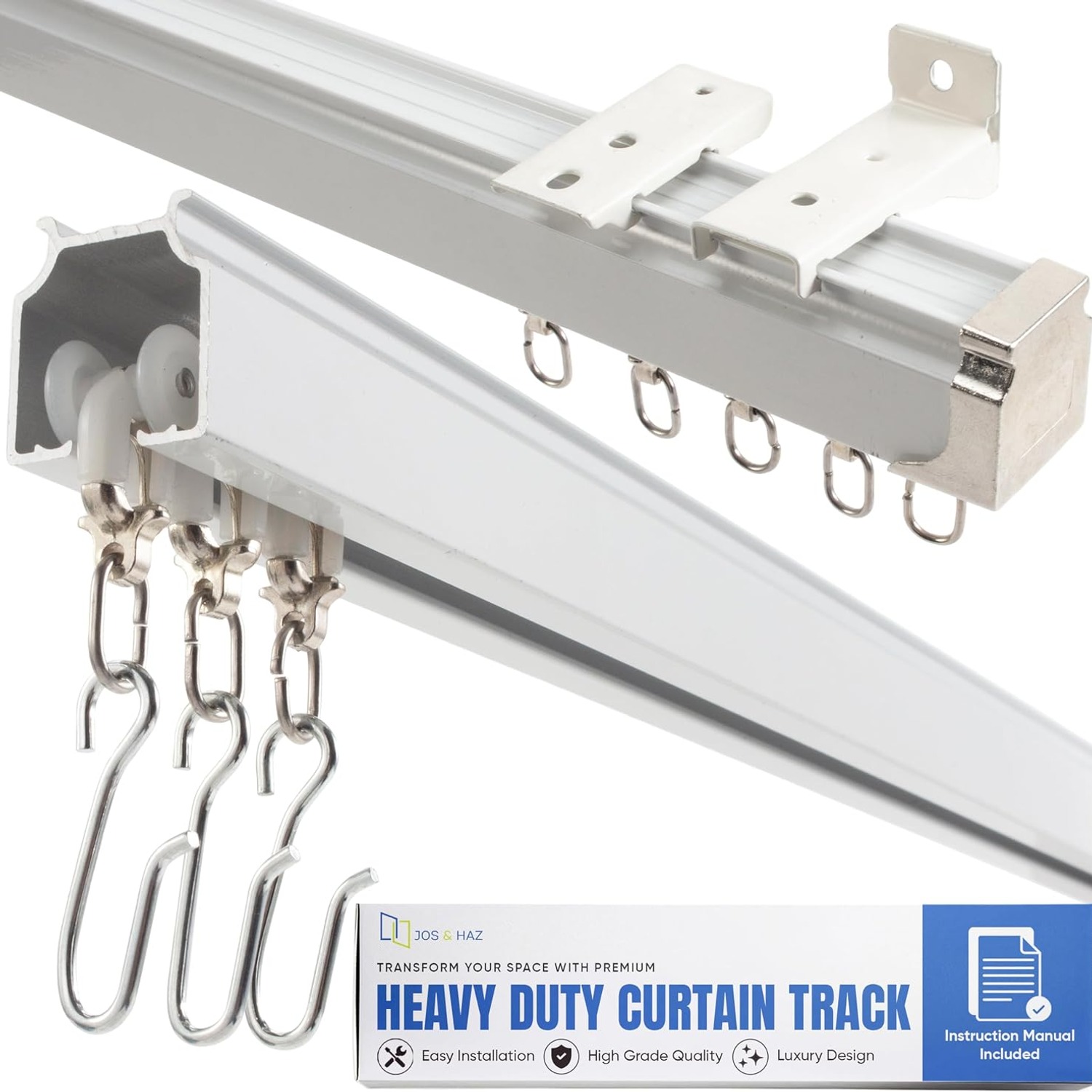
Inside the channel sit 26 rollers. Each roller carries one of the 26 iron hooks, and the hooks carry the curtain. Because the curtain rides on wheels rather than sliding over a bar, the pull is lighter and the sound is softer. Two end covers finish off the ends so rollers do not escape.
Fixing is from above. Nine ceiling brackets come in the box with nine drywall anchors and nine screws. Nine brackets across three meters gives you roughly one every 33 cm if you spread them evenly, which is plenty of support for most curtains. You will want to cluster a couple of them around any bend, because that is where the track works hardest.
The maximum weight recommendation is 35 pounds. Keep your curtain under that and the system behaves.
Who it suits
People with bay windows. A curved curtain track for a bay window is the obvious case. One continuous run follows the angles, the curtain pulls smoothly from one side to the other, and there are no gaps at the corner joints where light sneaks through.
Caravan and RV owners. Vehicle walls rarely run straight, and the ceiling line usually curves. A bendable rail follows it. Just check the panel thickness before you drill, and use fixings suited to what you are screwing into. The drywall anchors supplied are for drywall, not thin ply or composite panel.
Anyone dividing a room. A room divider curtain track is one of the cheapest ways to make one space behave like two. Run it across the ceiling, hang a heavy-ish fabric, and you have a sleeping area, a home office corner, or a guest nook that disappears when you pull the curtain back.
Bathrooms with awkward shower areas. A ceiling mounted shower curtain track can wrap around a corner recess where a straight rail would need two separate poles. Mounting overhead also means you are not drilling into tile.
Renters and people who hate drilling walls. Fixing to the ceiling leaves the wall face untouched. It also lets the curtain hang from ceiling to floor, which makes almost any room look taller.
How to choose and measure
Start with the run. Measure the total length the curtain has to cover, following every bend. If your bay has three faces, measure all three and add them together. If you are turning a corner, measure both legs. Write the total down. If it comes to 3 meters or less, one track covers it.
Next, think about shape. Sketch the run roughly on paper and mark where the bends go. This matters because you want a bracket near each bend, and knowing the shape in advance tells you how to divide up the nine brackets.
Then weigh your curtain, or at least estimate it. A pair of lined cotton curtains for a standard window is usually well under 35 pounds. A full-length interlined blackout pair spanning three meters is the kind of thing that gets close to the limit. Sheers and shower curtains are nowhere near it.
Last, check the ceiling. Drywall is what the supplied anchors are for. Concrete, timber joists and vehicle panels all need different fixings, and sorting that out before you start saves an annoying trip to the hardware shop halfway through.
Installing it without drama
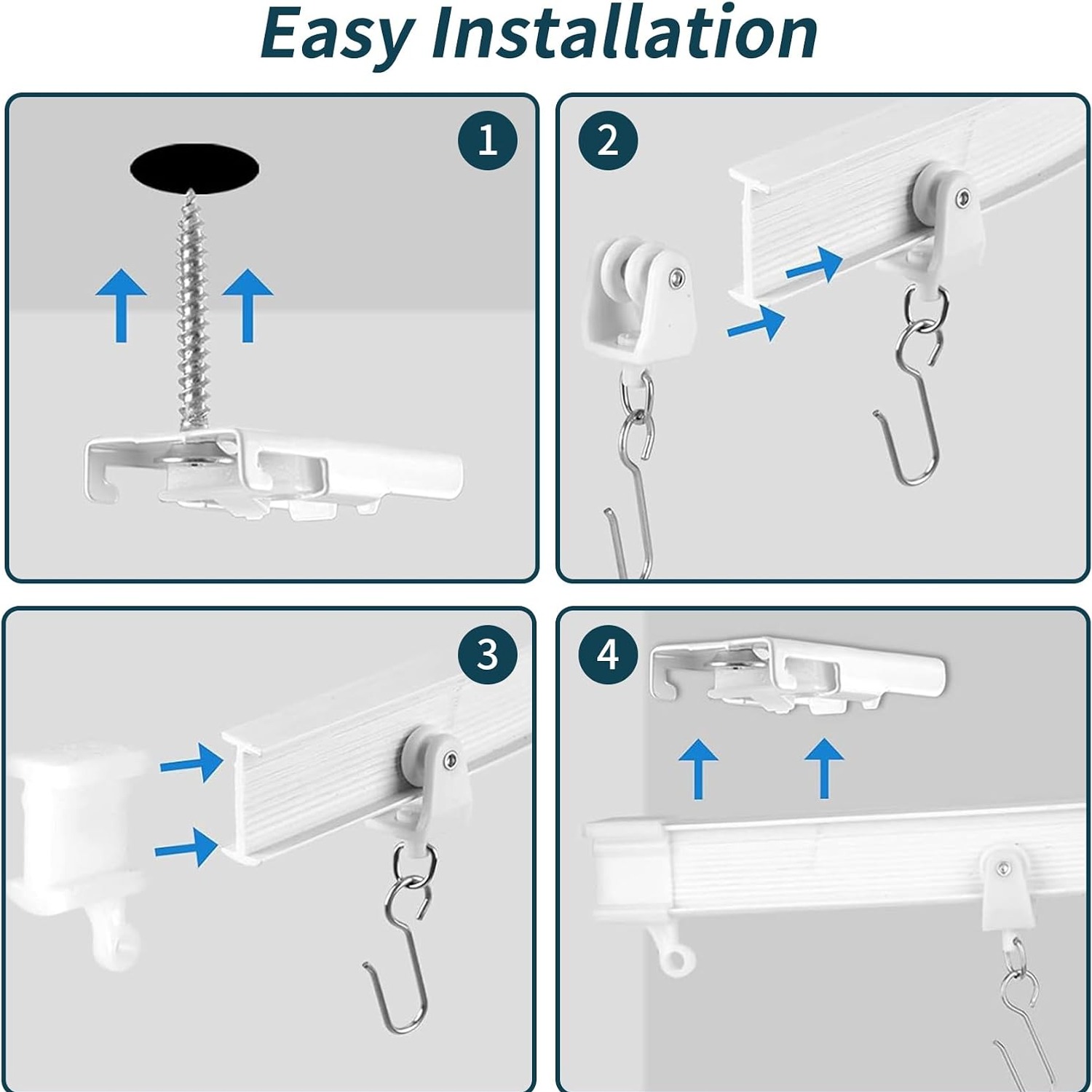
Mark your bracket positions first, with the track held up where it will go. A laser line or a long spirit level is worth the effort here, because a track that drifts downward at one end is obvious once the curtain is up.
Shape the bends before you fix anything. Ease the track into the curve gradually along a section rather than forcing a sharp angle at one point. A smooth radius lets the rollers pass through without catching. A kink will always be the spot where the curtain snags.
Fix the brackets, clip the track in, then load the rollers from one open end before you cap it. Twenty-six rollers is generous for most widths. For an even gather, space your hooks roughly 10 to 15 cm apart. Closer spacing gives neater folds and spreads the weight better.
Fit the end covers last. Then run the curtain back and forth a few times to check for drag points.
Keeping it running well
There is not much to it. Wipe the track and rollers with a soft cloth, dry or slightly damp. Skip the solvents and anything abrasive, because PVC does not love them.
If the glide gets rough, it is almost always dust or lint in the channel. Pull a few rollers out, clear the track, put them back. Bathrooms can get soap residue in the channel too, so an occasional wipe helps there.
Once or twice a year, check the bracket screws. Ceiling fixings take a small tug every time someone pulls the curtain, and over a few years that adds up. Tighten anything that has worked loose.
The short version
If your window or your room is not a neat rectangle, a flexible ceiling curtain track is usually the simplest answer. This one gives you 9.8 ft (3 m) of bendable white track, 26 rollers, 26 hooks, 9 ceiling brackets with anchors and screws, and 2 end covers, all rated to 35 pounds. Clips are not included, so buy those separately if your curtain needs them.
Measure the full run including the bends, check what your ceiling is made of, keep the curtain weight sensible, and support the bends properly. Do that and you get a curtain that follows the shape of the room instead of ignoring it.