


The complete guide
How To Choose A Ceiling Curtain Track That Actually Lasts
The problem with hanging curtains the usual way
A curtain rod looks simple on the shelf. Two brackets, one pole, done. Then you hang a lined blackout curtain from it and the middle starts to dip. The rings catch on the join. Pulling the curtain shut makes a noise you can hear in the next room, and after a couple of seasons the screw holes have widened slightly and the whole thing sits a few millimeters off level.
Rods are fine for a light panel over a small window. They struggle with weight, with width, and with anything you open and close several times a day.
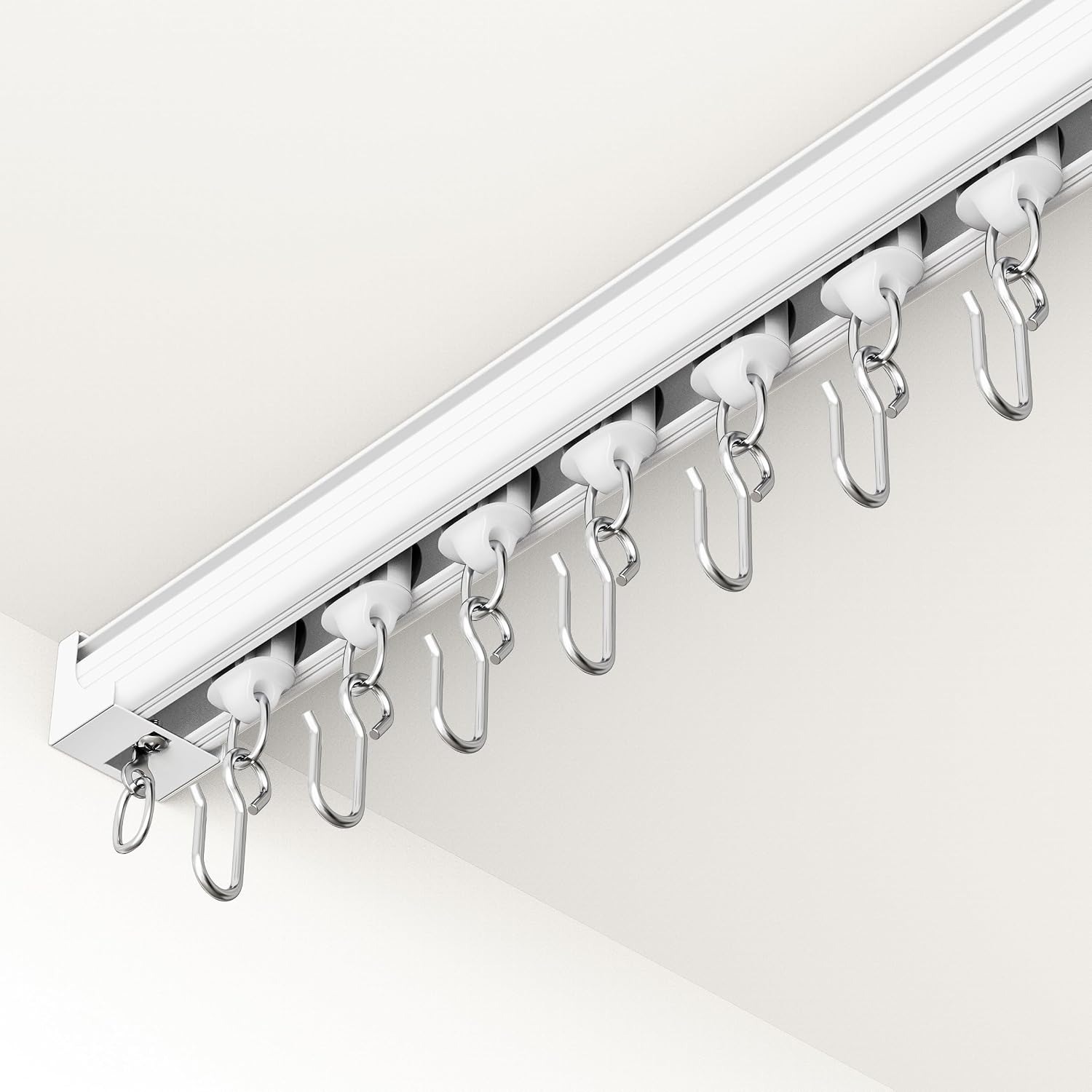
A ceiling curtain track solves it differently. Instead of rings running over the outside of a pole, small rollers run inside an aluminum channel. The channel is fixed at multiple points along its length, not just at the two ends, so the load spreads out. There is nothing to catch on, because the moving parts are enclosed. And because the rail can sit flush against the ceiling, the curtain drops in one clean line from the top of the room to the floor.
That full-height drop is why designers keep reaching for ceiling tracks even when a rod would technically do the job. A curtain that starts at the ceiling makes the wall read as taller. A curtain that starts 20 cm above the window frame just looks like a curtain.
How this track works
This kit covers a span of 6 to 9 feet using three aluminum sections, two connectors and two end caps. The connectors slide inside the rail ends so the channel stays continuous and the rollers pass over the join without a bump.
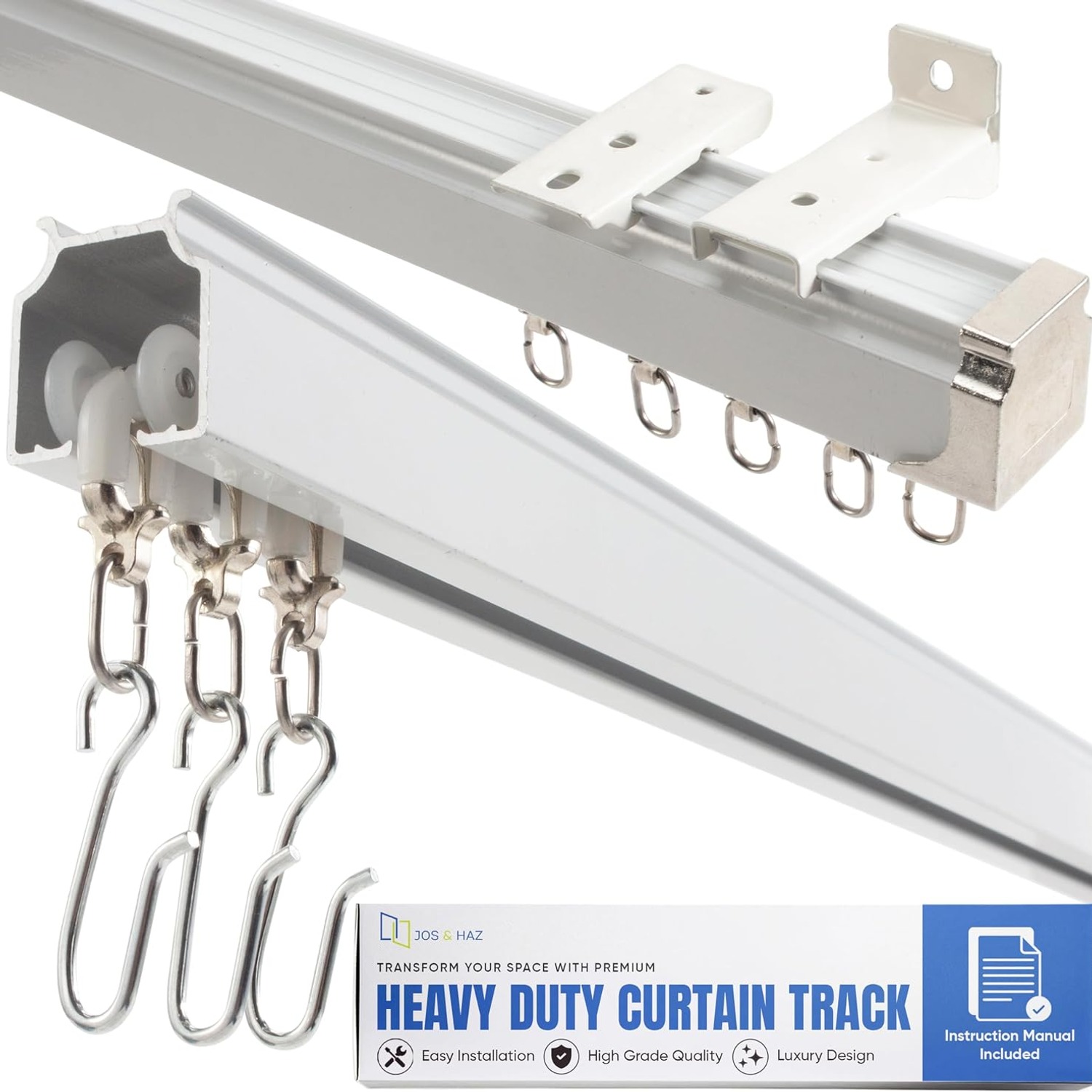
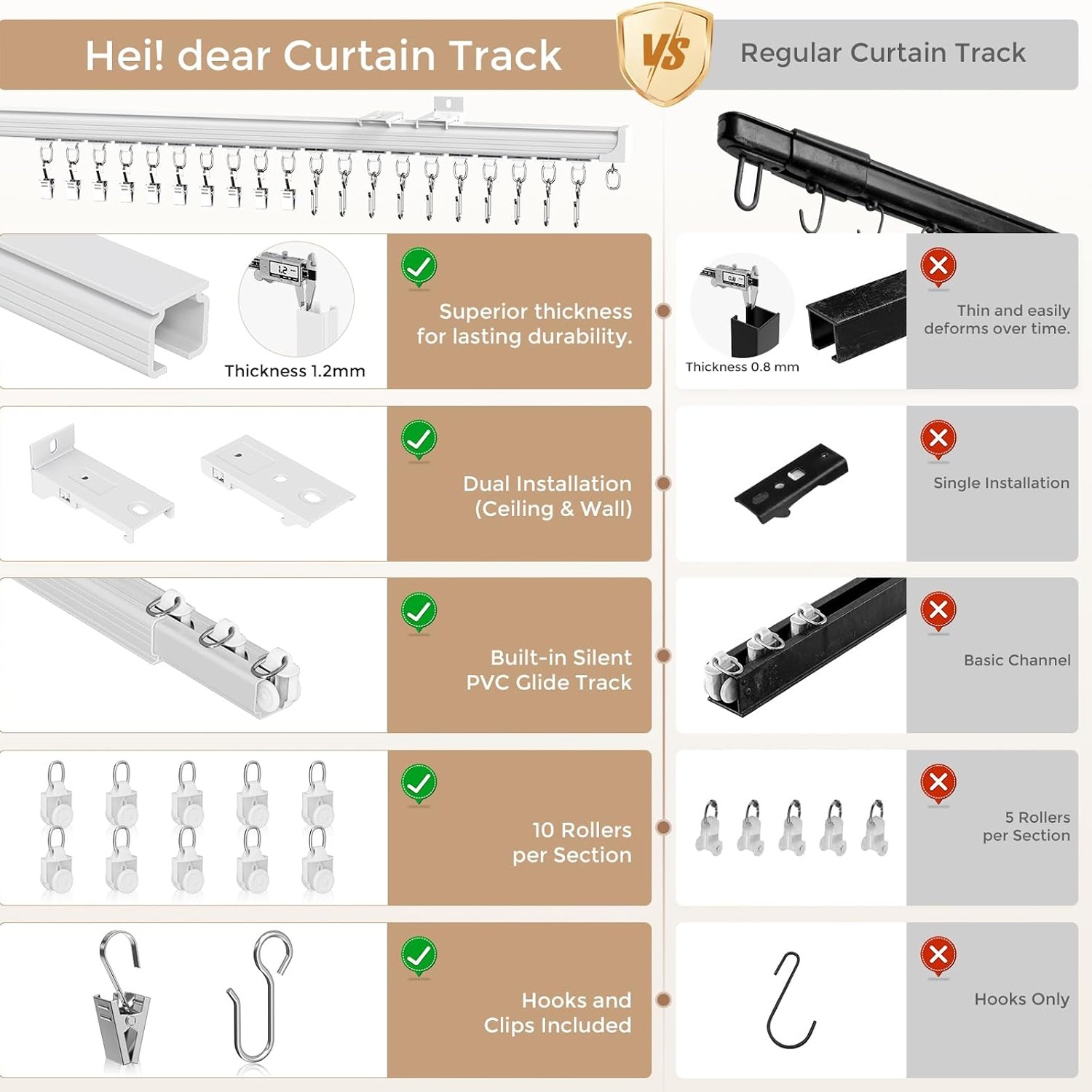
Inside the channel sit thirty rollers. Each one carries a hook or a clip, and your curtain hangs off that. The rollers do the work, so the fabric never touches the rail itself. That is where the quiet comes from. There is no metal ring dragging across a metal pole, just a small wheel in a smooth groove.
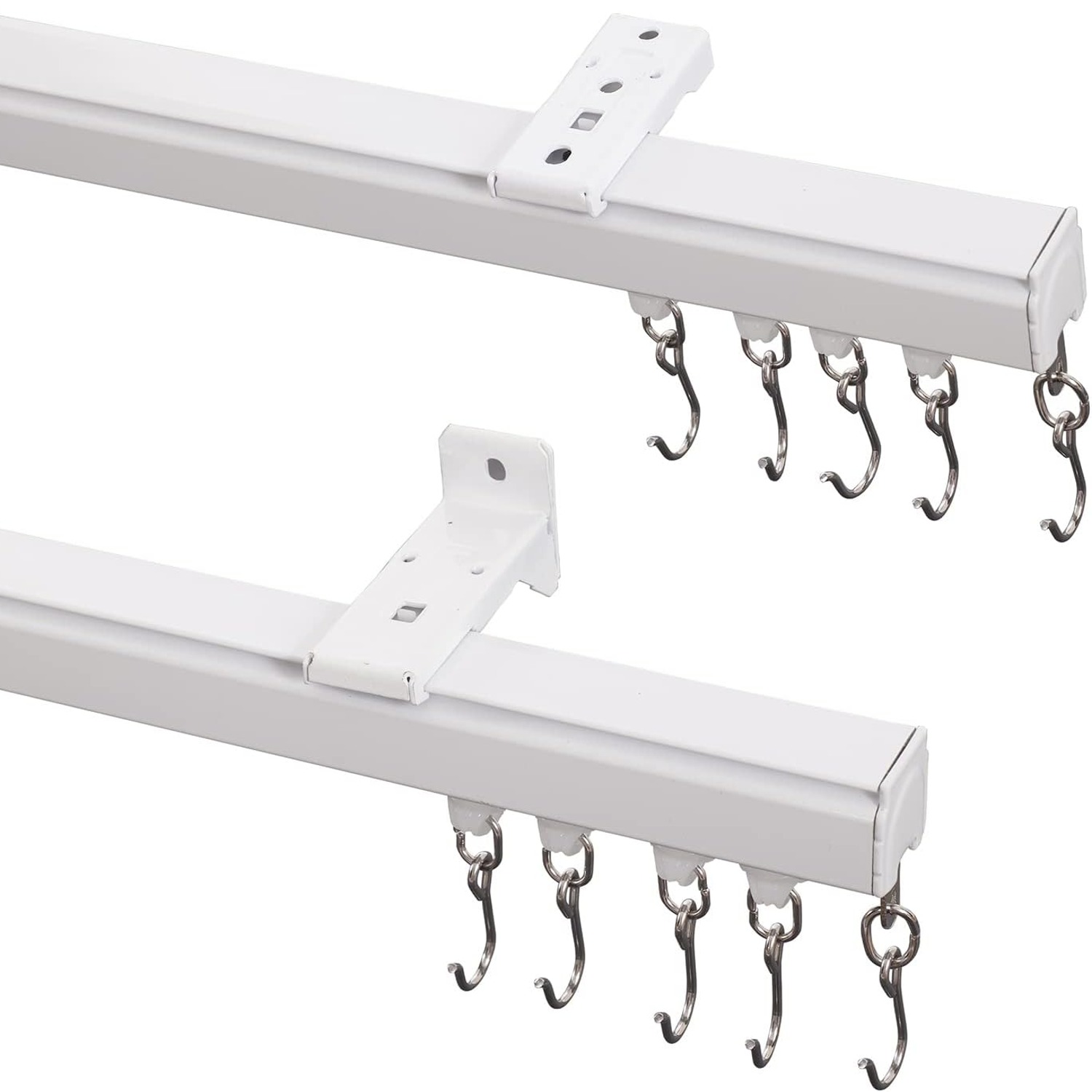
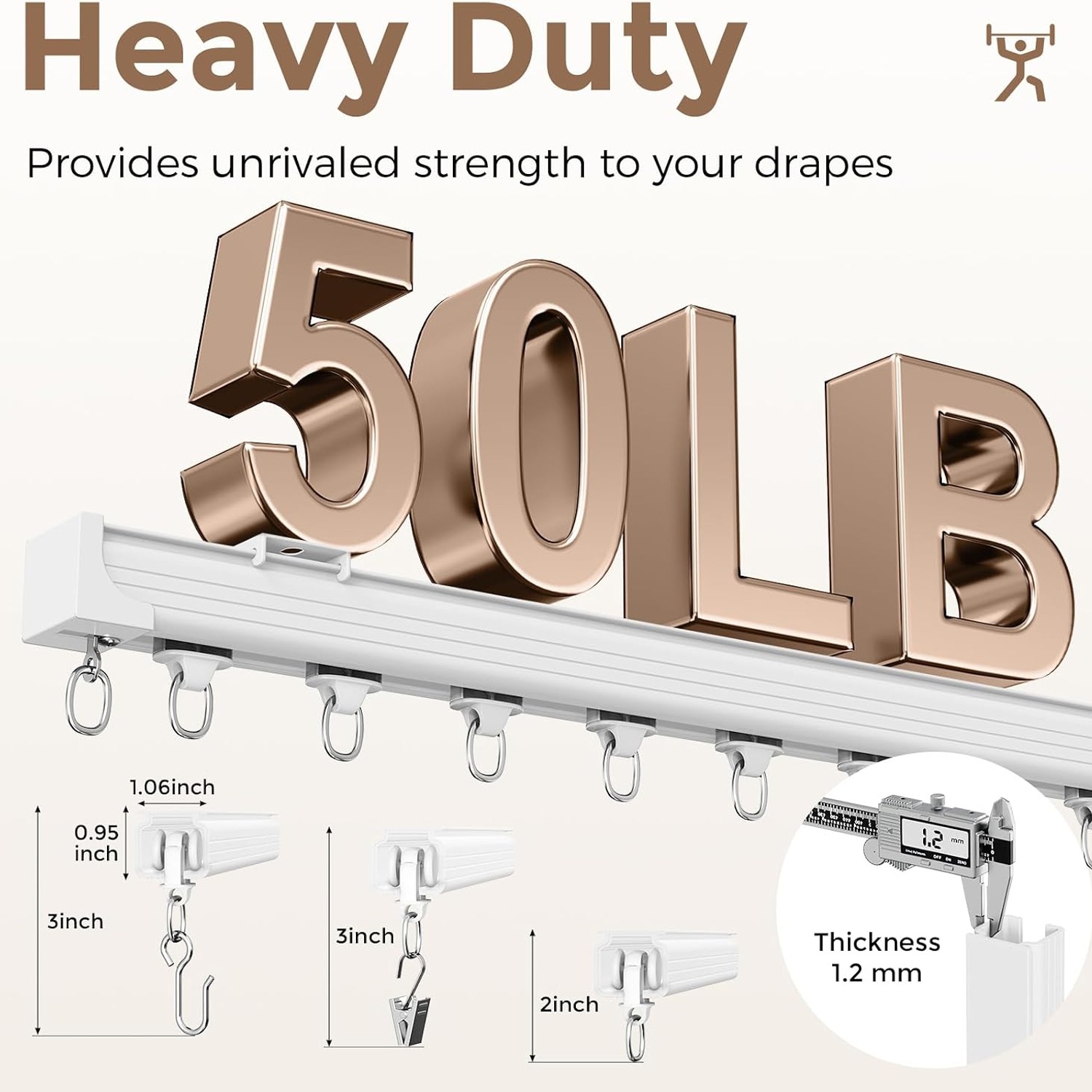
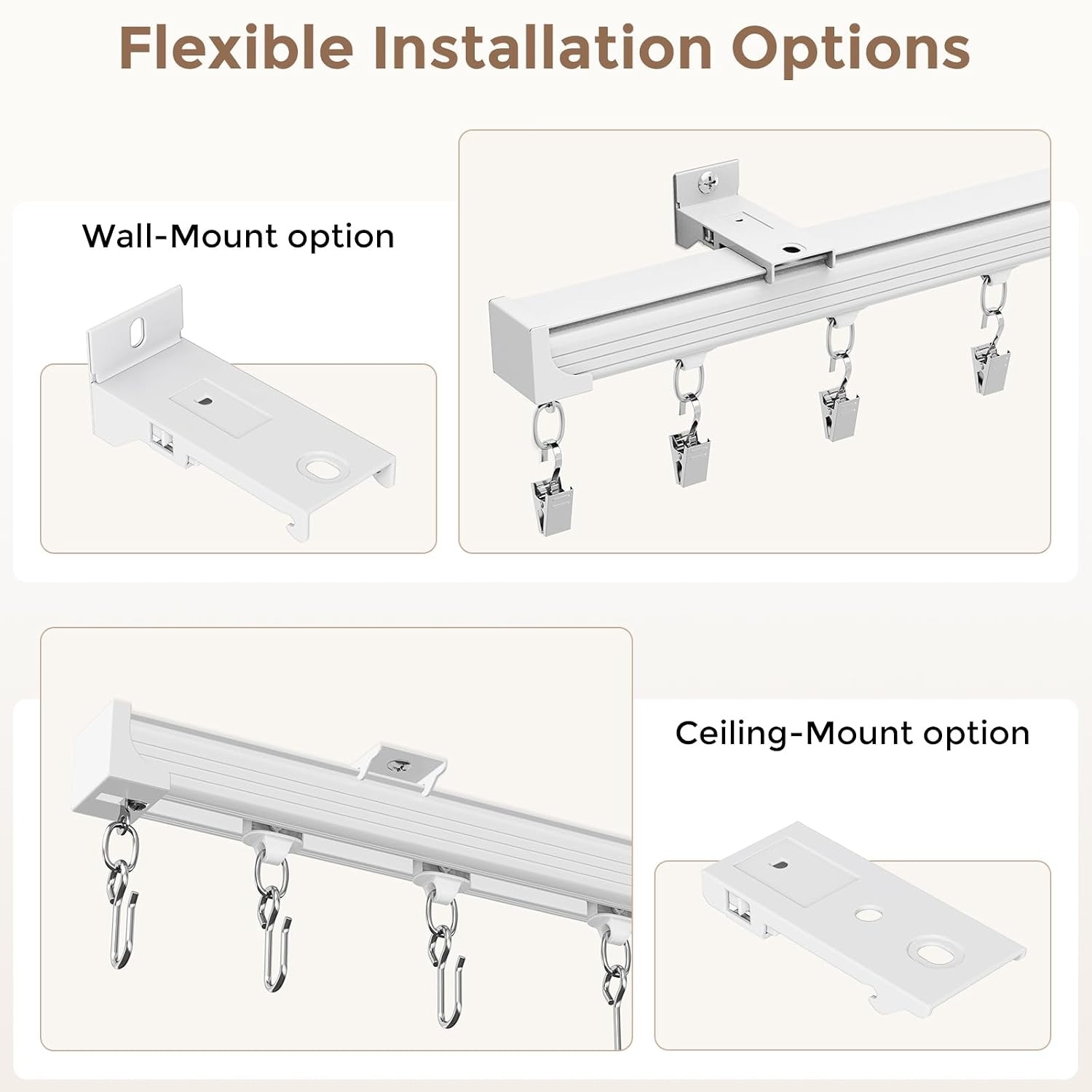
Brackets are the part people underestimate. You get six for the ceiling and six for the wall. Each bracket clips onto the rail and screws into your surface, and the more of them you use, the flatter the rail stays under load. The stated maximum is 50 pounds, which is realistic for lined drapes or a wide divider curtain, but only if the brackets are spread properly. Two brackets holding a 50 pound curtain across nine feet will bow. Six will not.
The small saw in the box matters more than it sounds. Almost no opening measures exactly 6, 7, 8 or 9 feet. Being able to cut the final section means the rail finishes where you want it to, with the end cap sitting neatly against a wall rather than stopping 8 cm short or overshooting into the next doorway.
Who this suits
People fitting a room divider. This is probably the most common reason to buy a heavy duty curtain track rather than a rod. A ceiling-run divider curtain can close off a studio sleeping area, split a shared kids' bedroom, or hide a home office corner during a video call. Nothing is built, nothing is permanent, and when the curtain is open the only trace is a slim white rail overhead.
Anyone with heavy curtains. Blackout linings, velvet, thermal panels. These are the fabrics that kill cheap rods. A track with multiple fixing points and a 50 pound rating handles them without complaint.
Bathrooms and walk-in showers. A ceiling shower curtain track lets you enclose a recess that has no frame to attach to. Aluminum copes with humidity better than steel, though it still pays to dry the rail and check the screws now and then.
Renters doing a careful upgrade. Twelve small screw holes in a ceiling are easy to fill. The visual difference between a floor-to-ceiling curtain and a short one hung off a rod is not small, and it costs almost nothing to put back.
Care settings and clinics. Privacy curtains have run on ceiling track for decades, for the same reasons listed above. Check your own facility's requirements for fixings and fabric before you fit anything.
Choosing the right length
Measure the full width you want the curtain to cover, not the width of the window. For a window, most people run the track 15 to 25 cm past each side of the frame so the open curtain stacks against the wall instead of blocking glass. For a divider, measure wall to wall.
If your measurement lands between 6 and 9 feet, this kit is the one. Cut the last section down to the exact figure rather than leaving the rail long. A few extra centimeters sticking past a corner is the kind of detail you notice every day afterwards.
One thing to check before ordering: this is a straight track. If your run turns a corner or follows a bay, you need a bendable system instead. Straight runs cover the large majority of windows, doorways and divider lines, but it is worth confirming your layout first.
Fitting it without drama
Find your fixing points before you do anything else. In a timber-framed ceiling that means locating joists with a stud finder and marking them. In drywall with nothing above, you need proper anchors rated for the weight. In concrete, you need masonry plugs and a hammer drill. The seven screws supplied will not suit every surface, so buy fixings to match what you are drilling into.
Mark your bracket positions with a level, not by eye. Ceilings are rarely as flat as they look, and a rail that follows a slightly wavy ceiling will still hang a curtain fine, but a rail that is set crooked relative to the floor will show.
Space the brackets evenly, with one near each end and one at every connector join. Somewhere around 60 to 80 cm apart works for most installs. Heavier curtain, closer spacing.
Load the rollers into the channel before you cap the ends. It is an obvious step that is very easy to forget, and prising an end cap off a mounted rail while balanced on a ladder is nobody's idea of a good afternoon.
Keeping it running well
Maintenance is light. Wipe the rail with a damp cloth and dry it. Avoid bleach and solvents, which take the shine off the white finish. Every few months, run the curtain all the way across a couple of times to push dust out of the channel.
If the glide gets stiff, do not reach for a lubricant straight away. Nine times out of ten the cause is grit in the channel or a connector that has shifted slightly. Clean it out, check the join is flush, and the movement usually comes back.
Check the bracket screws once or twice a year. Doorway dividers and bathroom tracks get handled constantly, and fixings do loosen. Half a turn with a screwdriver now saves a repair later.
The short version
A ceiling curtain track fixes the things a rod gets wrong: sagging, noise, catching rings and loose end brackets. This kit covers 6 to 9 feet, holds up to 50 pounds, and includes everything you need in the box, including the rollers, the hooks, the clips, both sets of brackets and a saw for trimming to a custom fit.
It works for windows, showers, closets and room dividers, and it mounts to a ceiling or a wall depending on what your space allows. Measure carefully, use plenty of brackets, fix into something solid, and it will quietly do its job for years.