
The complete guide
How to Choose and Fit a Flexible Ceiling Curtain Track
The problem with straight rods
Curtain poles work beautifully on one kind of window: a flat rectangle, set in a flat wall, with clear space either side for the brackets. Plenty of homes do not have that window. Bay windows turn two corners. Corner windows meet at ninety degrees. Caravans and motorhomes curve. Bathrooms need a curtain that wraps around a bath instead of hanging flat in front of it. Studio flats and shared bedrooms need a curtain hung across the middle of the floor where there is no wall at all.
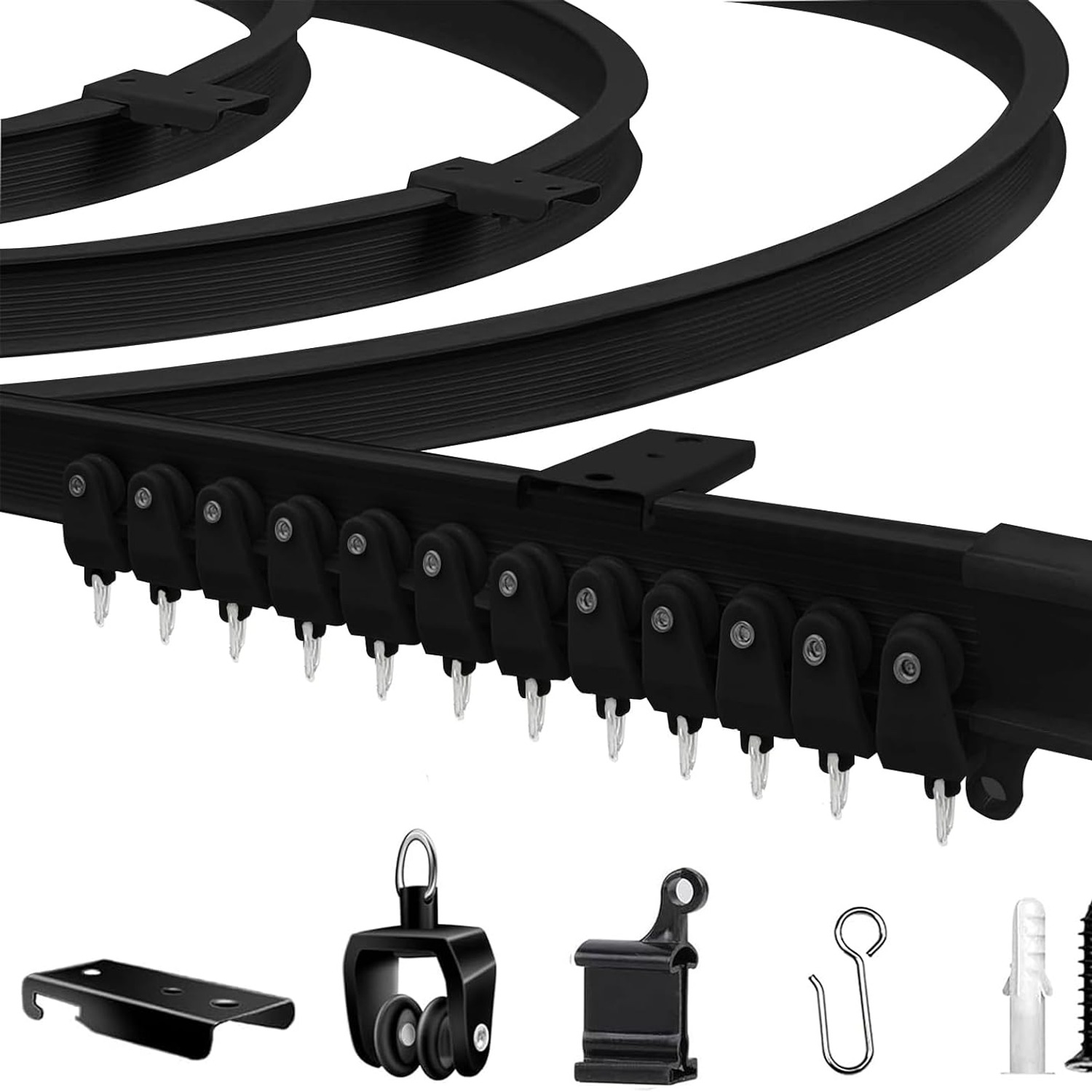
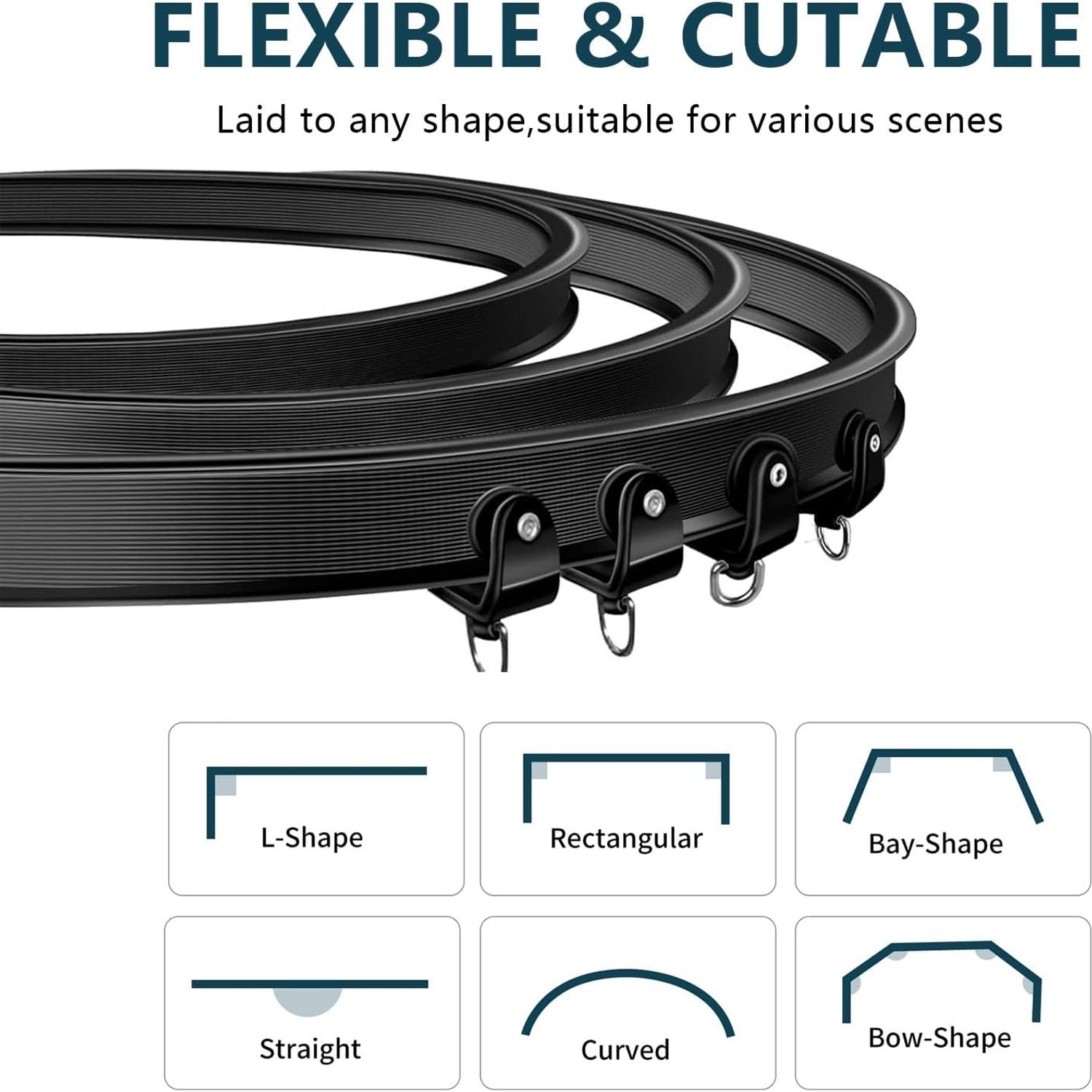
That is where a flexible ceiling curtain track earns its place. It is a rail made from PVC, which means you can bend it by hand into the shape your room actually is. Once the brackets are up, the rail holds that line. Instead of fighting the geometry of the room, you follow it.
How a bendable track works
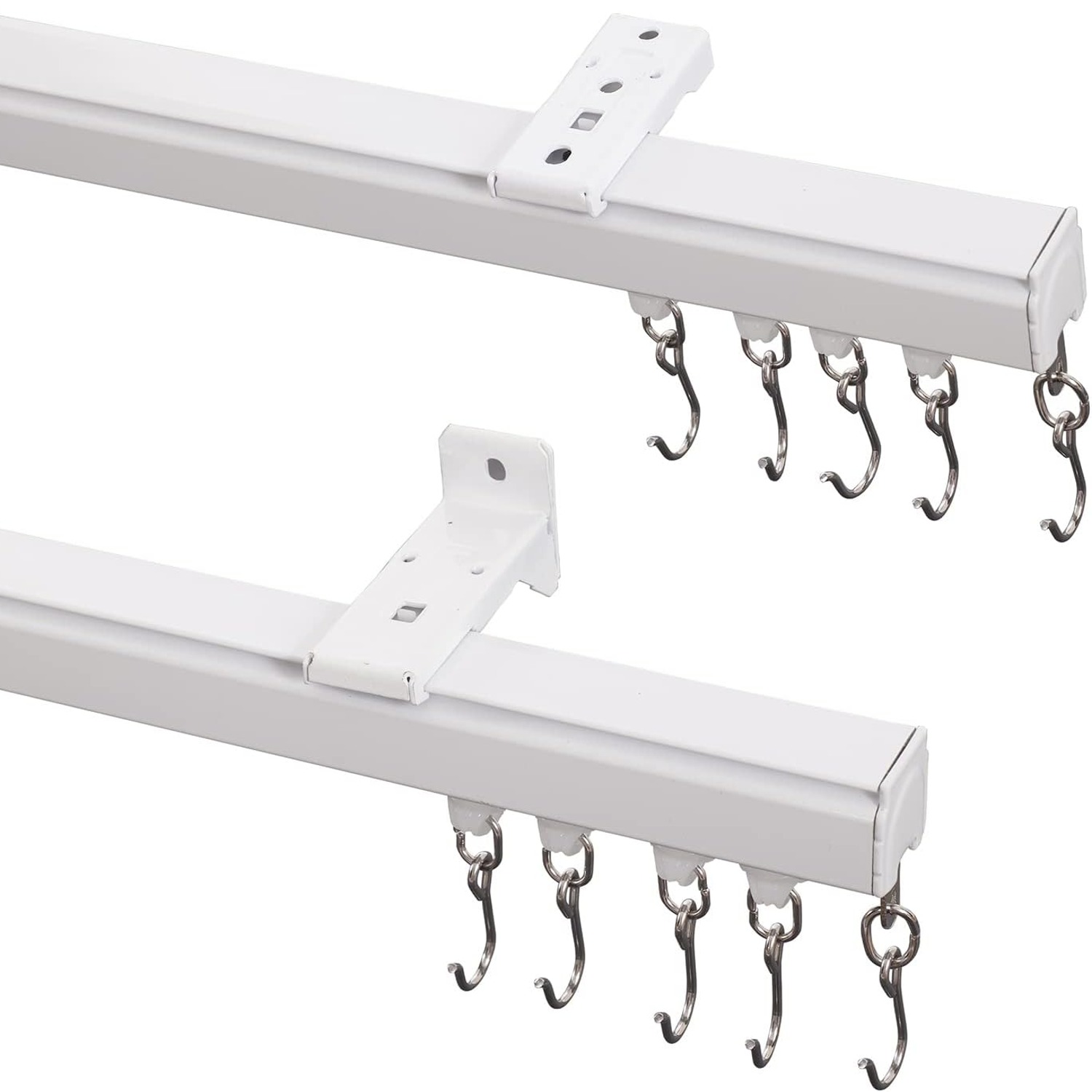
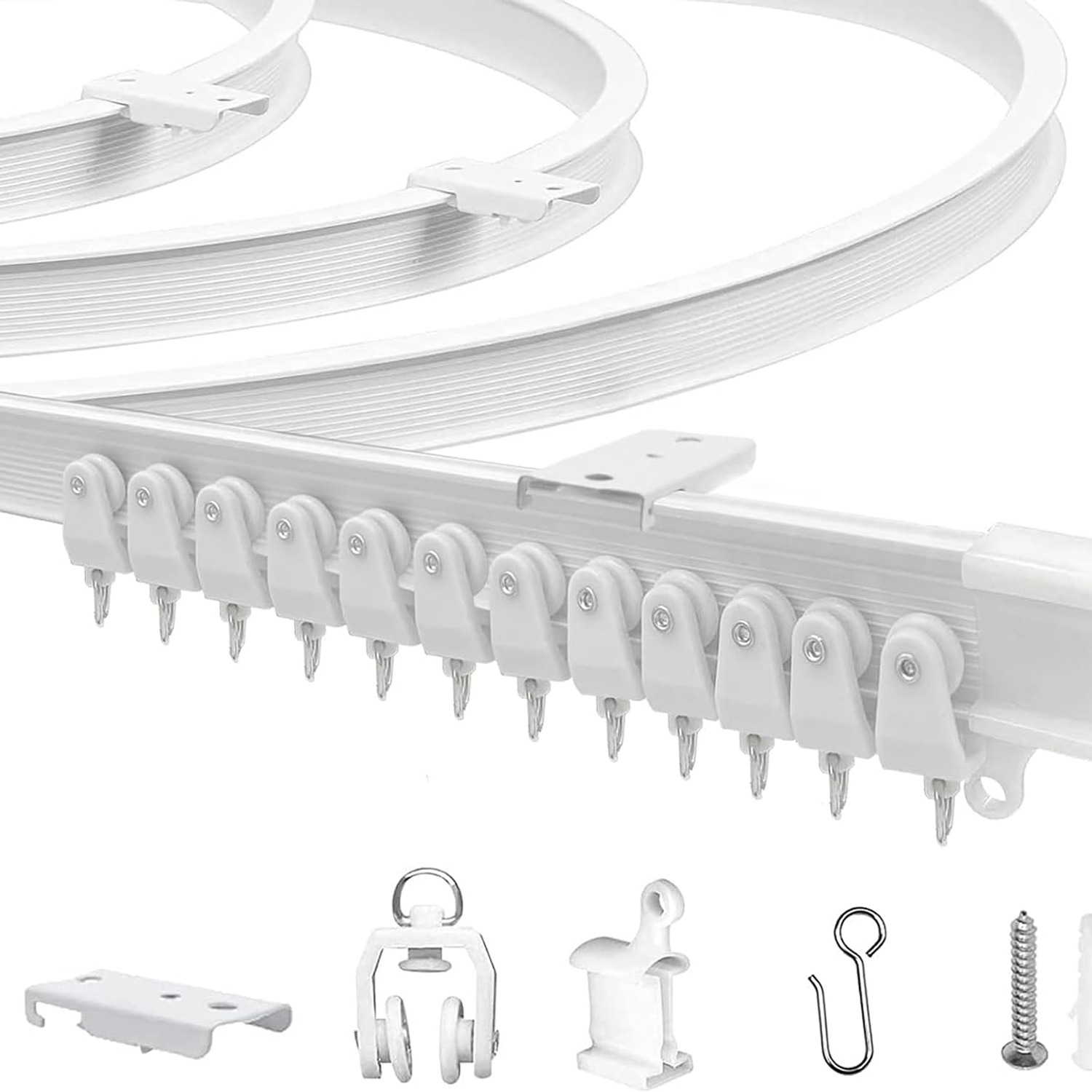
The rail itself is a long plastic channel with an opening along the underside. Rollers sit inside that channel and slide along it. Each roller holds a hook, and each hook goes into the heading tape of your curtain. Pull the curtain and the rollers travel, carrying the fabric with them.
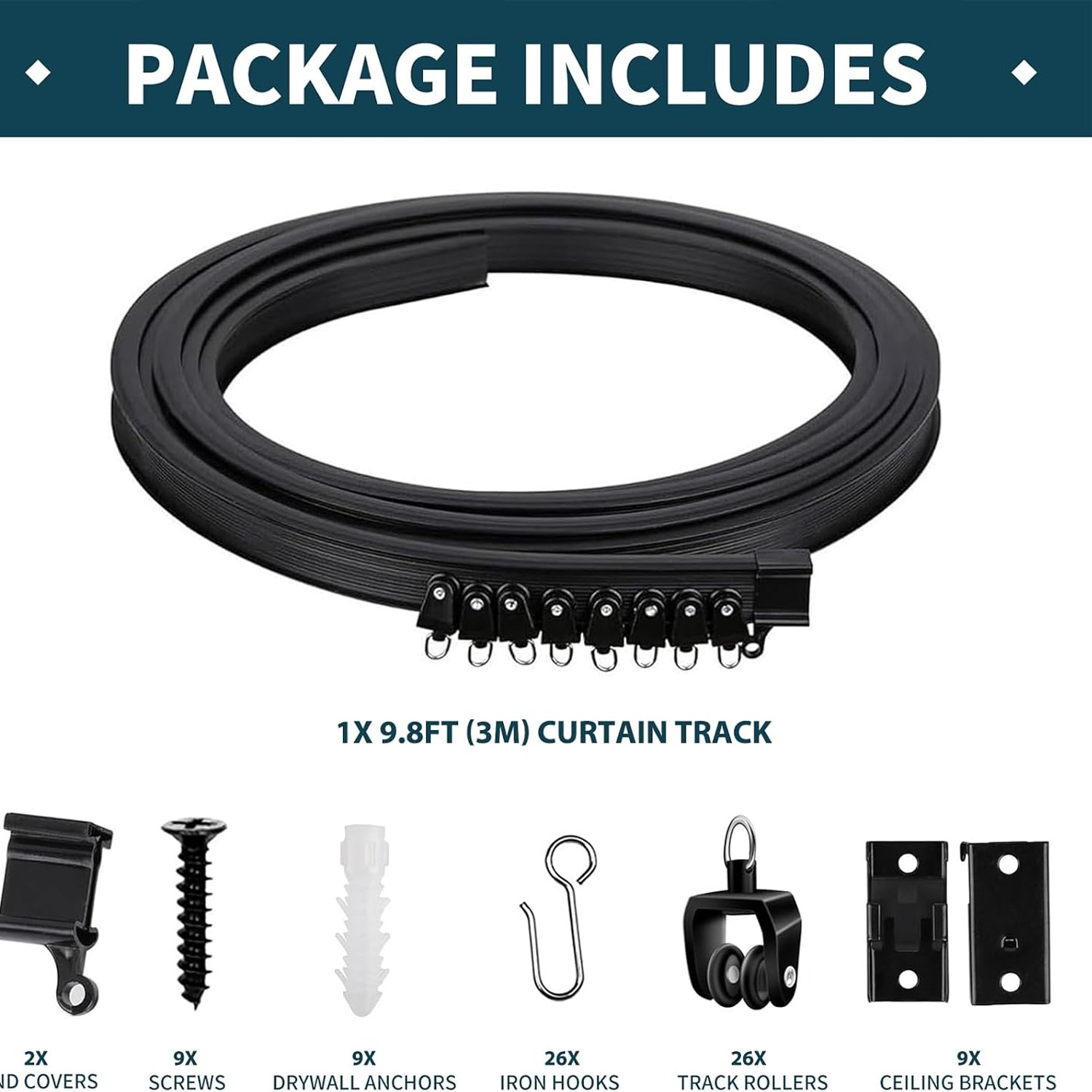
This kit comes as one 16.4 ft length, which is 5 meters. It includes 40 rollers and 40 hooks, 15 ceiling brackets with 15 drywall anchors and 15 screws, and 4 end covers to cap the cut ends and stop the rollers escaping. Clips are not part of the kit, so if your curtains rely on clips rather than tape, plan for that separately.
Bending is the headline feature, but cutting matters just as much. A fine-tooth hacksaw goes through PVC in seconds. That means one rail can become a short run over a shower and a longer run across a bedroom window, or a single L-shaped bay with a bit left over. You buy length and you decide how to divide it.
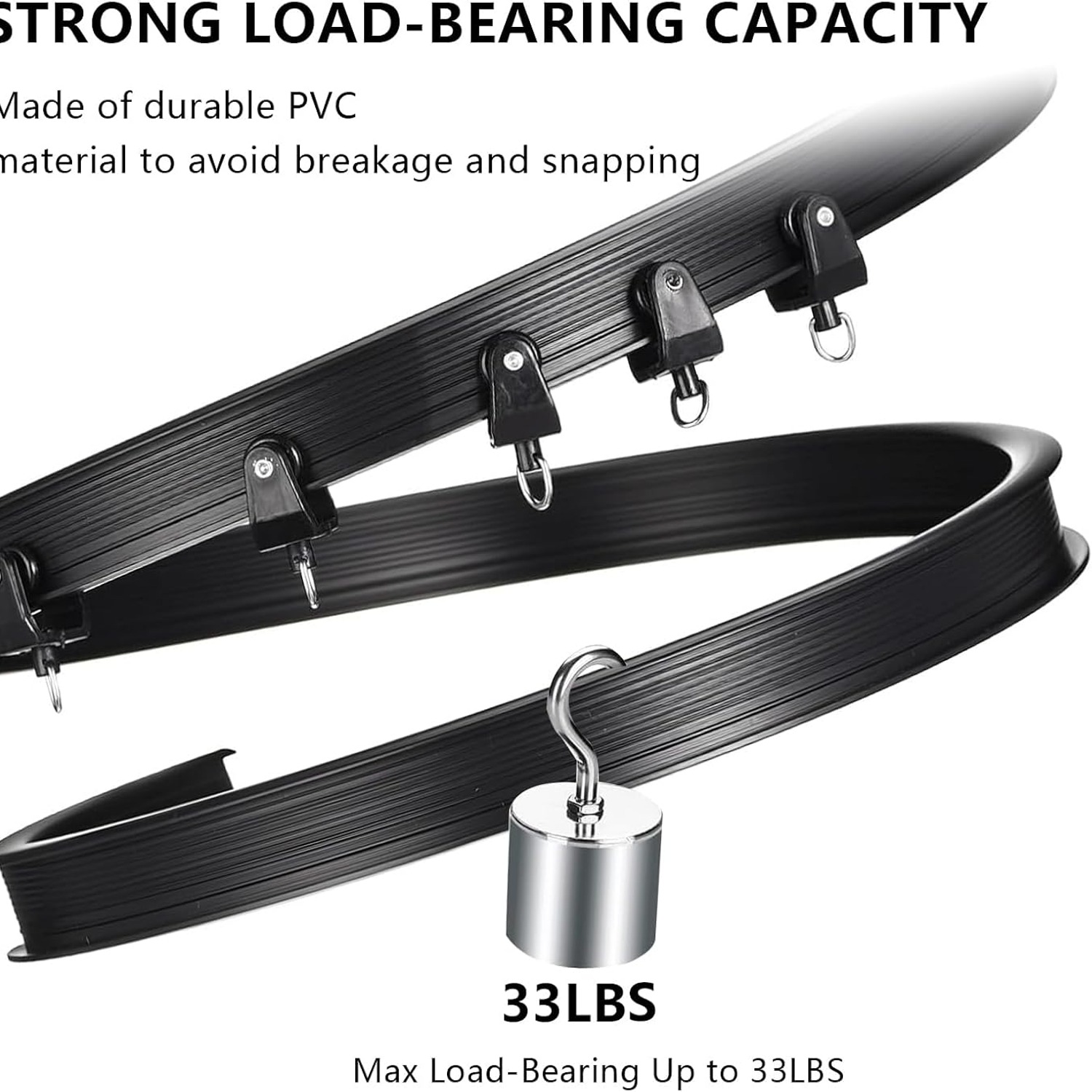
Load is rated at a maximum recommended 35 pounds. For context, a lined pair of curtains for a standard window usually sits well under that. Very heavy velvet or a long blackout divider panel is where you should do the sums before ordering.
Who it suits
Bay and corner windows. This is the classic case. A pole either needs expensive corner joints or simply cannot do it. A flexible rail bends around the return, and the curtain keeps moving through the corner instead of stopping dead at it.
Campervans, caravans and boats. Walls curve, window surrounds are thin, and wall fixings are often a bad idea. A ceiling mounted curtain rail puts the load where the structure is stronger and follows the curve naturally.
Bathrooms. Around a corner bath or a walk-in shower, a straight rod leaves gaps. A wrapped track closes them. Keep the rail dry when you can and clean soap residue off the rollers now and then.
Room dividers. This is one of the most popular modern uses. Hang a panel across an open-plan space and you create a bedroom corner, a home office, or a quiet zone for a child in a shared room. There is no wall to screw into, so ceiling mounting is the only sensible route.
Clinics, offices and workshops. Privacy screens, dust partitions and temporary booths all need a rail that can turn corners and be moved later. The listed applications for this track include hospital, clinic, hotel, cinema and workshop settings.
Choosing the right length and layout
Measure the full path the curtain will travel, not just the width of the glass. On a bay, that means measuring each face and each return and adding them together. Add a few inches at each end so the curtain can stack back clear of the window when it is open.
Then think about where the curtain will sit when open. A curtain bunched over the glass blocks light all day. Giving the rail an extra 6 to 10 inches past the window frame on each side lets the fabric park on the wall instead.
For a divider, measure the room and decide whether you want the curtain to run wall to wall or stop short to leave a walkway. Wall to wall gives better privacy. Stopping short gives you a doorway without needing to pull the whole panel back.
Fitting it properly
Start by marking a straight line on the ceiling where the rail will sit. A chalk line or a long straightedge keeps you honest. On a bay, mark each face separately and let the corners find themselves.
Next, find your fixings. Screwing into a ceiling joist is always stronger than relying on a drywall anchor, so use a detector or tap along the line to find where the timber runs. Where a bracket falls between joists, that is what the supplied anchors are for.
Bracket spacing is the detail most people get wrong. Fifteen brackets on a 16.4 ft run gives you roughly one every 13 inches if you use them all on a single length, which is generous. Light voile over a short window can go wider. Heavy curtains, long spans and curves want them closer. Around a bend, put brackets on both sides of the curve so the rail cannot flex back.
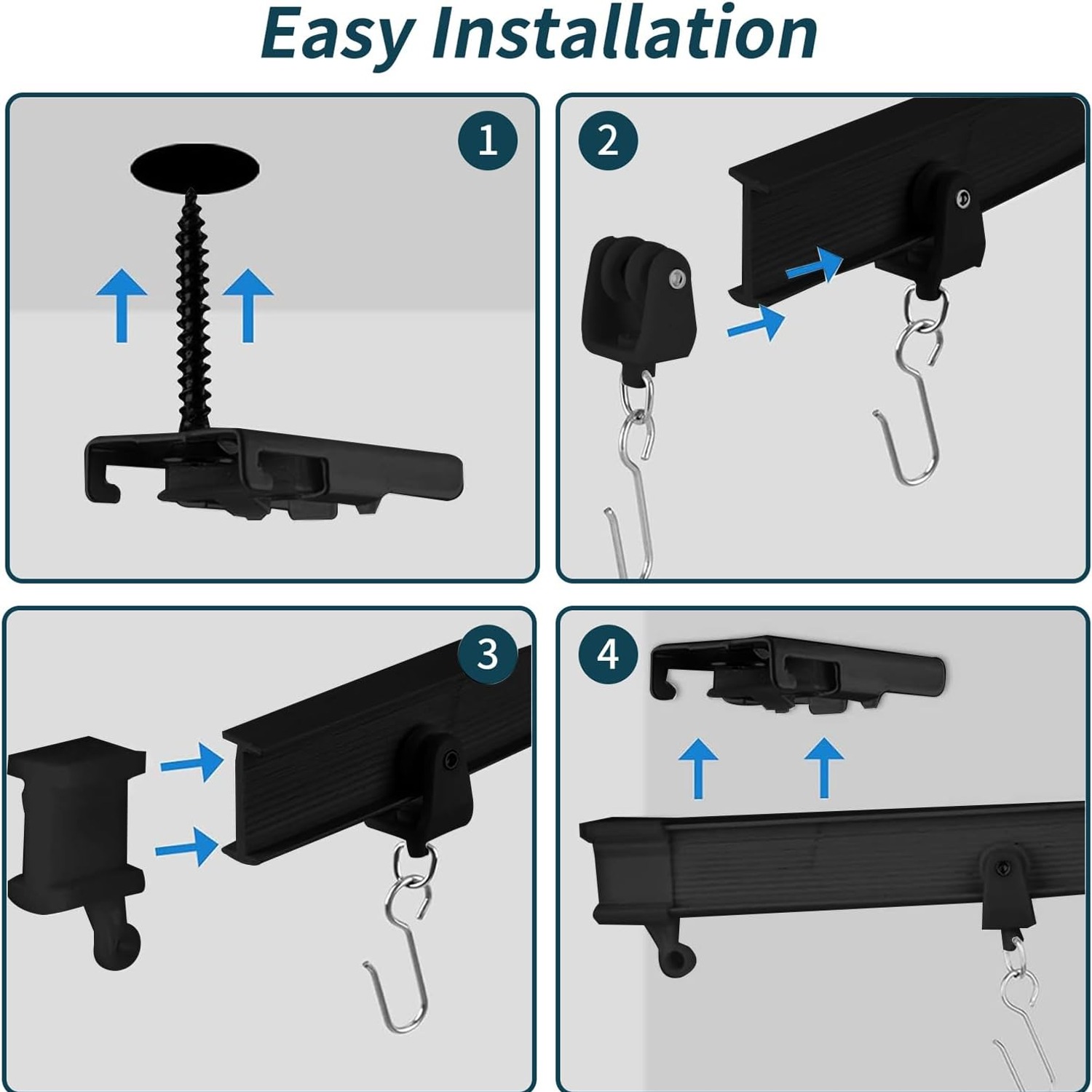
Cut the rail last, after the brackets are marked and you have confirmed the measurement on the ceiling rather than on paper. Cut slowly with a fine blade, file the burr off the end, then clip on an end cover.
Load the rollers before you fix the final end cover, not after. It is an easy mistake, and prising a cover back off a cut rail is annoying. Slide the rollers in, cap the end, then hook your curtains on.
Living with it
Day to day, a track like this asks for very little. Wipe the rail with a damp cloth when you dust. If the curtain starts to feel sticky on the pull, the usual culprit is lint and dust inside the channel rather than a faulty roller. Slide a few rollers out, clean the channel, put them back.
Avoid bleach, solvents and scouring pads on PVC. They dull the surface and can make the channel rougher, which is exactly the opposite of what you want. Plain water and a soft cloth do the job.
Once or twice a year, run a screwdriver along the brackets and nip up any that have worked loose. Ceilings move slightly with temperature and humidity, and a quarter turn now prevents a sag later.
If you ever move house, the rail comes down with a screwdriver. You will be filling a row of small holes, but the hardware itself is reusable. That is part of why renters like this style of rail.
The short version
A flexible ceiling curtain track solves a specific problem: hanging curtains where a straight pole will not go. This one is a 16.4 ft PVC rail in black, bendable into L, U and curved runs, cuttable with a hacksaw, and supplied with 40 rollers, 40 hooks, 15 brackets, 15 anchors, 15 screws and 4 end covers. Maximum recommended load is 35 pounds.
Measure the whole path including corners, mount to joists where you can, keep brackets close together on bends and heavy curtains, and cut only once you are sure. Do that and you get a curtain that follows the shape of your room instead of arguing with it.