

The complete guide
How to Choose and Fit a Room Divider Curtain Track Set
The problem with one room doing two jobs
Plenty of us live in homes where the walls are in the wrong places. A studio where the bed faces the kitchen. A bedroom that became a home office in 2020 and never changed back. Two children sharing one room and both wanting a corner they can call theirs. A living room where someone sleeps on a pull-out and has to be up before everyone else.
The obvious fix is a wall. The obvious fix is also expensive, slow, messy, and usually off the table if you rent. Freestanding screens are an alternative, but they fall over, they block light they do not need to, and they eat floor space you cannot spare.
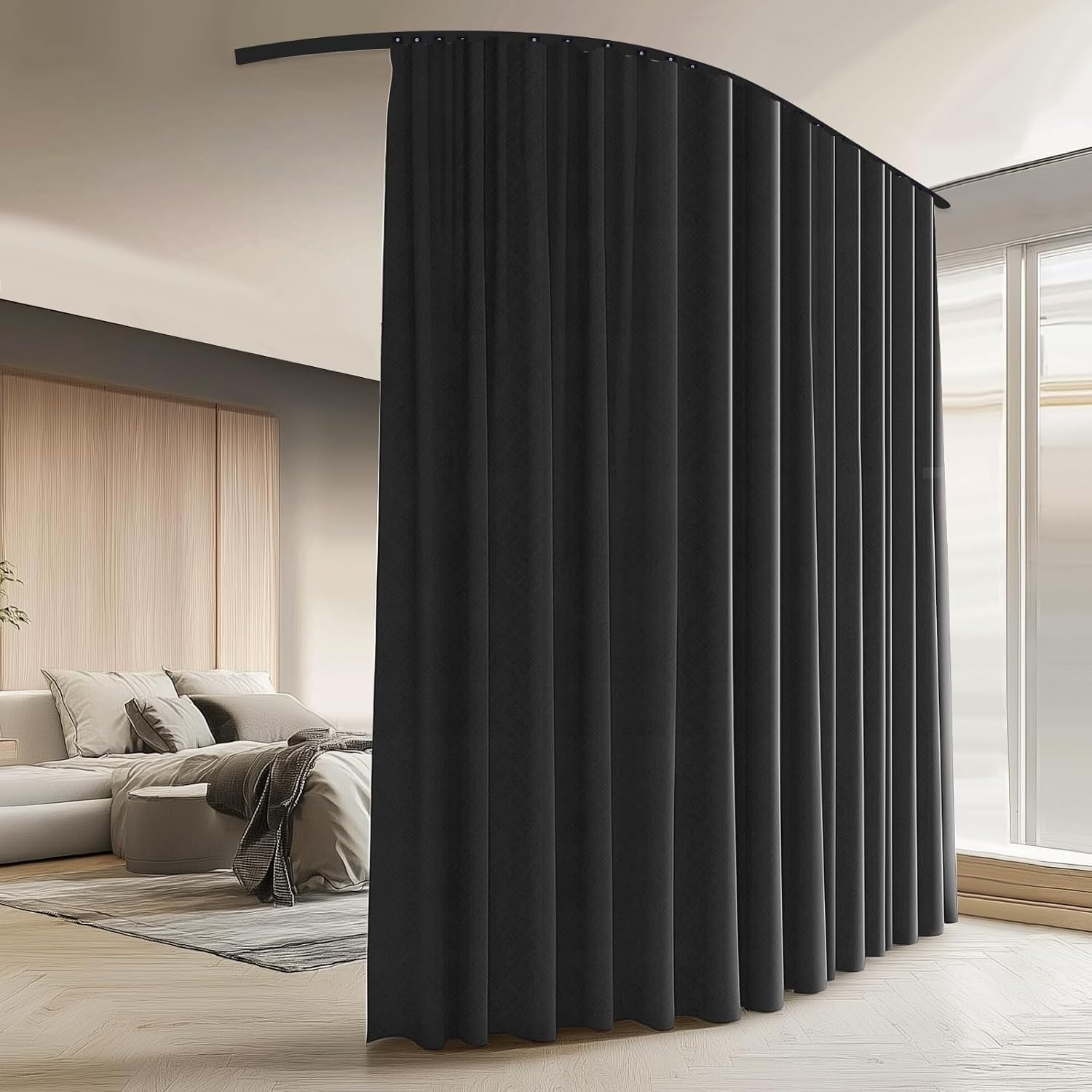
A ceiling-mounted divider curtain sits in between. It splits the space when you need it split, and it disappears to one side when you do not. It takes an afternoon, a drill and a bit of measuring. When you leave, it comes down and you fill four small holes.
What this set actually is
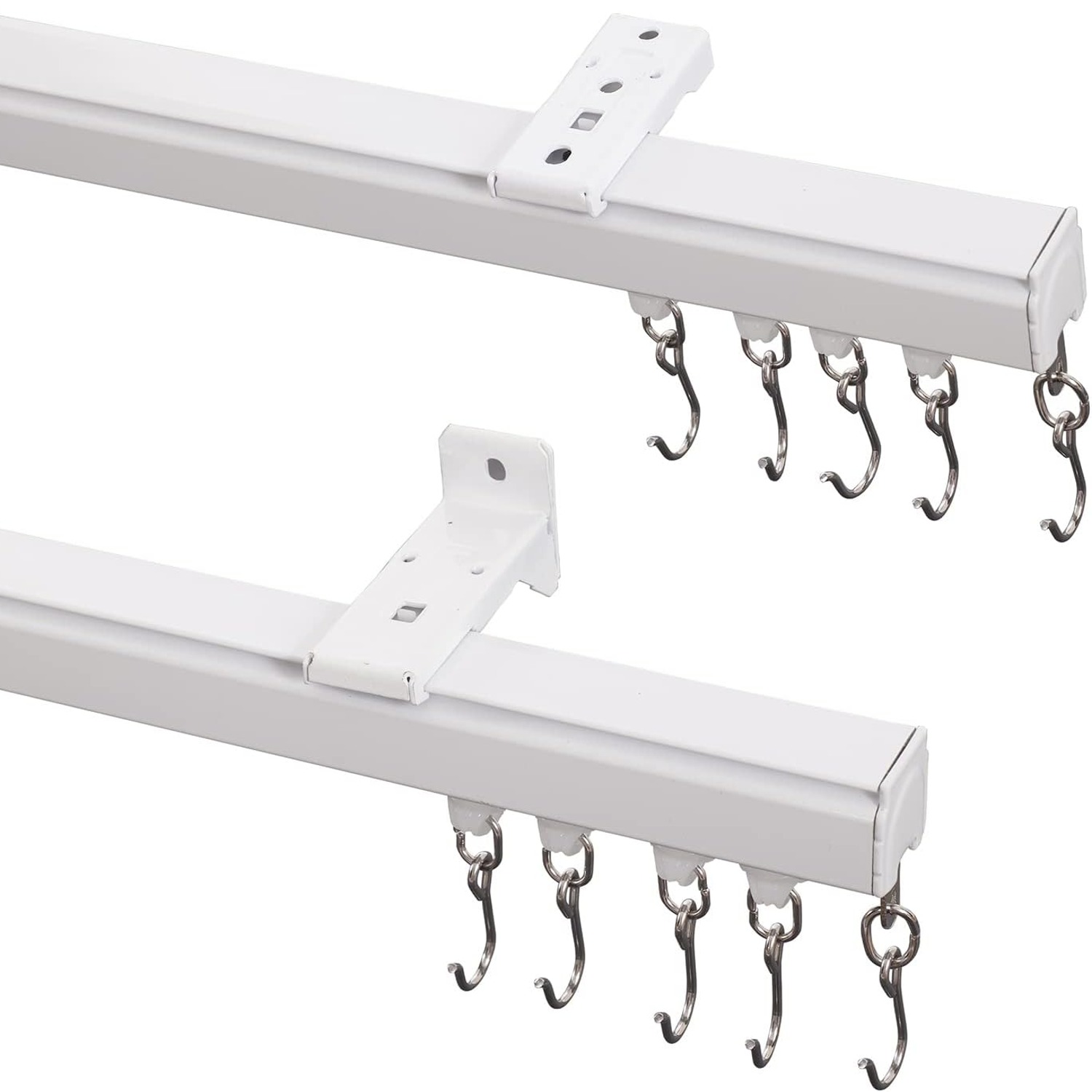
This is a complete kit. One blackout curtain panel measuring 108 inches wide by 84 inches long, a bendable aluminum ceiling track with pulleys, and the installation hardware to put it up. Package weight is 3.2 kg.
That completeness matters more than it sounds. Buying a track and a curtain separately is where most people come unstuck. The glider on one brand does not fit the tab on another. The screws supplied are for drywall when your ceiling is timber. You end up at the hardware shop twice in one day. Here the parts were designed together.
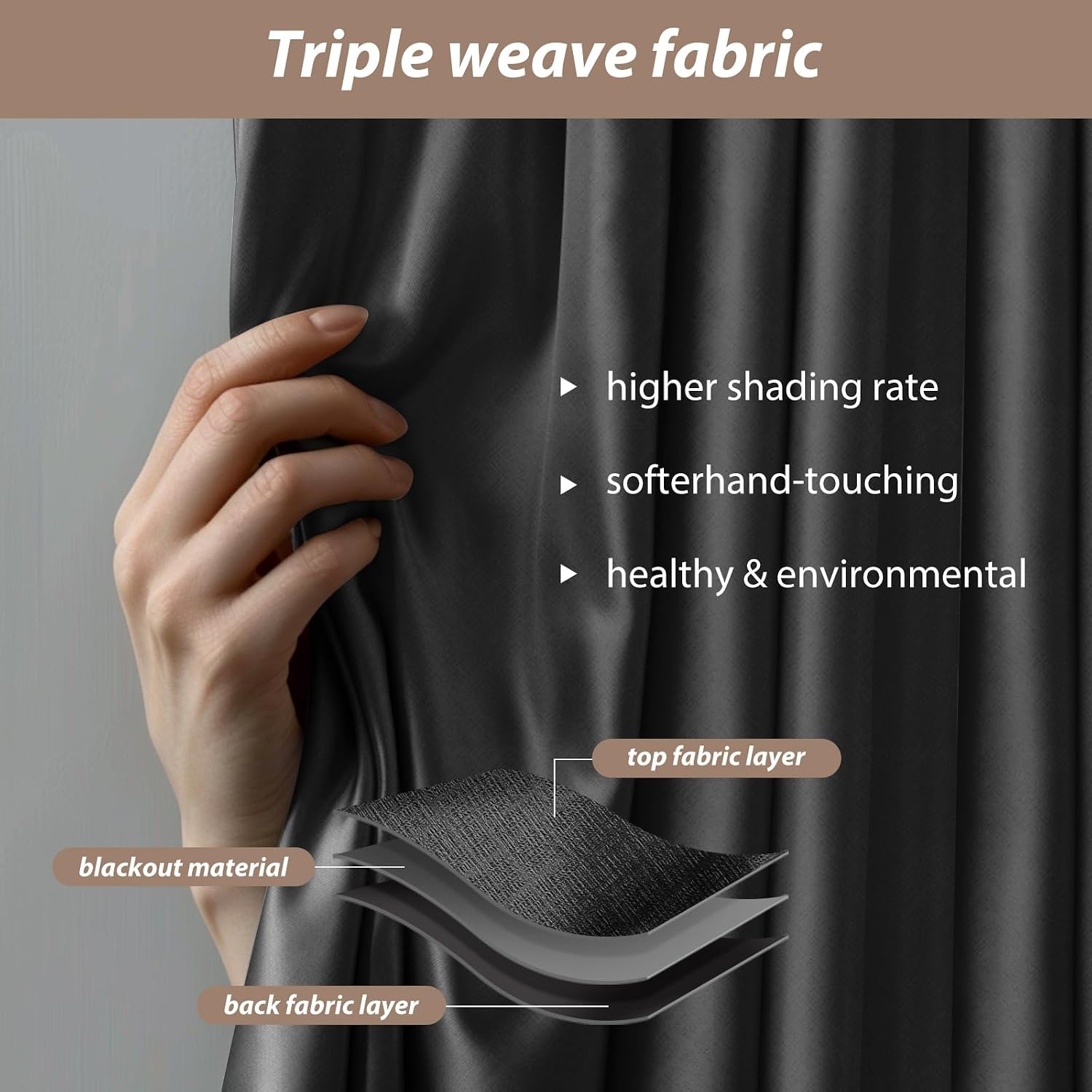
The panel itself is 100% polyester with a knitted weave, backed by a stitched black lining. That lining is doing most of the work. A single layer of fabric, no matter how dark, lets a surprising amount of daylight through the weave. Adding a separate lining layer behind it is what turns a dark curtain into a blackout curtain. The listing also describes the panel as thermal insulated and sound absorbing, which follows from the same density.
How a ceiling track works
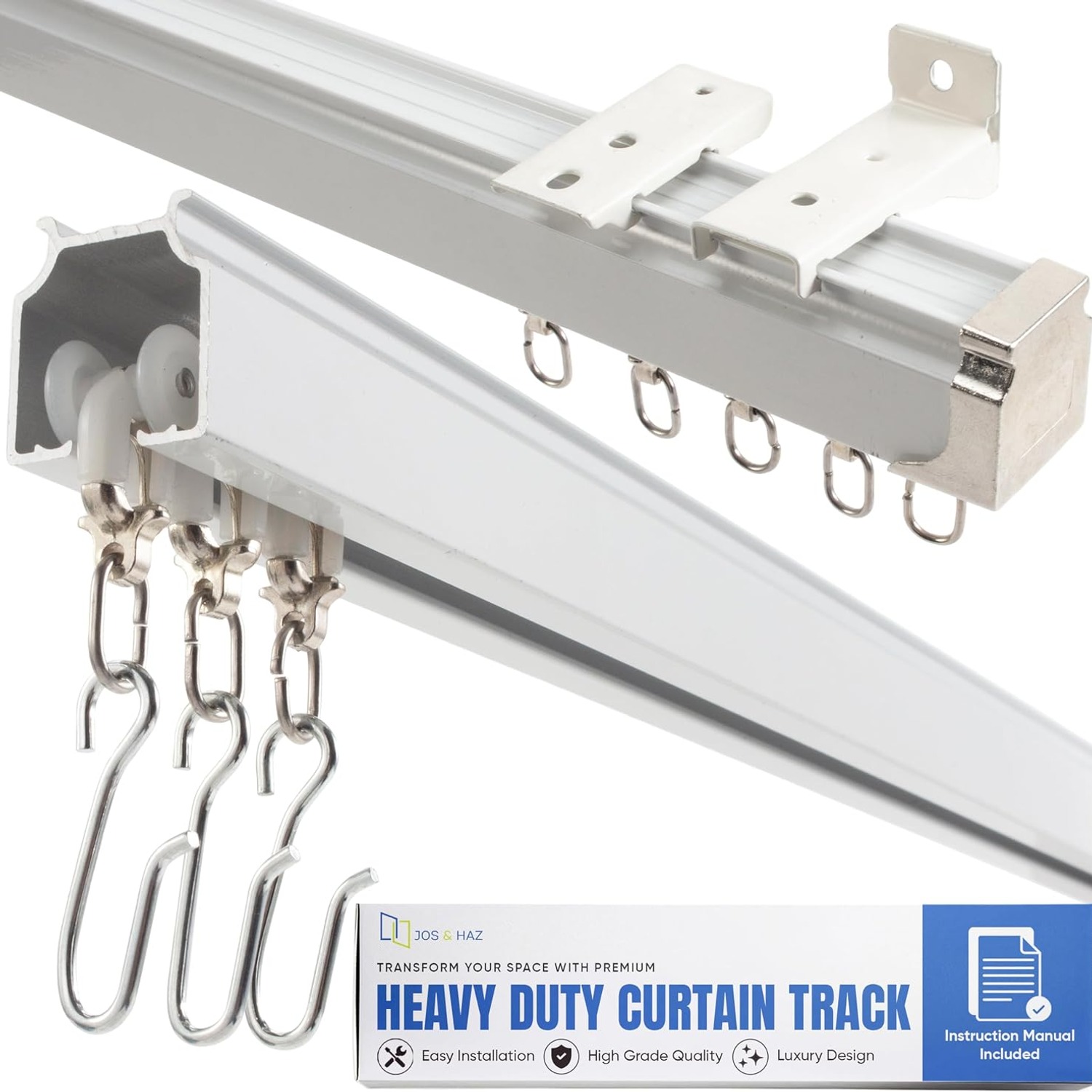
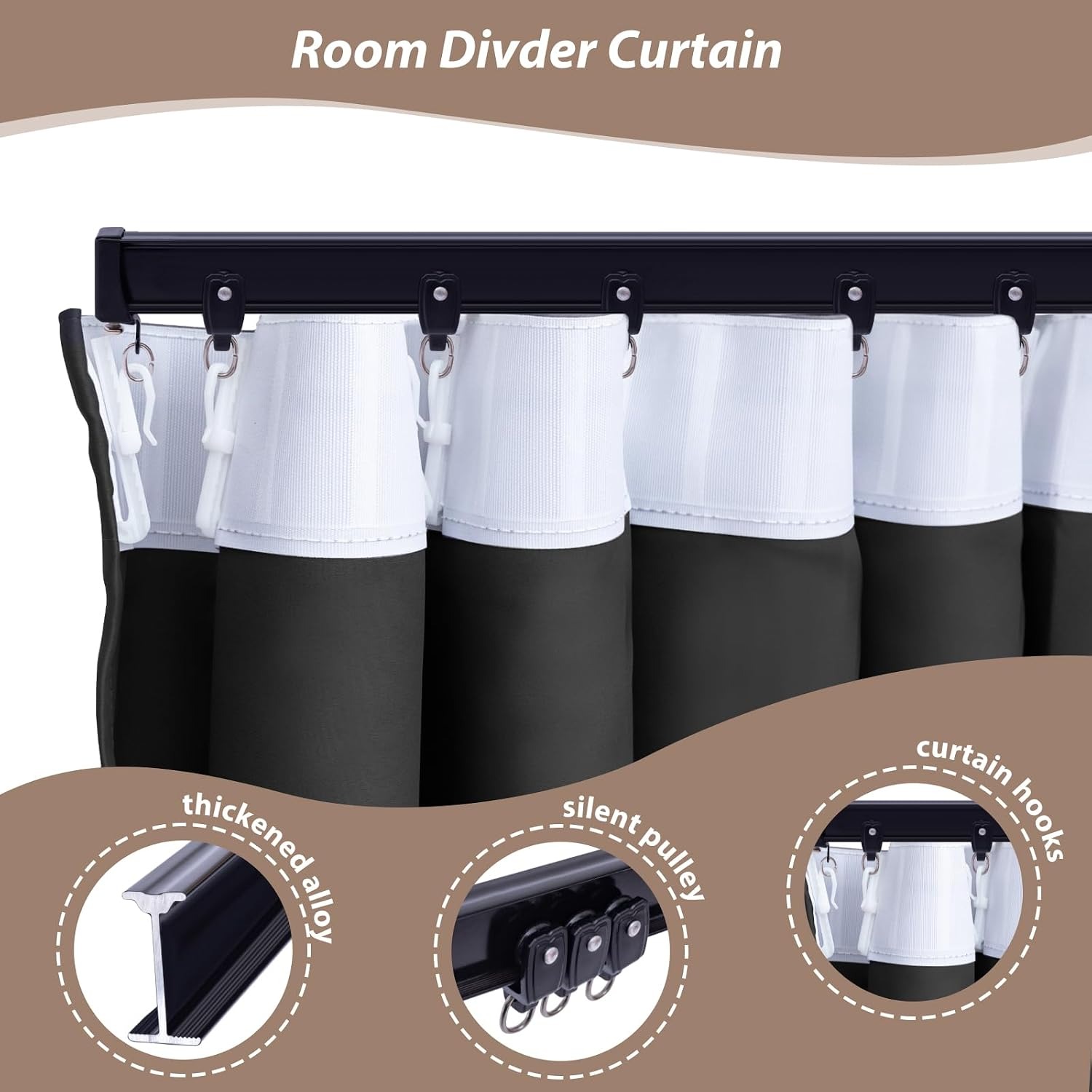
A ceiling curtain track is a rail screwed flat to the ceiling, with small wheeled pulleys running inside it. Your curtain hangs from those pulleys. Because the load is spread along the rail rather than hanging off two end brackets like a rod, a track handles a wide, heavy panel without sagging in the middle.
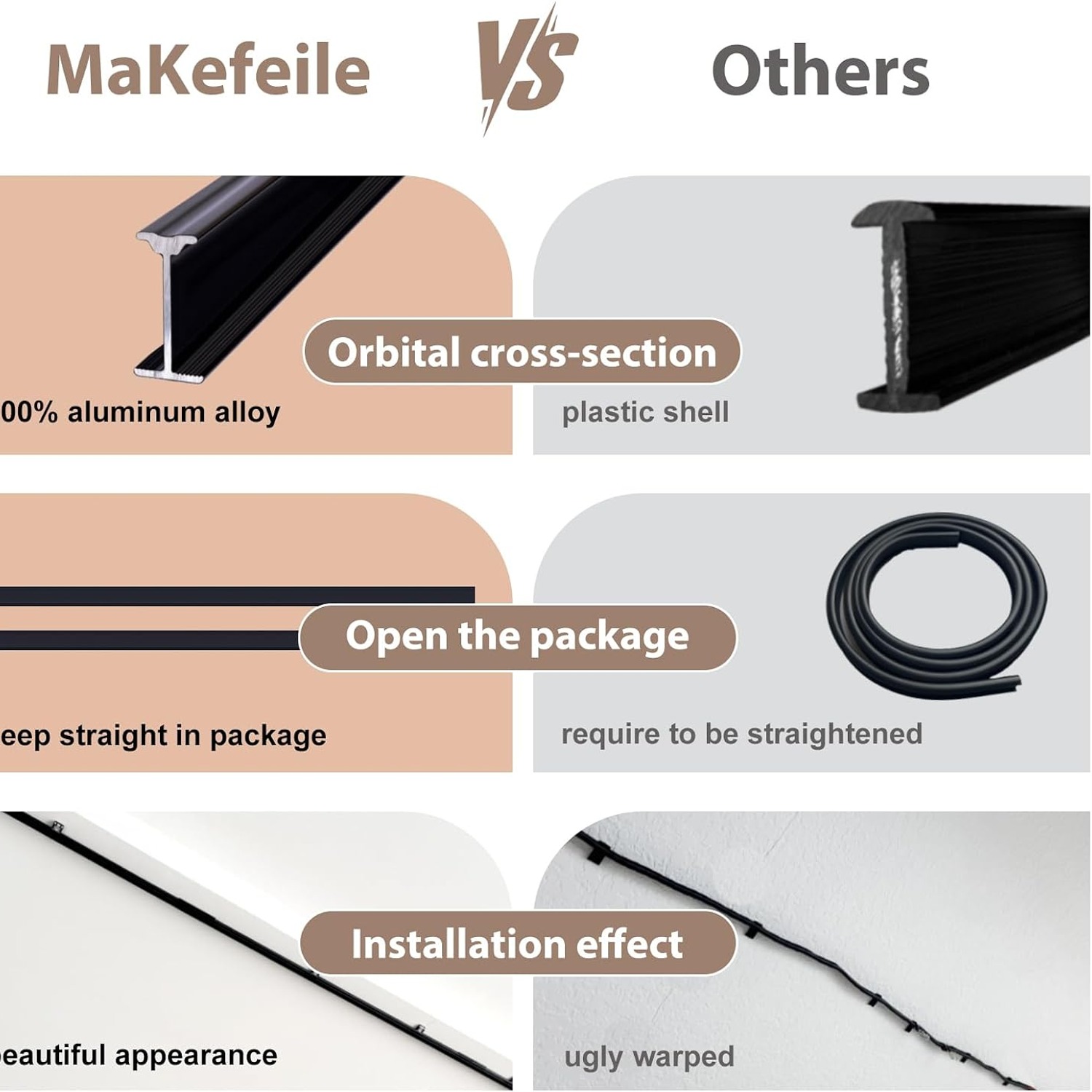
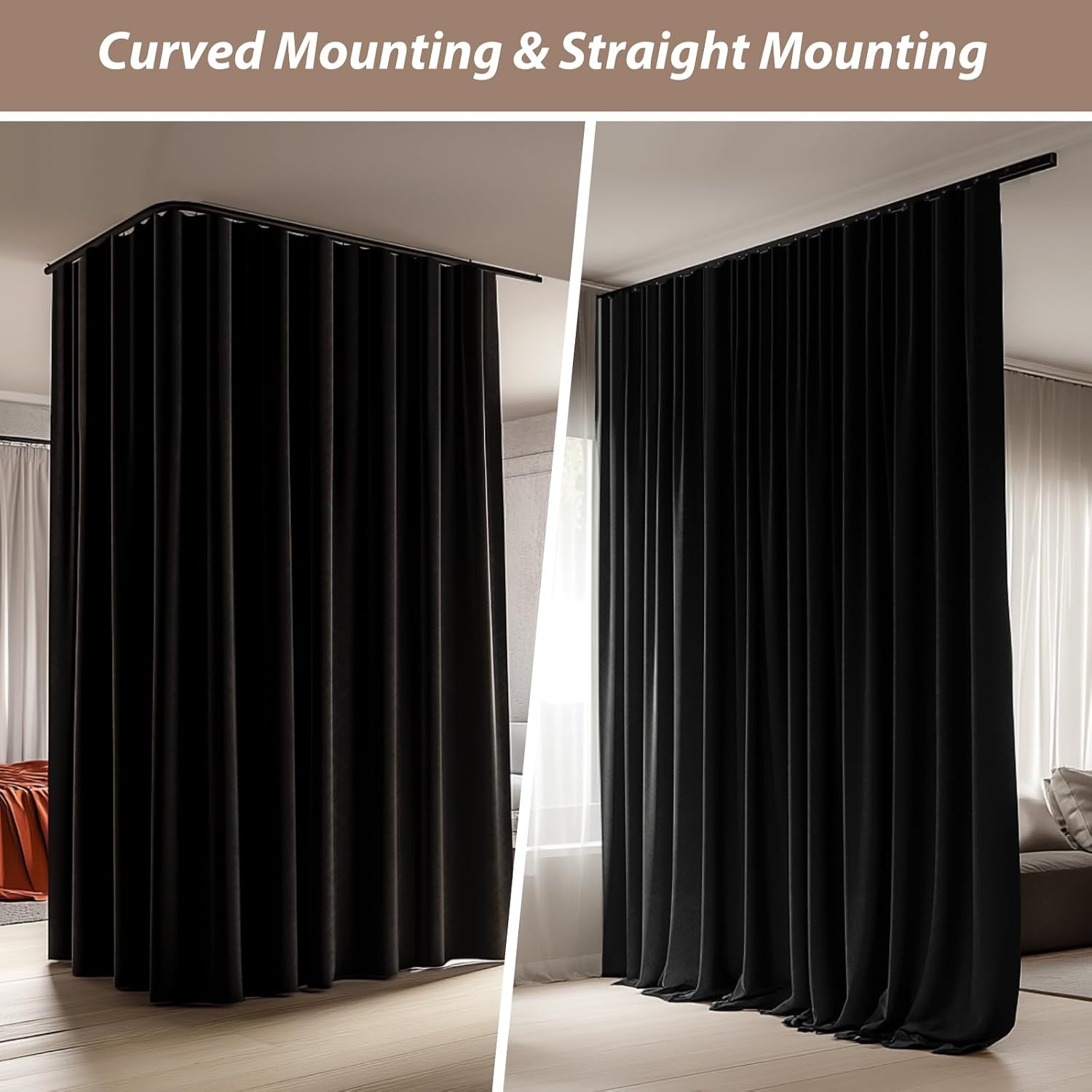
This particular rail is bendable aluminum. You can shape it by hand, which opens up layouts a straight rod cannot manage. Run it straight across a room for a simple split. Bend it into an L to wrap around the head and side of a bed. Form a C to enclose a dressing corner or a desk on three sides. Bend it gradually, working in small steps along the curve, rather than trying to force a sharp corner in one go.
The back tab top on the curtain pairs well with a track. Back tabs hold the fabric in an even wave along its whole length instead of bunching it up the way ring tops do. The result looks more like a soft wall and less like a window dressing, which is exactly what you want from a room divider curtain track set.
Who it suits
Studio and one-bedroom renters get the most out of this. A single panel can separate sleeping from living, which changes how the whole flat feels at night.
Shared bedrooms are the next most common use. Two kids, one room, one curtain down the middle. Each of them gets a zone. It also helps when siblings go to bed at different times, since the blackout lining keeps one side dark while a lamp is on in the other.
Home workers use it to close the desk away in the evening, which is better for your head than looking at an open laptop from the sofa. Shift workers use it over a window or across a sleeping alcove to get daytime dark. Anyone with a wide patio glass door can use it where a normal rod would bow under the span.
The listed room types also include study, school and hospital settings, which tells you the design is aimed at general privacy screening as much as home decoration.
Measuring before you buy
Three numbers matter. The width you want to cover, your ceiling height, and where you can actually fix into.
For width, measure the opening and then add overlap. A curtain pulled taut edge to edge will gap at the sides every time someone walks past. The panel here is 108 inches, so around 9 feet of fabric. If your run is wider than about 8 feet, you are looking at more than one set or a different approach.
For height, measure from the ceiling down to the floor and compare it with the 84 inch drop. On a standard 8 foot ceiling, the panel will finish roughly a foot above the floor once the track and pulleys take up their share. Some people like that gap for airflow and vacuuming. If you want fabric closer to the floor, you need either a lower track position or a longer panel.
For fixings, find your joists. A loaded curtain track pulls straight down, and drywall plugs alone are not a long-term answer over a long span. The cleanest method is screwing a timber batten across several joists first, then mounting the track to the batten. It takes an extra twenty minutes and it will never move.
Fitting it without drama
Mark your line before you drill. Hold the track up, use a level or a laser, and pencil the screw positions. On a long run, measure the distance from the wall at both ends so the rail does not drift diagonally.
Fit the track empty, then load the pulleys and hang the panel. Working with 3.2 kg of fabric already attached makes the job harder than it needs to be.
If you are bending the rail, do the bending on the floor where you can see what you are doing, test the shape against your ceiling, then fix it. Check the pulleys still run through the curve before the curtain goes on.
Once it is up, slide the panel end to end a few times. Any stiffness usually comes from a slight twist in the rail or a screw head sitting proud inside the channel.
Living with it
Care is simple. Wash below 86F with a mild detergent, skip the bleach, and iron on low if it needs it. The fabric is not water resistant, so keep it out of shower spray and away from standing damp.
Hanging the panel back on the track while it is still slightly damp is the easiest way to drop creases out. Gravity does more than an iron will.
The track needs almost nothing. Wipe dust out of the channel with a dry cloth once or twice a year and the pulleys will keep gliding. Check the mounting screws every few months, especially in the first year, since a curtain that gets pulled several times a day works at its fixings.
The short version
If one room in your home is trying to be two rooms, a ceiling track curtain is the cheapest and fastest fix that actually looks deliberate. This set gives you a 108 by 84 inch blackout panel, a bendable aluminum rail and the hardware, all matched to each other, in one box weighing 3.2 kg.
Measure your height and width first. Fix into joists or a batten. Expect genuine darkness and real privacy, plus some help with warmth and echo, but do not expect the silence of a built wall. Within those limits, it is a very good trade for an afternoon of work.