


The complete guide
How to Choose a Motorized Curtain Track That Actually Fits Your Window
The small daily annoyance nobody budgets for
Opening curtains is not hard work. It is just constant. Morning, evening, again when the sun swings round and hits the television. Multiply that by every room in the house and it adds up to a surprising amount of walking back and forth.
Then there are the windows where it genuinely is hard work. The tall one above the stairs. The wide picture window behind the sofa. The bay that needs three separate tugs to close properly. Heavy lined curtains on a long span do not glide, they drag, and most of us end up yanking at the fabric near the leading edge until something gives.
A motorized curtain track solves both problems with the same piece of hardware. The rail does the pulling, your hands stay out of it, and the curtain stacks evenly every single time because the motor moves at the same speed on every pass.
How a motorized track actually works
Inside the aluminum rail there is a drive belt. The motor sits at one end and turns a pulley, which moves the belt, which pulls the lead runner. Every other runner follows it along the channel, carrying the curtain with it.
That is the whole mechanism. There is nothing exotic about it, which is good news, because simple mechanisms are the ones that last. The parts that matter are the rigidity of the rail, the quality of the runners and the quietness of the motor.
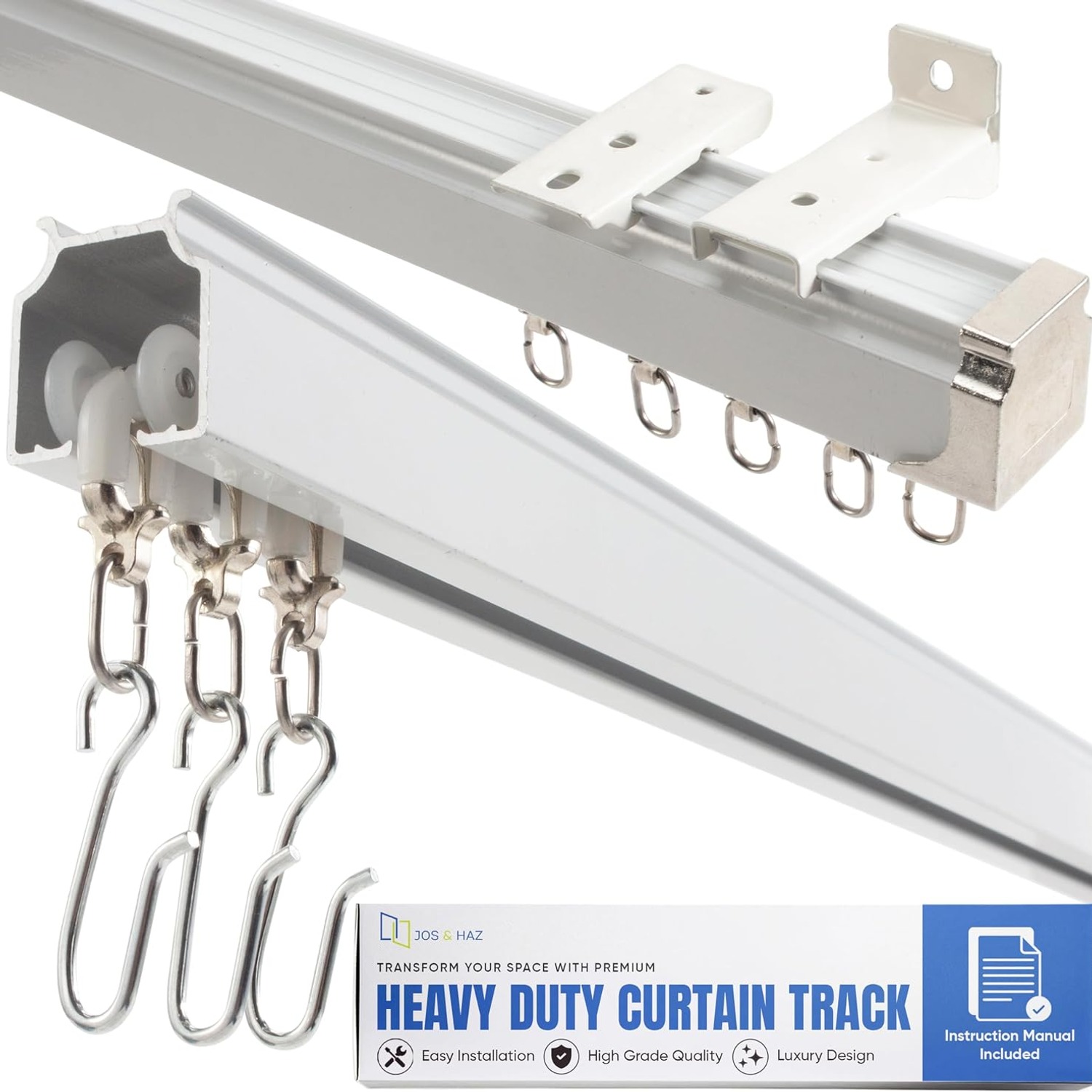
Rigidity is why the QL600 uses aluminum rather than plastic. Across a span approaching 16 feet, a flexible rail sags in the middle, the belt tension goes uneven, and the curtain starts to stick. A reinforced aluminum section holds its line and keeps the load, up to 20 kg here, moving smoothly from one end to the other.
The motor quality shows up at night. A cheap gearbox whines. A good one hums briefly and stops. If the track is going in a bedroom and you plan to run a sunrise schedule, noise is not a minor detail, it is the difference between a pleasant wake-up and being jolted awake at six.
Why hidden brackets change the look
Most curtain tracks are fitted and then forgotten, because nobody looks at them. Motorized tracks are different. They are chunkier, they sit on the ceiling where the eye travels, and if the hardware is visible the whole window reads as mechanical rather than finished.
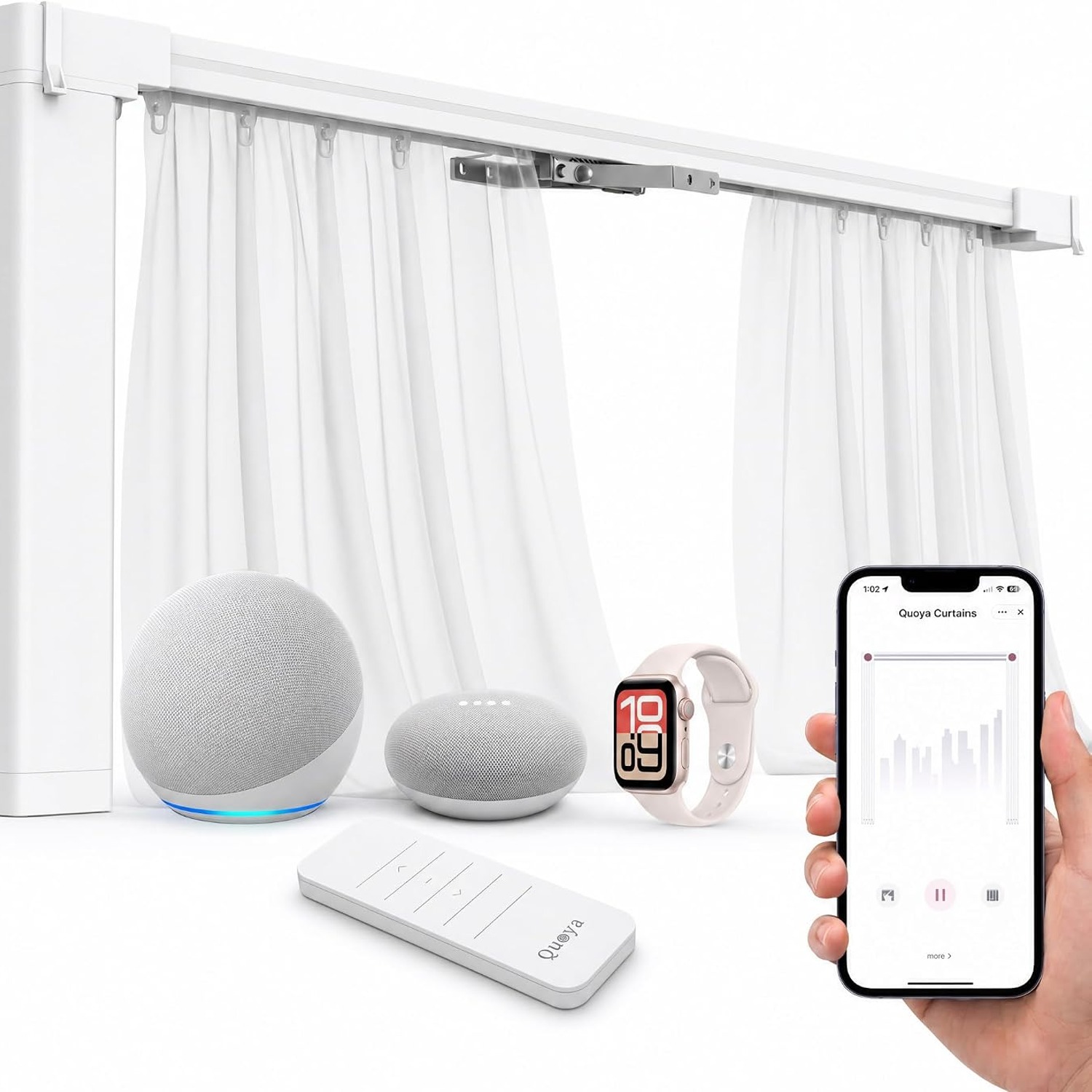
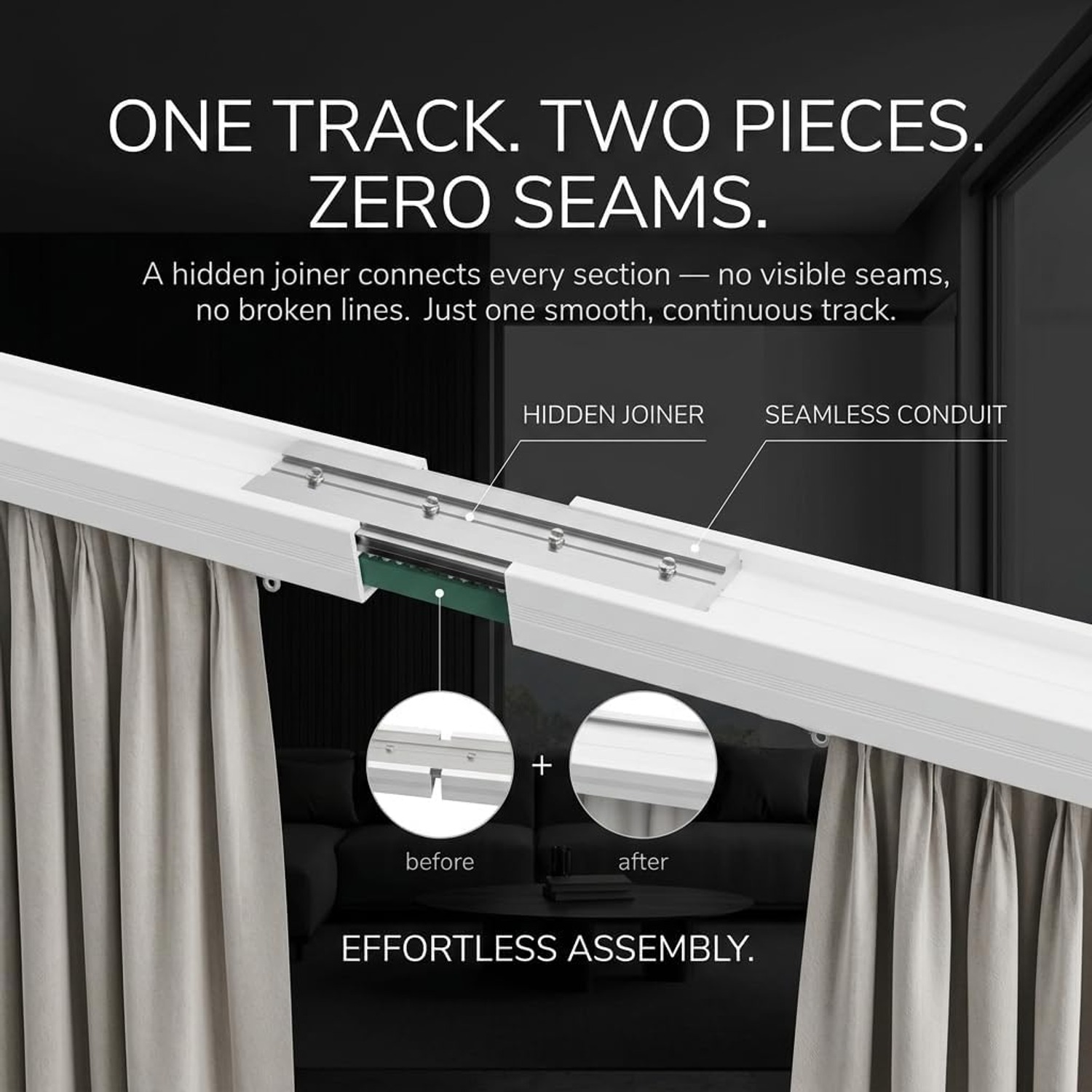
The QL600 handles this with clip-on ceiling brackets that sit behind the rail and joiners that hide inside the sections. What you see from the room is one continuous white line. In a room with a white ceiling it more or less disappears, which is the point.
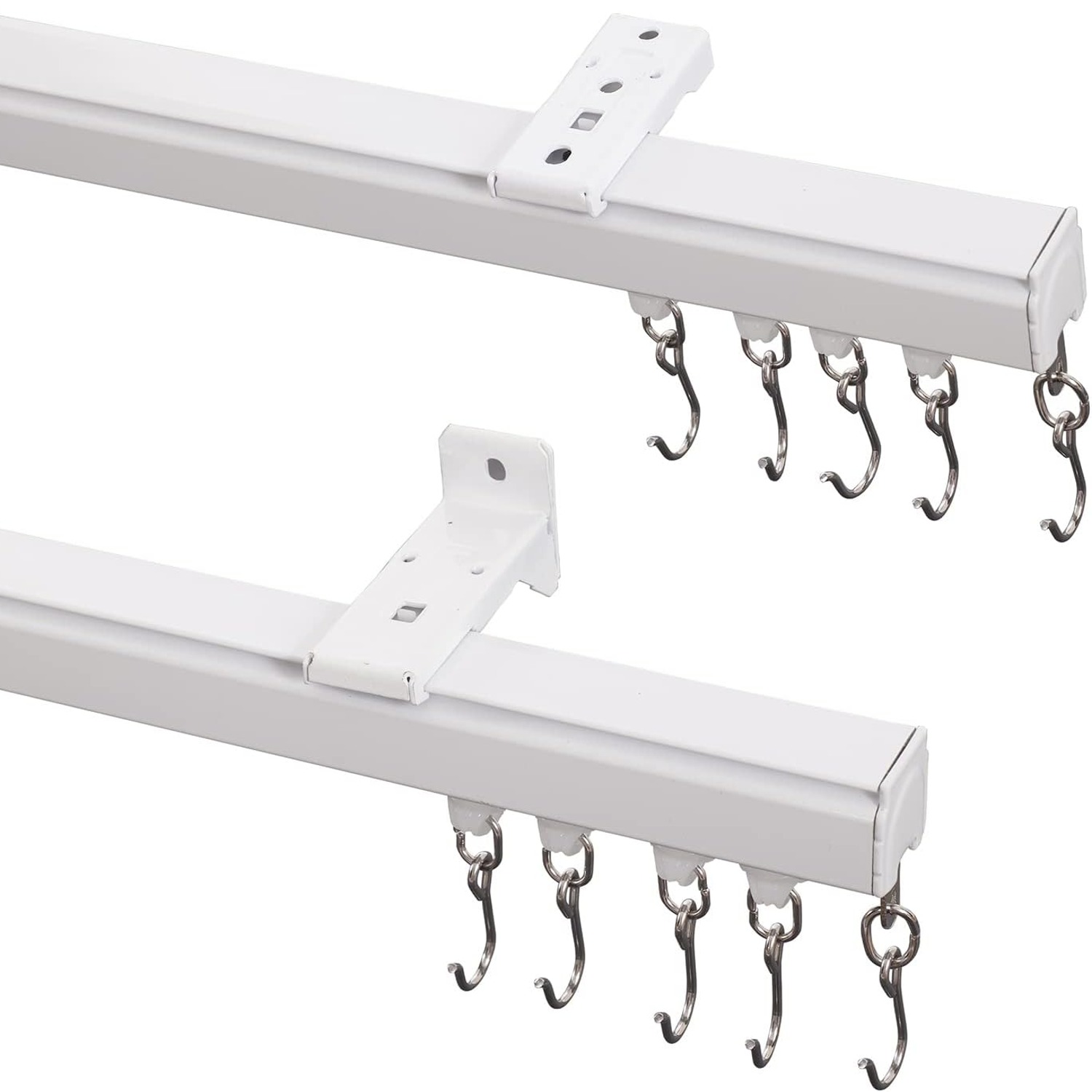
It is worth thinking about this before you choose a track. A rail with exposed L-brackets every 60 cm is cheaper, and in a utility room or a home office nobody cares. In a living room with good curtains, the concealed version is the one you will be happier with in a year.
Building the right length
Standard tracks come in fixed sizes and you either cut them down or live with the gap. The QL600 takes a different approach by shipping as a set of sections.
You get four 1 m pieces, one 50 cm, two 20 cm and one 10 cm. Combine those and you can hit almost any width within a couple of centimeters. Need 3.4 m? That is three 1 m sections plus two 20 cm pieces. Need 2.6 m? Two meters, a 50 cm and a 10 cm.
If your measurement falls awkwardly between combinations, any section can be trimmed with a hacksaw. Go slowly, support the rail properly, and file the cut edge smooth so the runners do not catch.
Measure the full width you want the curtain to cover, not just the window opening. Curtains look better when the stack sits clear of the glass, so add 15 to 25 cm at each end if you have the wall space. On a wide window that extra return makes the room feel bigger and lets in noticeably more light when the curtains are open.
The curtain heading question
This is where people get caught out, so it is worth being blunt about it.
The QL600 works with curtain hooks. Pinch pleat, pencil pleat, wave heading with the right tape, all fine. Eyelet curtains, where the pole passes through metal rings in the fabric, will not work. Ring-top curtains will not work either.
If you love your current eyelet curtains, the fix is to have the heading changed by a curtain maker, which is usually cheaper than new curtains. Or plan the track around a new pair. Either way, sort this out before you order rather than after the box arrives.
Wave or ripple fold headings are a particularly good match for a motorized rail. The folds are evenly spaced by design, so the stack looks tidy whether the curtain is a third open or fully drawn.
Control options and which you will actually use
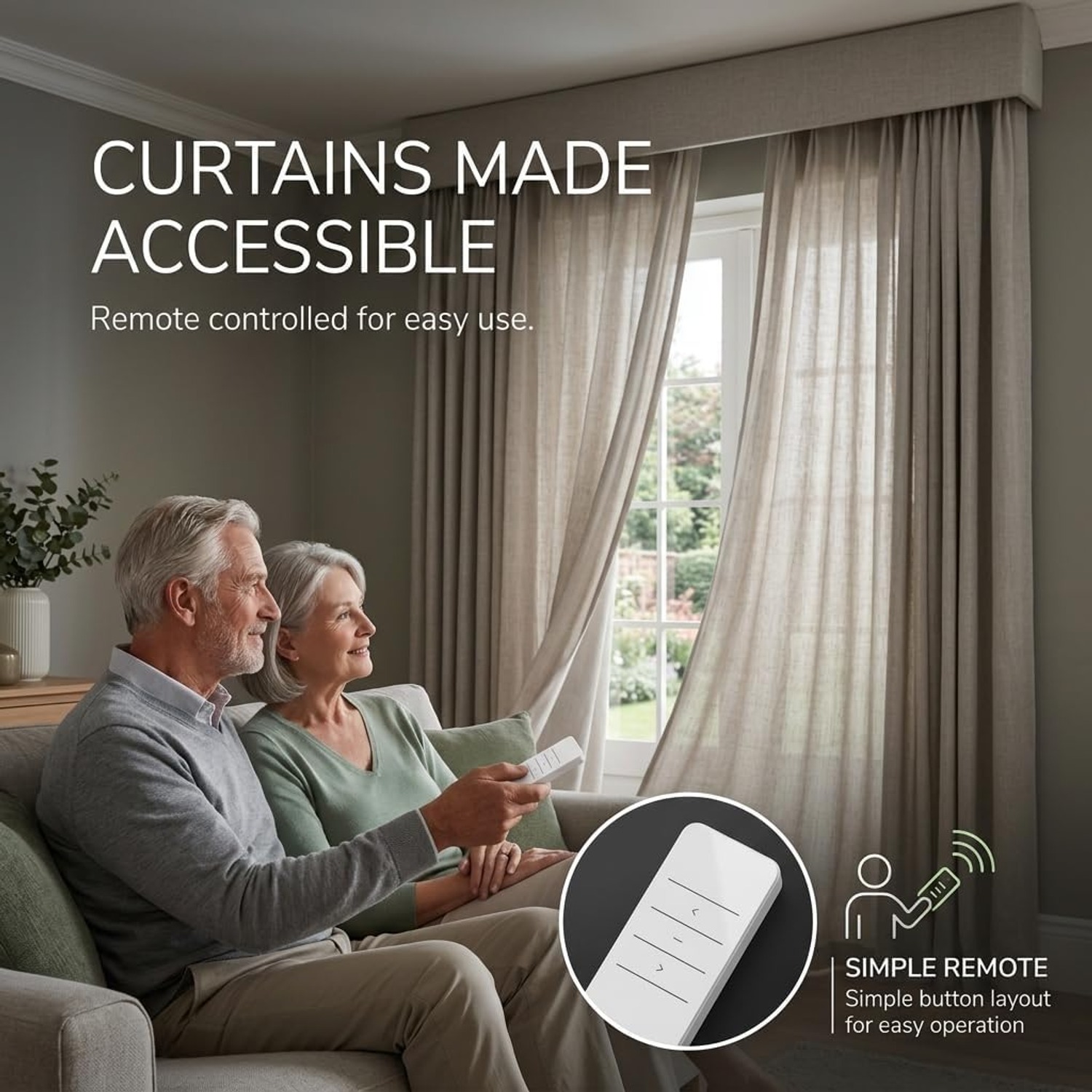
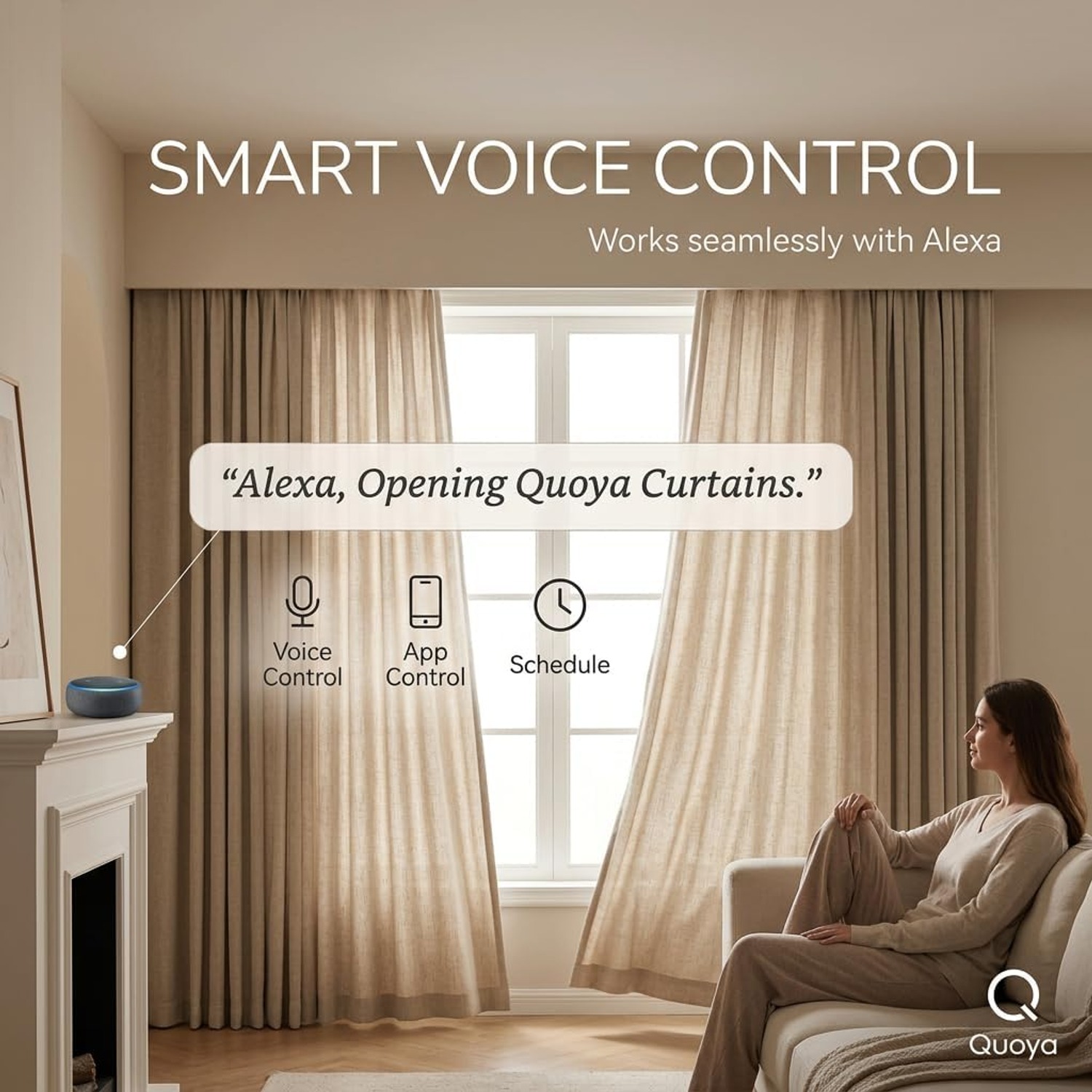
On paper the QL600 gives you four ways to move the curtains. A handheld remote, the Tuya/Smart Life app, voice through Alexa or Google Home, and scheduled routines. There is also touch-start, where a light pull on the fabric tells the motor to finish the job.
In practice households settle into one or two of these. The schedule does the morning and evening automatically, and the remote covers everything else. The app comes out when you are away from home and want the curtains to look lived in. Voice control gets used most in rooms where your hands are busy.
Set the schedule up properly on day one. A slow open around sunrise and a close at dusk covers roughly ninety percent of what you want the track to do, and once it is running you stop thinking about curtains altogether.
You can also set the motor to work from the left or the right, and choose one-way draw or two-way central opening. Decide the motor side based on your power socket, because the 118 in cable needs somewhere to go and a trailing lead across a wall spoils the clean install you just paid for.
Fitting it without regrets
This is a ceiling-mounted track. Before you order, look up and work out what is above the drywall. Fixing into joists is straightforward. Fixing into drywall alone needs proper cavity anchors rated for the load, and you should err on the side of more brackets rather than fewer.
Mark your bracket positions with a laser level or a long spirit level. A track that is 5 mm out over 3 m will look wrong even if the mechanism works perfectly.
Dry-fit the sections on the floor first. Join them, check the total length against your mark-up, and only then start drilling. It takes ten extra minutes and saves the far worse job of taking a fitted rail back down.
If any of this sounds like a stretch, a handyperson will fit it in an hour or two. There is no shame in it, especially on a high ceiling.
Keeping it running
Maintenance is light. Wipe the rail with a dry or just-damp cloth, then dry it. Skip the bleach and the scouring pads, they will mark the white finish.
Every few months, run a soft vacuum brush along the channel. Dust and fabric fibers are what eventually make runners stick, and five minutes of cleaning prevents a service call.
The one habit worth building is never dragging the curtain against a running motor. If the motor is moving, let it finish. Use touch-start or the remote. Fighting the belt is the fastest way to wear out a drive that would otherwise run for years.
The short version
If your curtains are heavy, your window is wide, or you are simply tired of walking across the room twice a day, a motorized track earns its place. The QL600 is a solid pick because of three things that matter in daily use, a rigid aluminum rail rated to 20 kg, brackets and joiners that stay out of sight, and a sectional design that lets you build the exact length you need up to 16.4 ft.
Check two things before you buy. Your window width, including the stack space either side. And your curtain heading, because hooks are required and eyelets will not fit.
Get those right and the rest is just choosing what time you want the sun to wake you.