

The complete guide
How to Divide a Room with a Ceiling Curtain Track (Without Building a Wall)
The problem with one room doing two jobs
Space runs out quietly. A spare room becomes an office, then an office and a guest room. A studio has to hold a bed, a sofa and a desk. Two children share a bedroom and go to sleep two hours apart. Nothing is broken, exactly, but the room never feels finished, because every part of it is visible from every other part.
The usual fixes are either expensive or ugly. Stud walls cost real money, need permission in a rental and are permanent. Folding screens fall over, eat floor space and look like office furniture. Freestanding shelving units block light and are a pain to move.
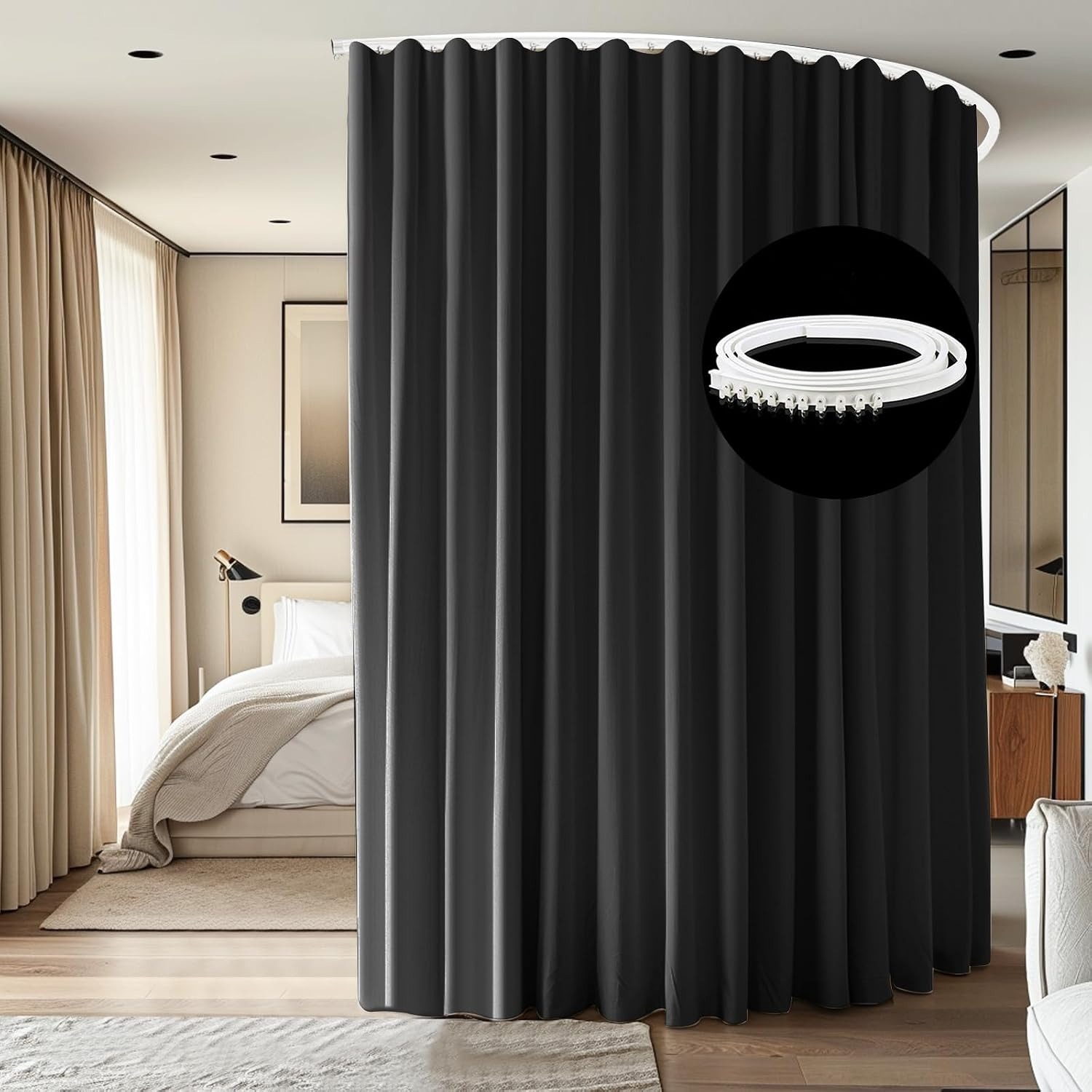
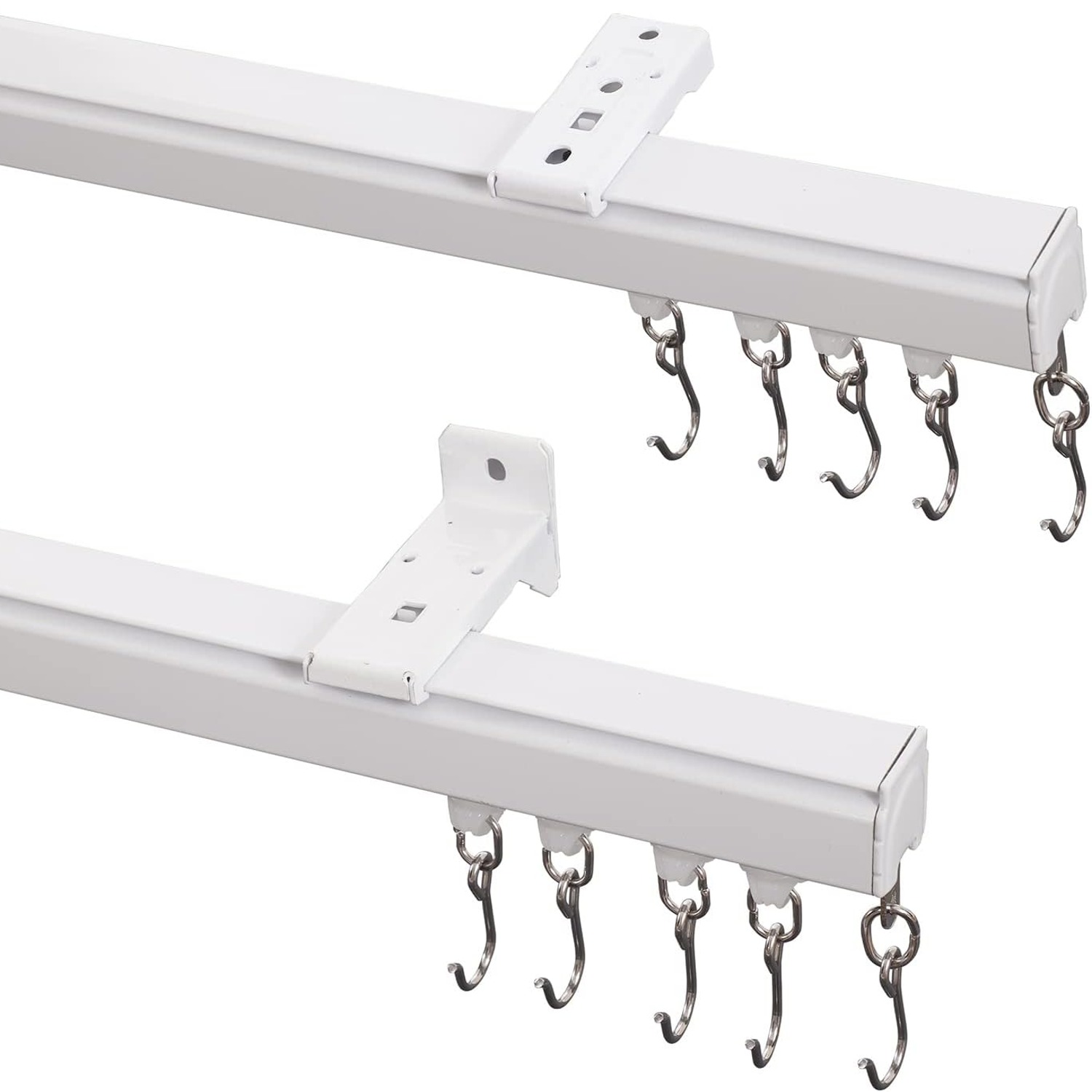
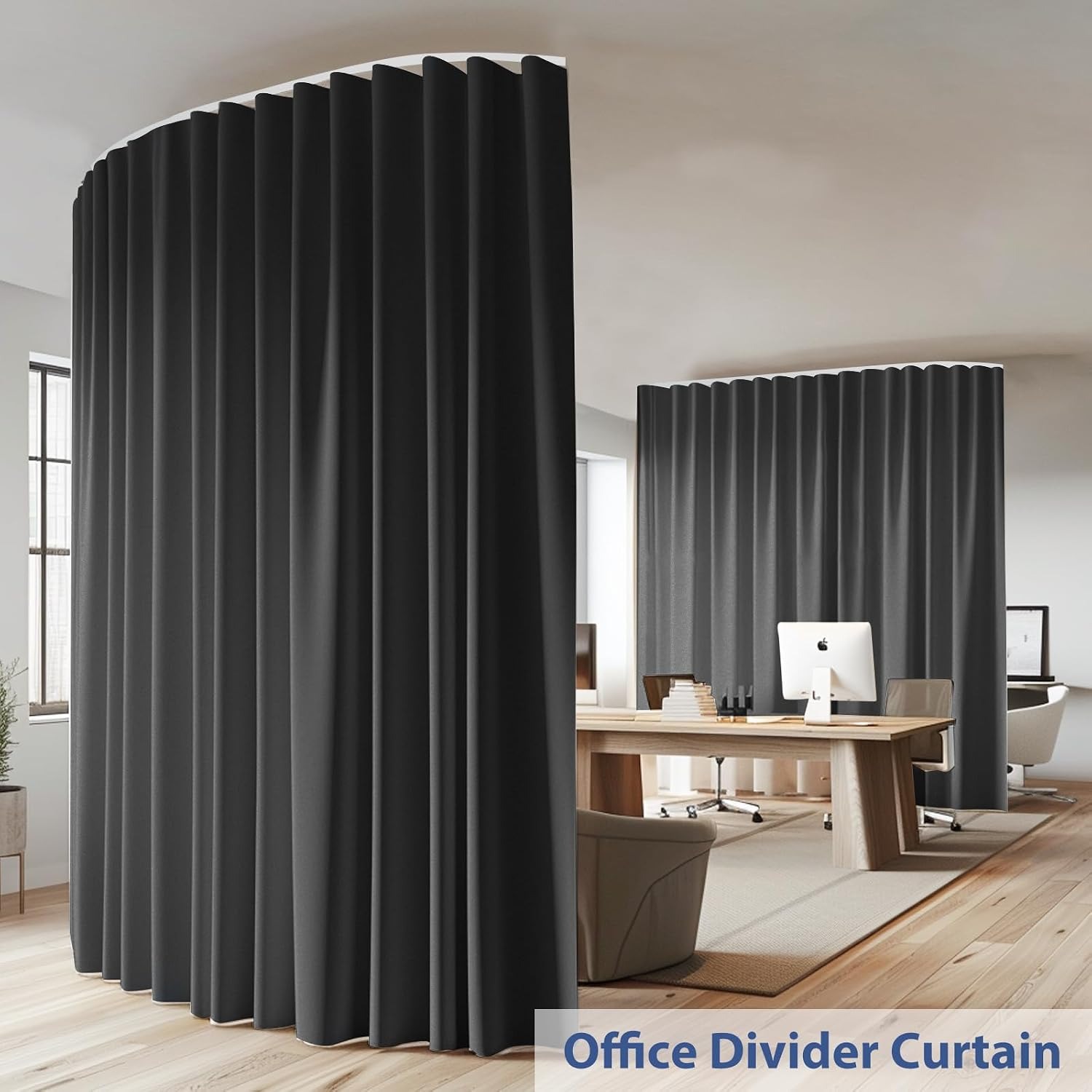
A room divider curtain on a ceiling track sits in between. It costs a fraction of building work, leaves nothing on the floor, and disappears to one side when you want the room back as one space. This set pairs a black blackout panel measuring 100 inches wide by 84 inches long with a bendable white rail, plus the hooks, tieback and mounting hardware you need to put it up.
How a ceiling track divider actually works
There are two parts. The rail carries the weight. The curtain does the screening.
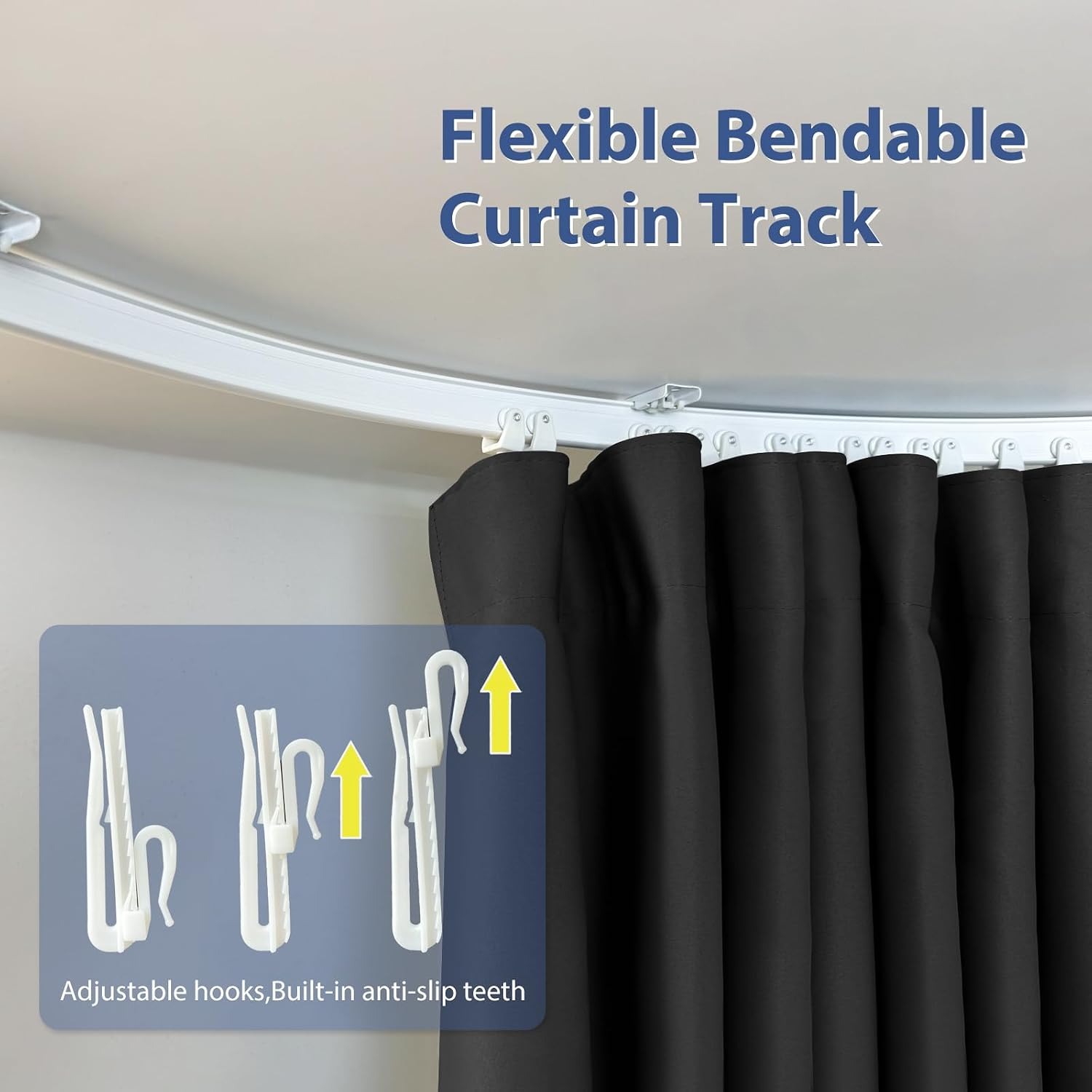
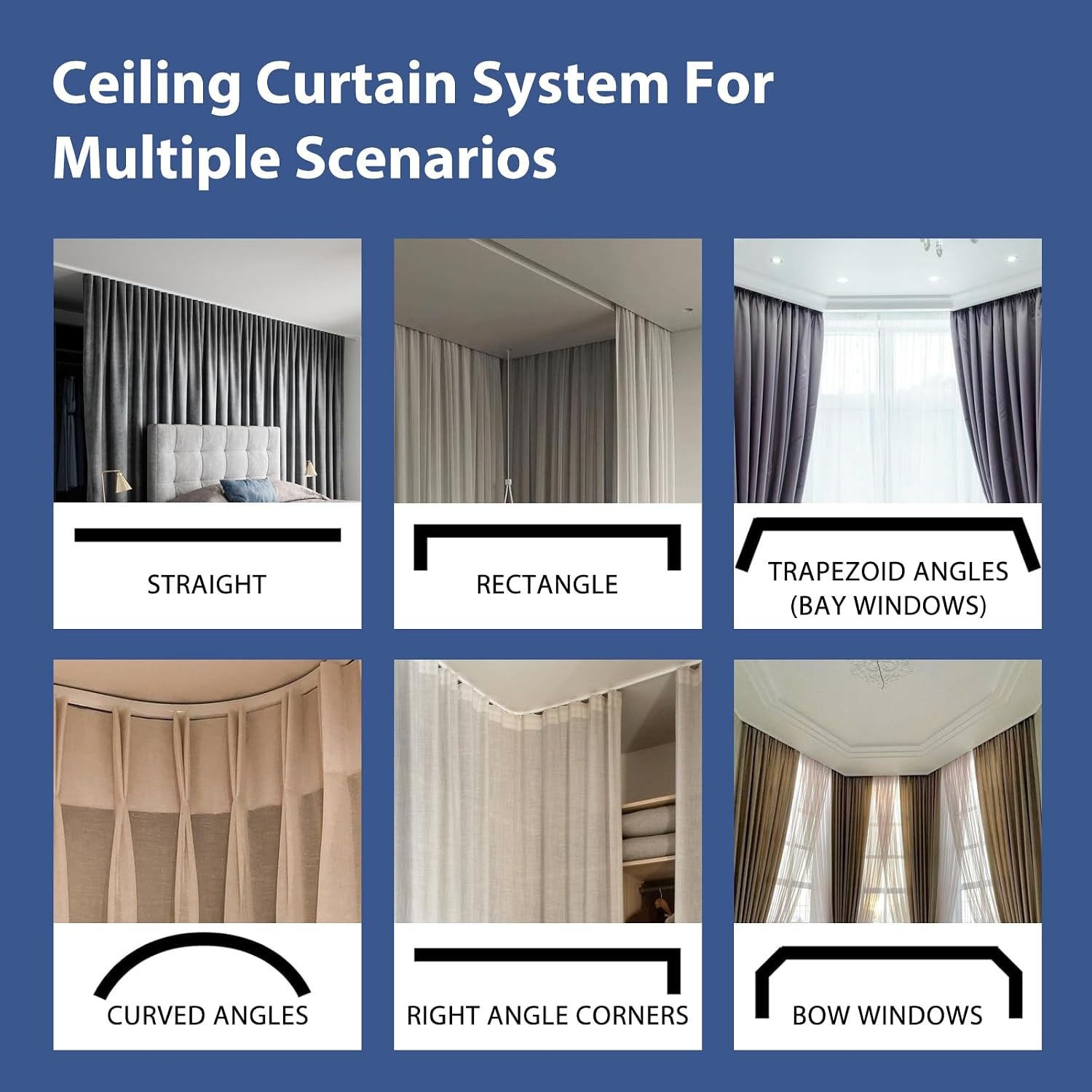
The rail here is bendable, which is the detail that matters most. A rigid pole can only go in a straight line between two fixed points, usually wall to wall. A bendable ceiling track can be shaped by hand into a curve, a right angle, a rectangle or a trapezoid before you screw it up. That changes what you can do with it. Instead of slicing a room in half, you can wrap a curtain around three sides of a bed, box off a desk in a corner, or follow a bay or a sloped ceiling line that a pole would never match.
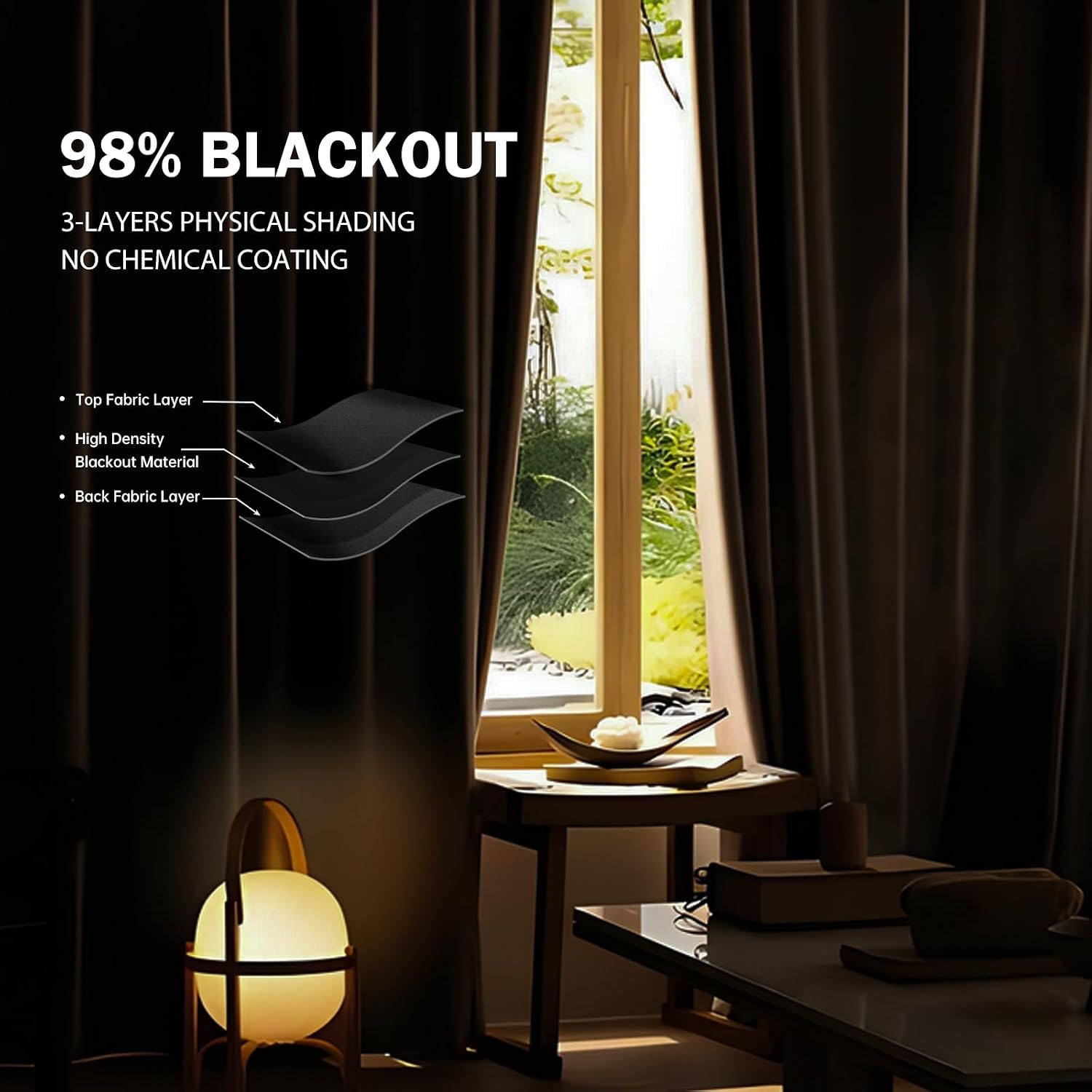
The curtain is a single wide panel in knitted 100% polyester, described as a three-layer blackout fabric and unlined. The heading is pleated and hangs on 20 hooks that run along the rail. Pull it across and the pleats open into even folds. Pull it back and the tieback holds it flat against the wall.
Because the fixings are in the ceiling, the floor underneath stays empty. You can vacuum straight through, push a chair under, and nobody trips over a base rail in the dark. That is the single biggest practical advantage over a folding screen.
Who this suits
Small flats and studios are the obvious case. Screening a bed from a living area makes a studio feel like it has a bedroom, even though the floor plan has not changed. Closing the curtain at night also keeps the sleeping corner darker if the main room has a street-facing window.
Shared children's rooms are the second case. Two kids with different bedtimes benefit enormously from a curtain partition for shared bedroom use. The one who is still awake can read with a lamp on without lighting up the whole room.
Home workers are the third. An office privacy curtain across a work corner gives you a clean background for calls and a visible signal to the rest of the household that you are working. It also helps you stop working, which is harder than it sounds when the desk is in the lounge.
Beyond those, people use ceiling track dividers to screen a utility corner, to hide storage shelving in a garage, to create a changing area, or to split a long living room into a sitting end and a dining end.
Choosing the right setup
Start with measurements, not with the product. Measure the width of the opening you want to cover and the drop from your ceiling to the floor.
For width, remember that a 100 inch panel does not cover 100 inches when hung. Fabric needs to gather to look right and to hang in proper folds. As a rough guide, expect the finished covered span to be meaningfully less than the flat width, and plan for some overlap at each end rather than an exact fit. Light and sightlines sneak through gaps, so overlap is your friend.
For drop, the panel is 84 inches long, which is seven feet. On a standard ceiling that gives a small gap at the floor. That gap is normal and actually useful, since a hem that drags collects dust and wears through. If you have very high ceilings, accept that the gap below will be larger, or mount the track on a drop bracket if your situation allows.
Then think about shape. Sketch the room from above and draw the line you want the curtain to follow. A straight run wall to wall is simplest. An L shape around a corner desk uses less rail than you think. A curve around a bed feels softer and avoids hard corners in a small space. Shape the rail before you fix it, and keep bends gentle so the hooks glide instead of catching.
Last, check your ceiling. Timber joists take screws happily. Drywall without a joist behind needs proper anchors rated for the load, and concrete needs the right plugs and a masonry bit. A curtain plus track is not heavy, but it gets pulled sideways every time someone opens it, and side loads are what pull bad fixings out.
Getting the install right
Mark your line first with a pencil and a long straight edge or a chalk line. A track that is a few millimeters off looks fine. A track that wanders by a centimeter over three meters looks obviously wrong once the fabric hangs off it.
Fix the ends first, then work along the run adding the middle supports so the rail cannot sag. Check each bend is smooth before you tighten everything down. Hang the curtain last, hooking it on from one end and sliding each hook along as you go.
Then open and close it ten times. Any hook that catches, any bend that is too tight, any support screwed in a fraction too deep will show up straight away, and it is far easier to fix before you have put the ladder away.
Keeping it looking right
Polyester is forgiving, which is part of why it is used for this. Wash the panel in cold water on a gentle cycle, on its own so heavier items do not abrade it. Do not bleach it. Dry it on low heat or hang it damp, which pulls most creases out by itself. If fold lines from the packaging survive, a cool iron or a steamer finishes the job.
The rail needs almost nothing. Wipe dust out of the channel occasionally with a dry cloth. Resist the urge to spray lubricant in there, because oil holds grit and grit is what makes gliders stick. If a hook starts dragging, the cause is usually a kink in a bend rather than friction.
Keep the whole thing indoors. The fabric is listed as not water resistant, so a damp bathroom or a covered patio will shorten its life.
A note on expectations
Two honest points. First, blackout fabric blocks light through the cloth, but a room divider hangs away from walls, so light passes around the edges. If total darkness is the goal, run one end tight to a wall and overlap generously at the other.
Second, a heavy drape dampens sound without stopping it. It reduces echo and makes a conversation on the other side less distinct. It will not give you a soundproof room, and no curtain will.
Knowing that up front means you get what you expected, which is a flexible, reversible way to make one room behave like two.
The short version
If you need a second space and cannot build a second room, a ceiling mounted curtain track is the cheapest sensible answer. This set gives you a bendable white rail you can shape to your room, a 100 by 84 inch black blackout panel, 20 hooks, a tieback and the mounting hardware, all in one 2.29 kg box.
Measure your opening and your drop first. Plan the shape on paper. Fix into something solid. After that it is a job you can finish in an afternoon, and undo just as easily the day your floor plan changes again.