

The complete guide
Flexible Ceiling Curtain Track Buyer's Guide
The problem with straight rails in rooms that are not straight
Curtain poles have one big assumption built into them. They assume you want a straight line across a flat wall above a rectangular window. That covers a lot of situations, but it misses plenty of others.
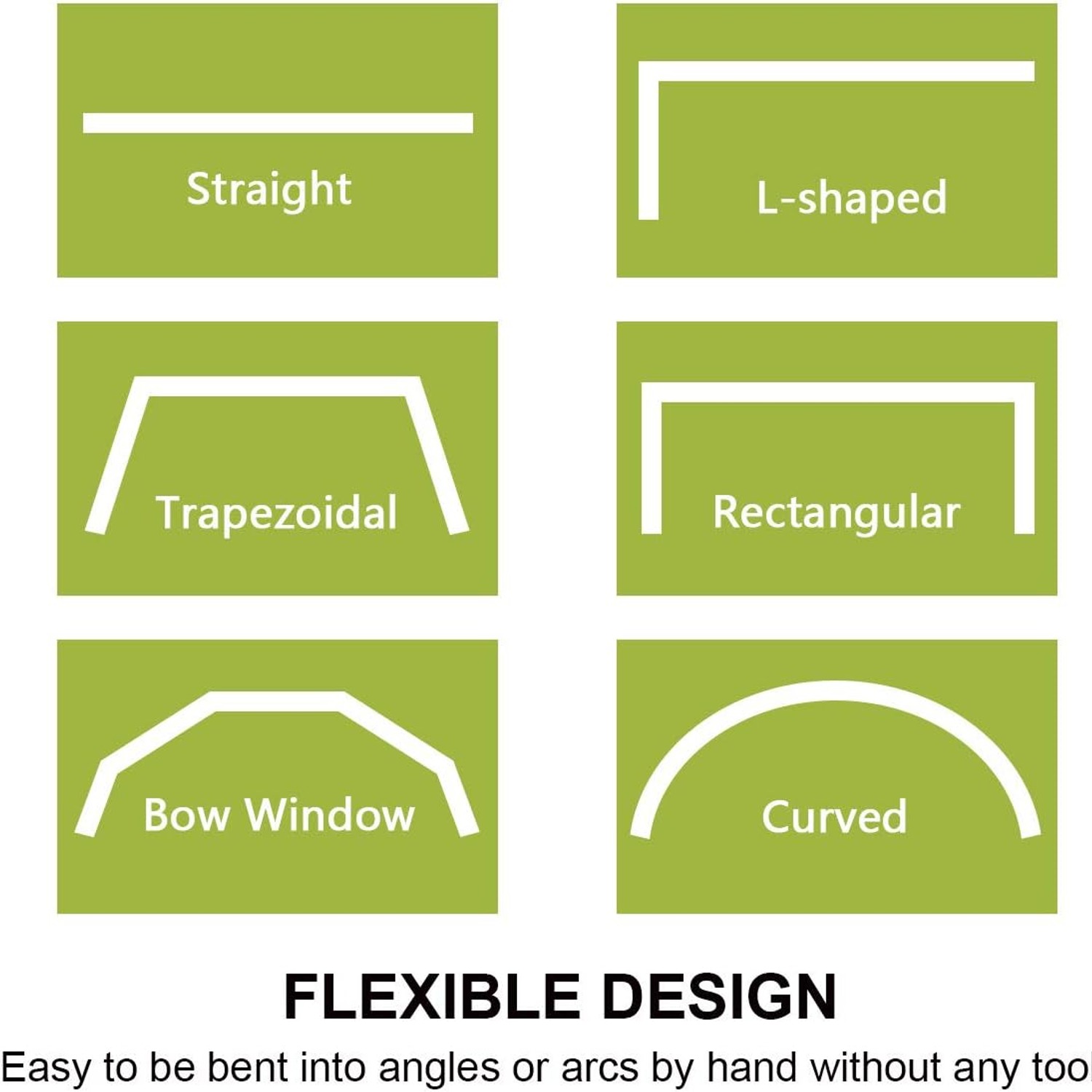
Think about a bay window with three faces. A pole cannot follow it. Think about a bed in an alcove where you want a curtain to wrap around two sides. A pole cannot do that either. Think about an open-plan flat where you want to screen off a sleeping corner, or a camper van with curved walls, or a treatment room where the floor needs to stay clear for a wheelchair.
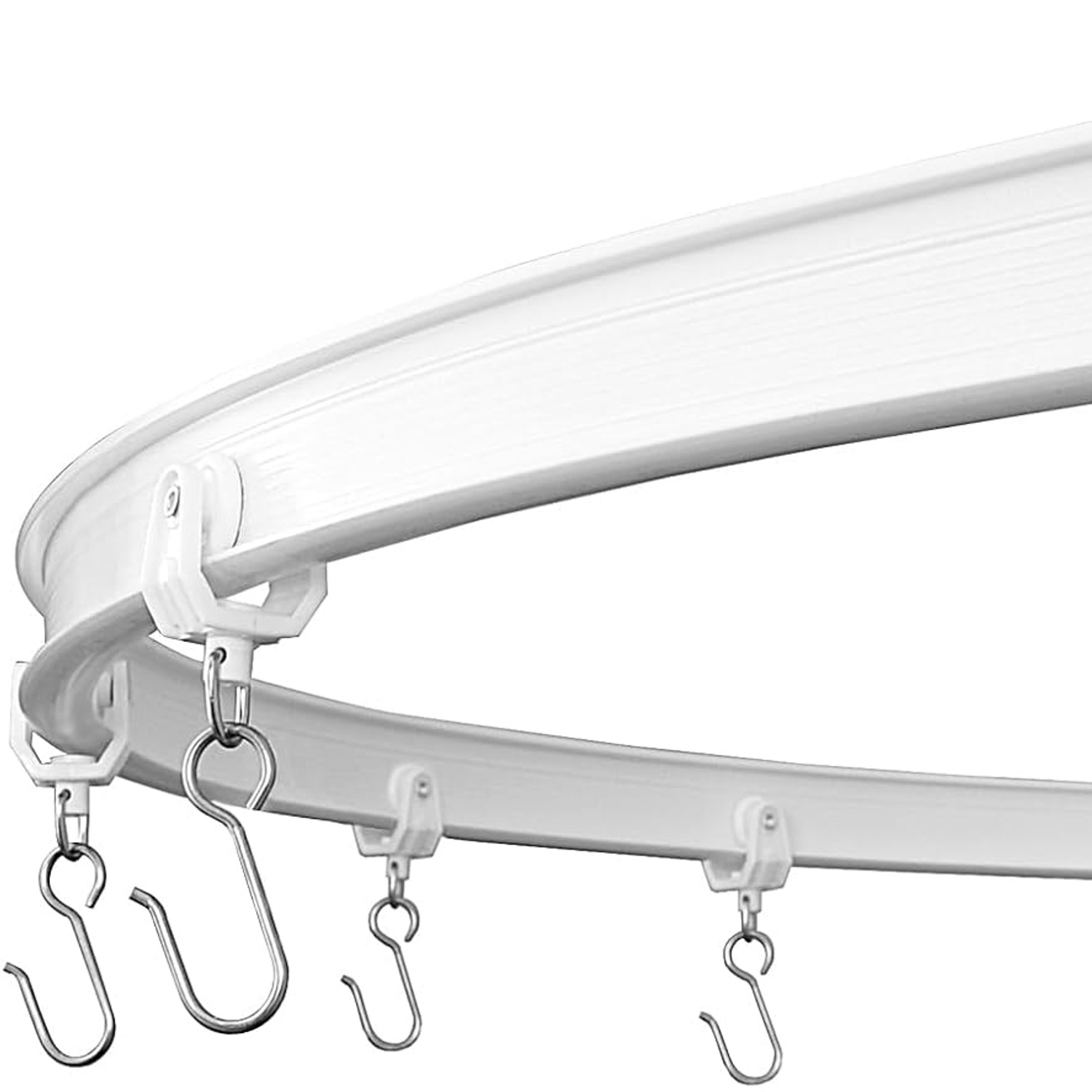
In all of those cases, the fix is a track that mounts to the ceiling and bends. That is exactly what this is. Twenty feet of white rail with a steel plate running inside it, a set of ceiling mounts, and fifty carriers that roll rather than scrape.
How a flexible ceiling track actually works
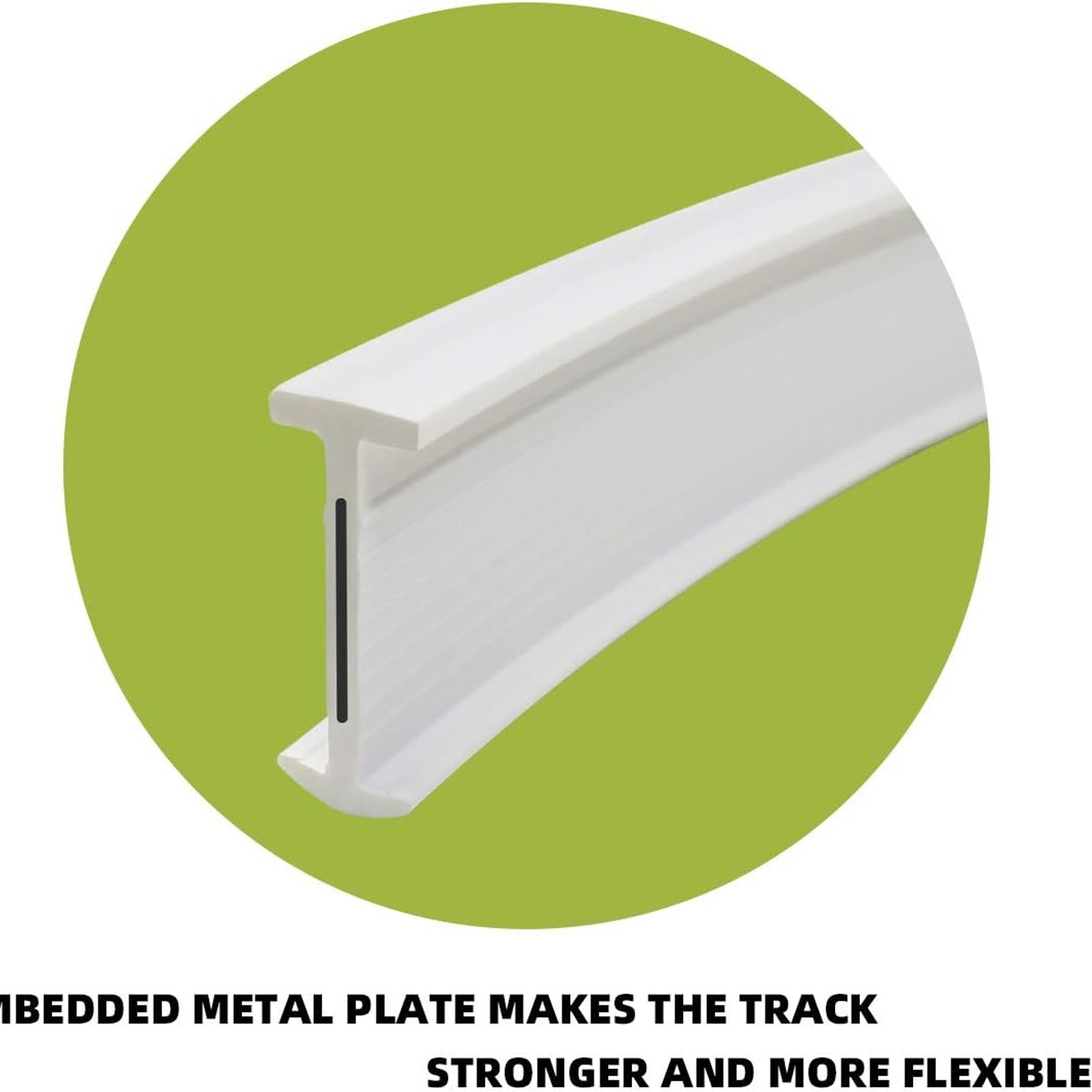
The rail itself is a PVC channel with a steel plate embedded along its length. The PVC gives you the smooth inner groove the carriers run in. The steel is what makes the whole thing behave properly when you bend it.
Without that plate, a plastic track would either snap at the bend or spring straight again the moment you let go. With it, the rail takes a curve and holds it. You shape it by hand as you work along the ceiling, fixing a mount every so often to lock in the line you want.
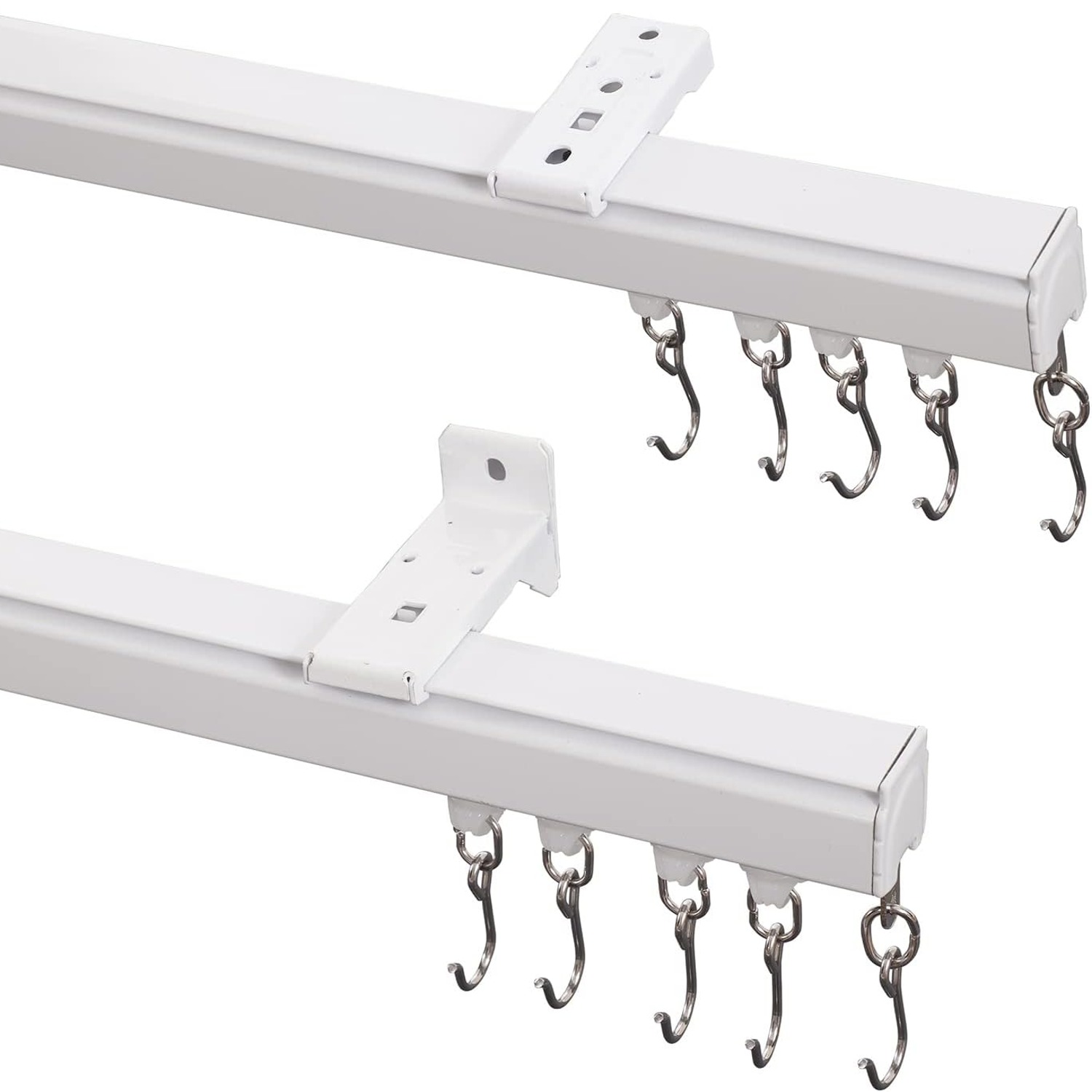
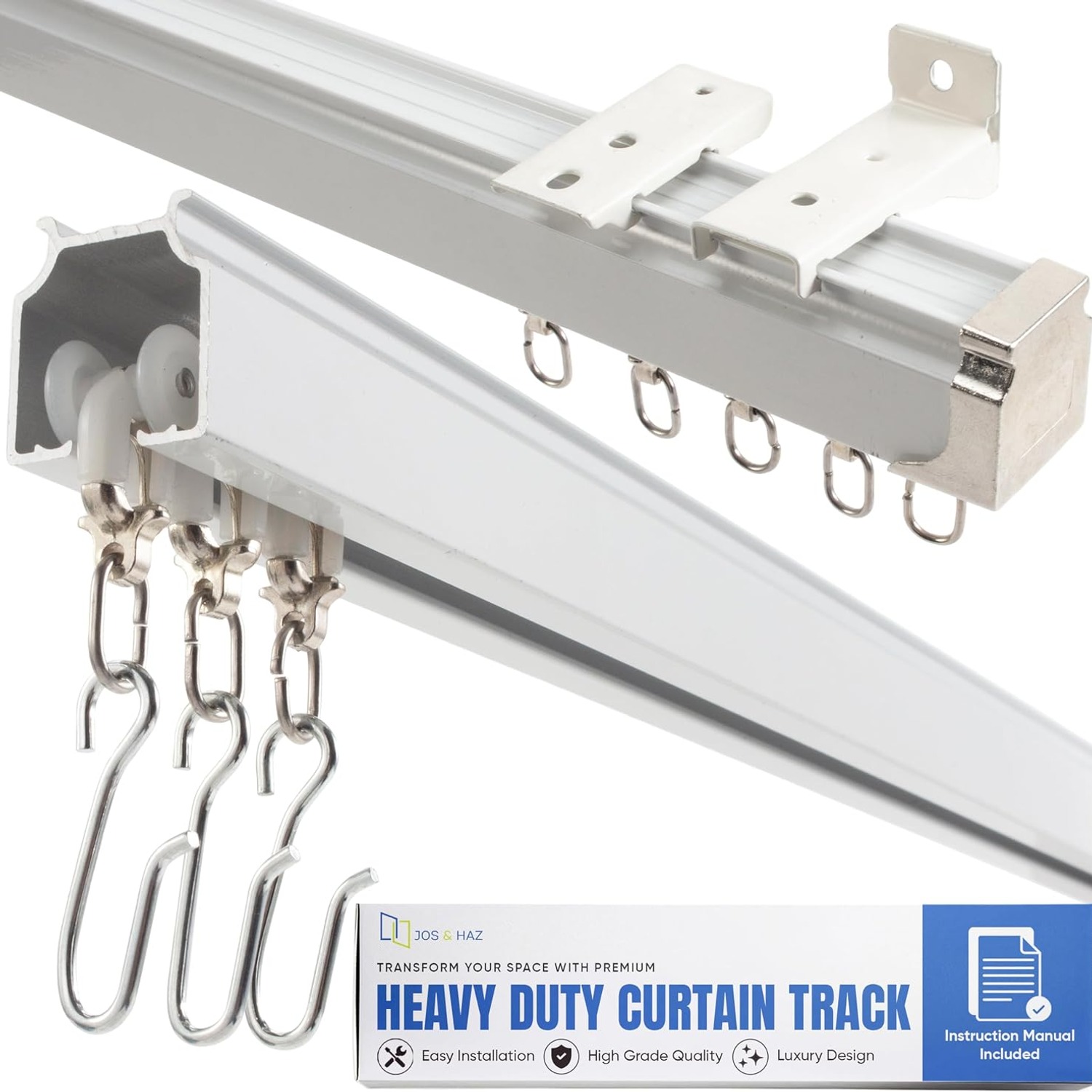
The carriers are small rollers that sit inside the channel. Your curtain hangs from hooks clipped onto those carriers. When you pull the curtain, the rollers turn and the whole thing travels along the track, including around the curves. That rolling action is why a good ceiling mounted curtain rail sounds like a soft rumble rather than a scratchy drag.
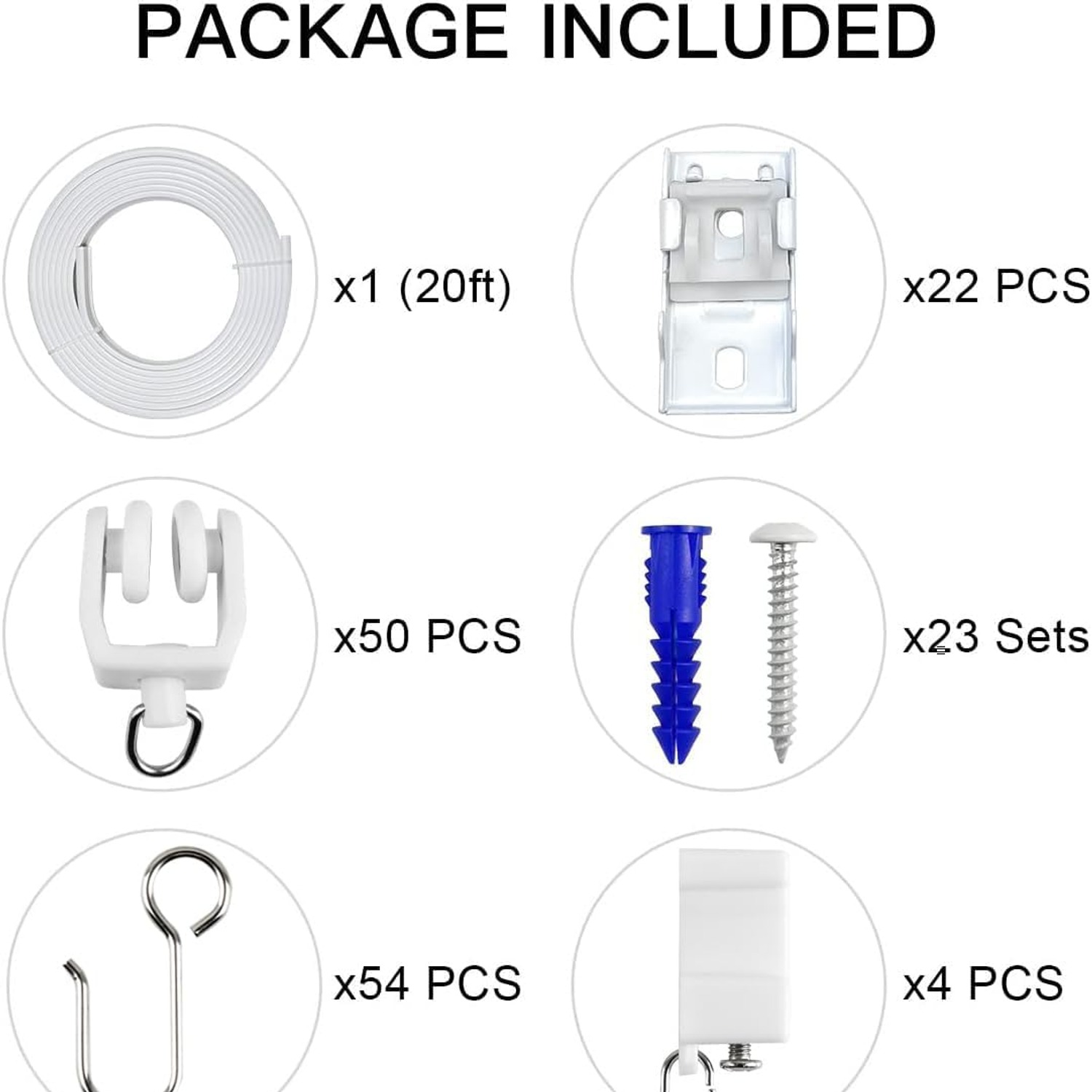
The kit here includes 50 carriers and 54 hooks, which is enough for a long divider or a couple of window curtains. Twenty-two ceiling mounts and 23 sets of screws cover the fixing side of the job.
Who this suits
Small flats and studios. The most popular use. Hang a curtain across the room and you have two spaces instead of one. Pull it back and you have the open room again. No building work, no permission from a landlord beyond the drill holes you will later fill.
Care at home and clinical rooms. Hospital settings and home health care are both listed uses for this track. Floor-standing screens get in the way. A ceiling track keeps everything overhead so beds, hoists and chairs can move freely.
Camper vans and RVs. Van walls curve. That is a problem for rigid hardware and not a problem at all for a bendable rail. People use these to screen off a bed area or a shower cubicle in a conversion.
Awkward windows. Bays, corner windows and anything where the glass turns a corner. Running a single curtain around the whole shape looks much tidier than three separate poles.
Photo and video work. Backdrops hang off a track just as well as curtains do, and the ability to curve the rail means you can create a soft corner rather than a hard edge behind a subject.
Working out whether 20ft is enough
Measure the actual path the curtain needs to travel, not the straight-line distance. If the track goes round a corner, you measure along both legs plus the curve.
Then add a little extra at each end. You want the curtain to stack back past the opening rather than sitting in front of it, otherwise it blocks light or view even when open. Six to twelve inches of overrun at each end is a reasonable allowance.
Twenty feet covers a very long divider wall, or a full bay plus overrun, or two separate windows if you cut the rail into two pieces. If your run is longer than 20ft in one go, this kit on its own will not reach, and you should plan a deliberate break point.
Weight, fabric and why they matter
The maximum weight recommendation for this track is 33 pounds. That number is for the whole run, not per carrier.
Most sheer and light cotton curtains sit well under that. A full-height blackout curtain across a long divider is where you start getting closer. Heavy canvas, multiple layers or a thick interlining will push the number up faster than you expect, so weigh the curtain if you are unsure.
Two practical habits keep heavy fabric behaving. First, use more ceiling mounts than you think you need, especially in the middle of a span and around any curve. Second, use plenty of carriers so the load spreads across many points rather than hanging off a few.
If the curtain is going to be pulled back and forth many times a day, more carriers also gives a neater fold and a smoother pull.
Fitting it without drama
Start by marking the line on the ceiling. A chalk line or a long straightedge helps on a straight run. For a curve, a bit of string taped in place lets you check the shape looks right before any holes appear.
Find out what the ceiling is made of. Timber joists are the easy case, because the supplied screws bite properly. Drywall is the common case, and there the supplied screws alone will not hold a loaded curtain. You need hollow-wall anchors rated for the weight. Concrete needs the right plug and a masonry bit.
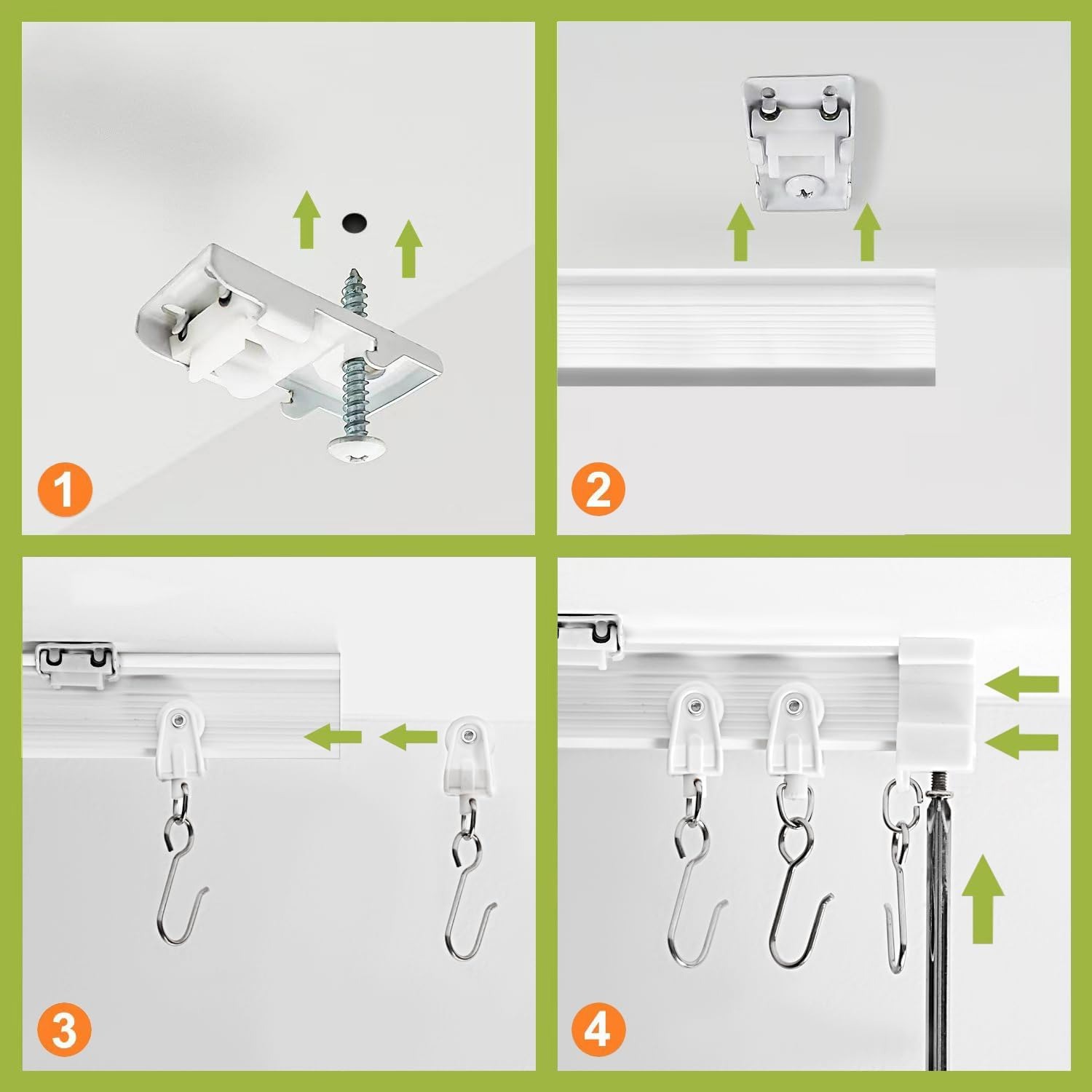
Cut the track before you mount it, using a fine tooth hacksaw. Cut square, clear any rough edges from the cut end, and test that a carrier slides in and out freely.
Then work along the ceiling fixing mounts one at a time, bending the rail into shape as you go. Close spacing at the curves. An extra person holding the far end makes the whole job much less awkward, particularly over a 20ft run.
Finally, load the carriers in, cap the ends if your setup needs it, and hang the curtain.
Keeping it running smoothly
A ceiling track needs almost nothing in the way of care, but a few things help.
Wipe the white rail with a damp cloth when you dust the room. Skip bleach, solvents and scouring pads, which will dull or mark the finish.
If the glide starts feeling sticky, the cause is usually dust inside the channel. Slide the carriers out one end, wipe the groove, and put them back. Resist the temptation to spray lubricant in there. Oily sprays catch dust and make the problem worse a few months later.
Once or twice a year, run a screwdriver along the mounts and nip up anything that has worked loose. Doors slamming and seasonal movement in a building will gradually loosen fixings, and a loose mount is the usual cause of a sudden sag.
Common mistakes worth avoiding
Spacing mounts too far apart is the big one. It looks fine on day one and sags by month three.
Bending the rail into a sharp kink rather than a gentle curve is the second. The steel plate lets you bend the track, but a tight fold in one spot will restrict the carriers. Spread the curve over a longer stretch and it runs far better.
Cutting before measuring twice is the third, and the only one with no fix.
Lastly, do not forget the overrun at each end. People measure the exact window width, mount the track, then wonder why the open curtain still covers a slice of the glass.
The short version
This is 20ft of white ceiling mounted curtain rail that bends. A steel plate inside the PVC lets it hold a curve and carry up to 33 pounds of curtain. You cut it to length with a hacksaw, screw the 22 mounts into the ceiling, load the 50 rolling carriers and hang your curtain off the 54 hooks.
It is the right answer when a straight pole cannot follow your room: bays, corners, alcoves, van walls, open-plan spaces and care rooms where the floor needs to stay clear. It is the wrong answer if you have a simple rectangular window and want a decorative pole on show.
Measure the full path, allow for overrun, weigh your curtain, and use plenty of mounts. Do those four things and the track will quietly do its job for years.