


The complete guide
How To Choose And Fit An Aluminum Ceiling Curtain Track
The problem with a curtain that will not hang straight
You buy decent curtains. You hang them. Two weeks later the middle of the rod has a visible sag, one panel sticks halfway across, and the top of the window has a bright gap where light leaks over the fabric. None of that is the curtain's fault. It is the hardware.
A curtain rod carries its load at two points, so everything in between has to resist bending on its own. A thin rod over a wide window will bow. A flexible plastic rail will do the same at every bracket, and once it takes a set it never looks straight again. The runners then have to climb over those dips, which is why curtains start to catch.
A rigid aluminum track works differently. It is supported along its length by multiple brackets rather than at the ends, and the profile itself is stiff. The runners sit inside a channel and travel in a straight line. You get a clean horizontal edge at the top of the window and curtains that move the whole way without a fight.
What this kit actually is
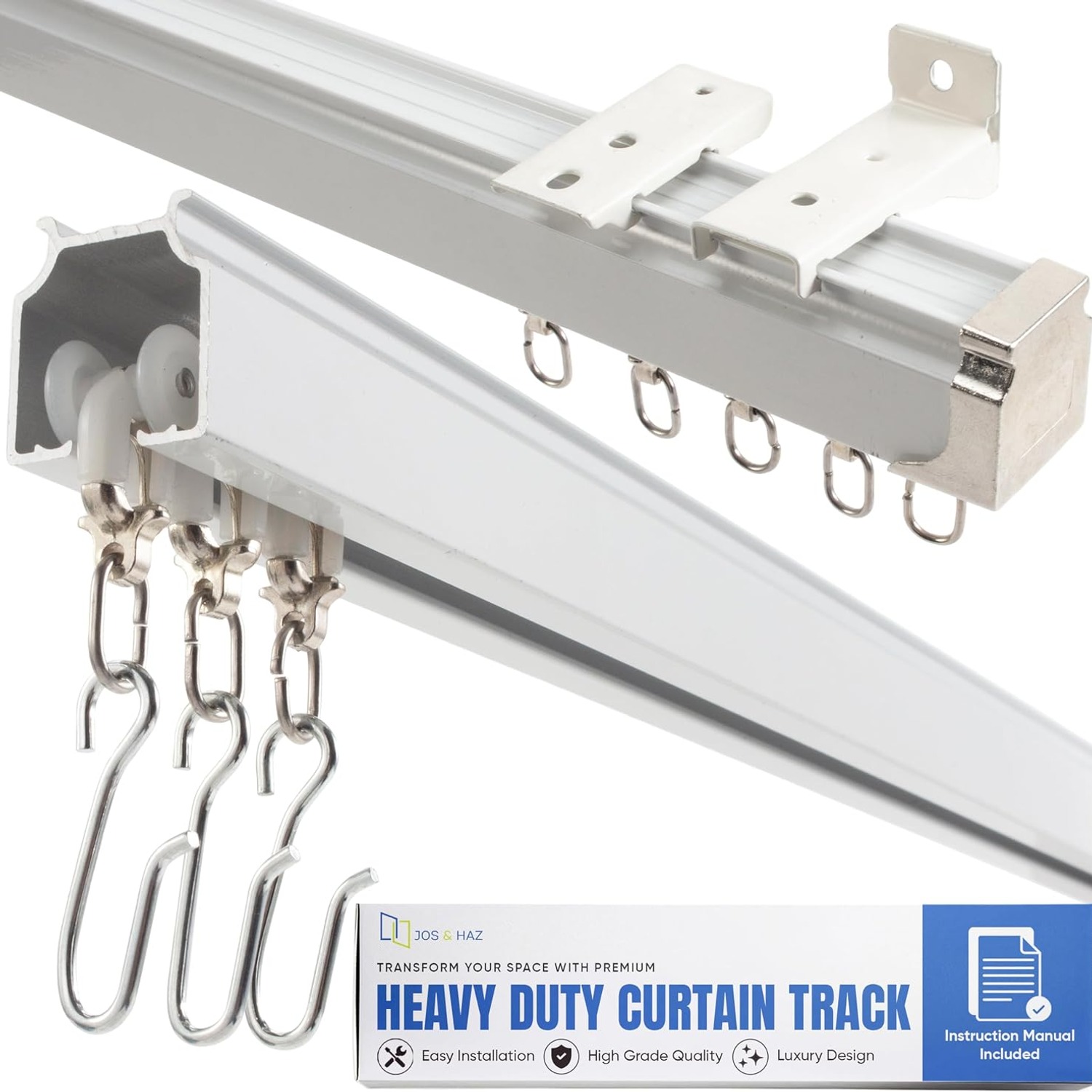
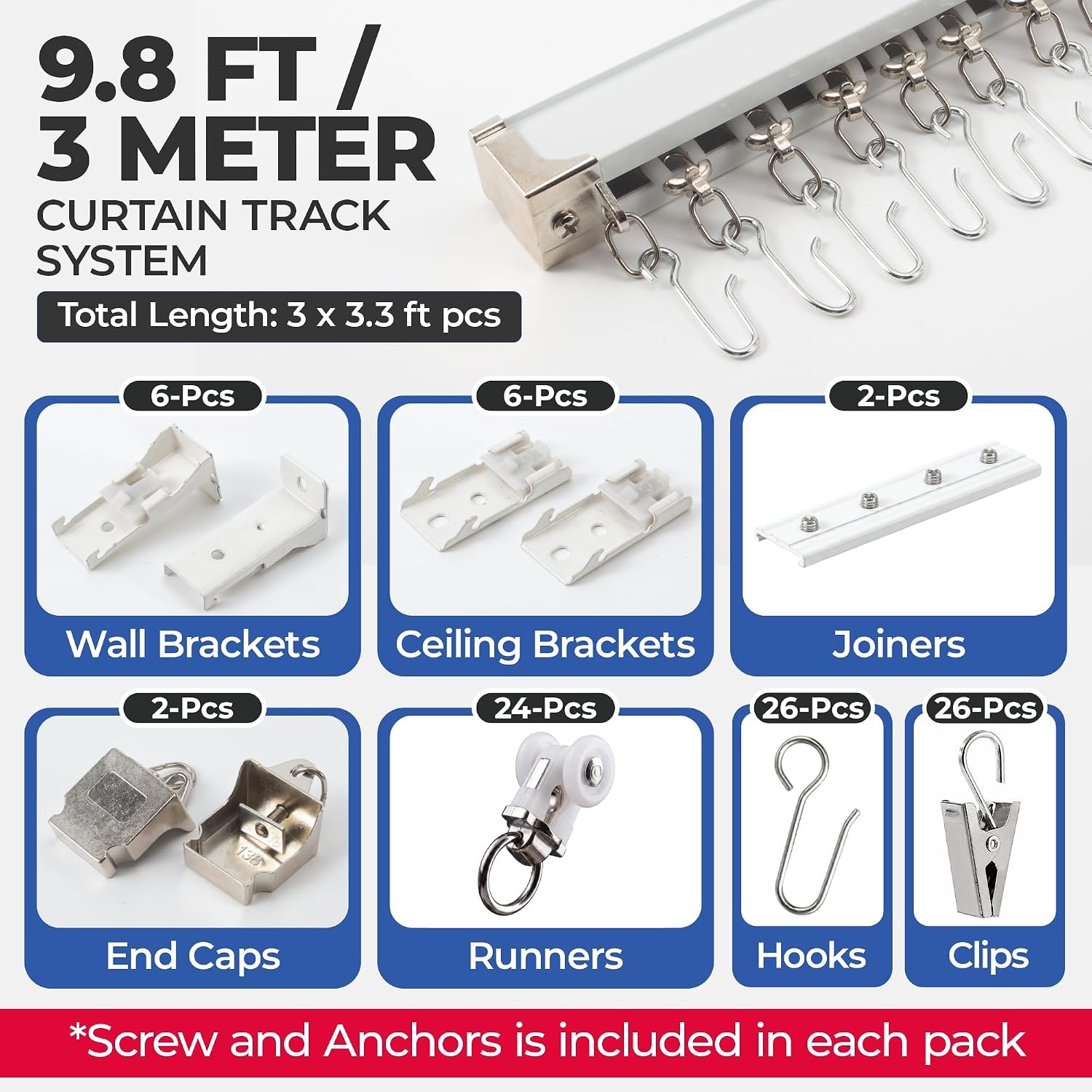
The Jos & Haz track is a white aluminum rail, 118.11 inches long (about 9.8 feet) and 1 inch wide. The whole thing weighs 2.8 pounds, so it is easy to handle on a ladder once you have a helper holding the far end.
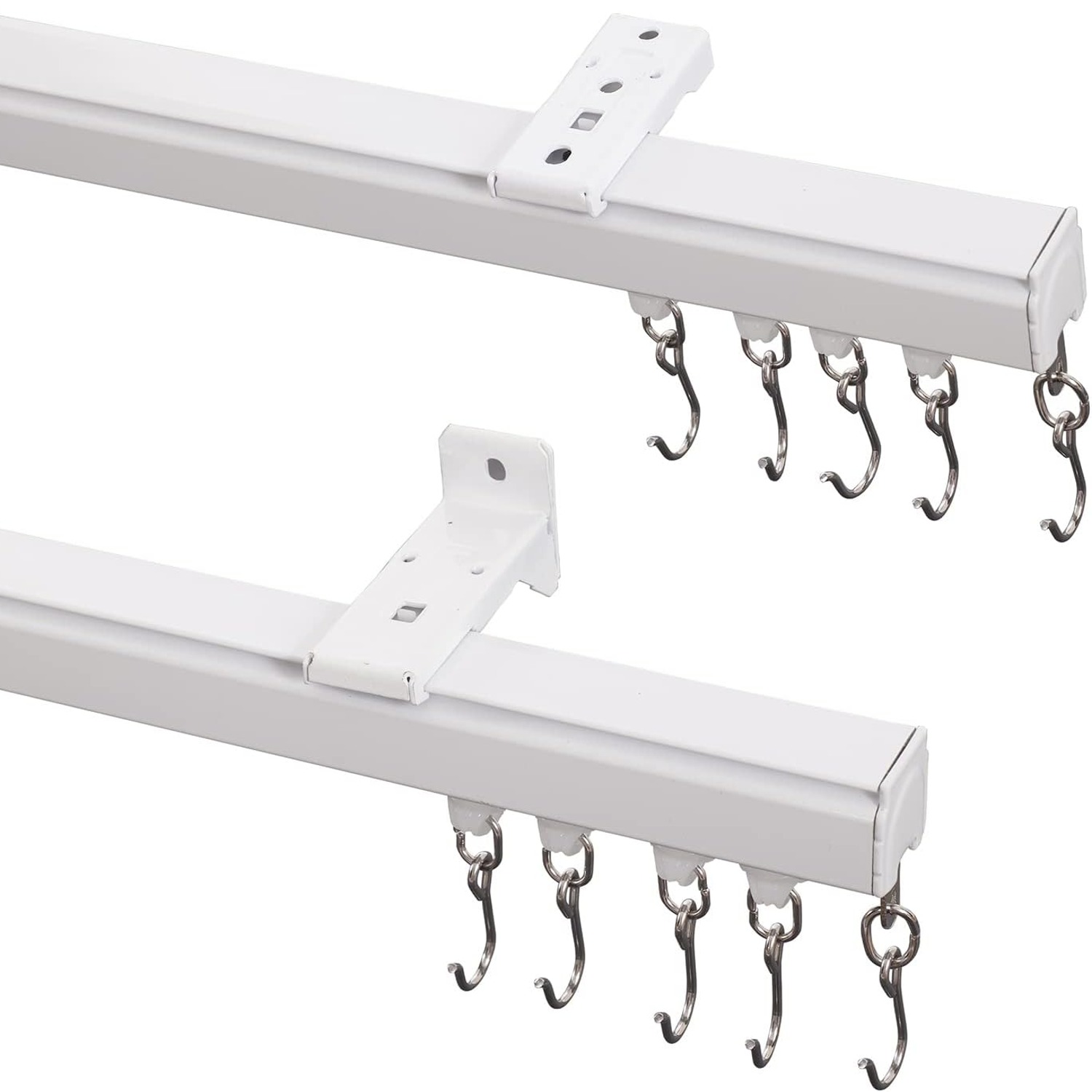
The kit includes 6 ceiling brackets, 6 wall brackets, 2 joiners, 2 end caps, 24 runners and 26 hooks, plus screws and anchors. That matters more than it sounds. Plenty of track is sold as a bare rail, and you discover at checkout that runners and brackets are separate line items. Here the hanging hardware is in the same box as the rail.
The maximum recommended load is 25 pounds across the run. That figure is the one to check against your curtains before anything else.
Ceiling mount or wall mount
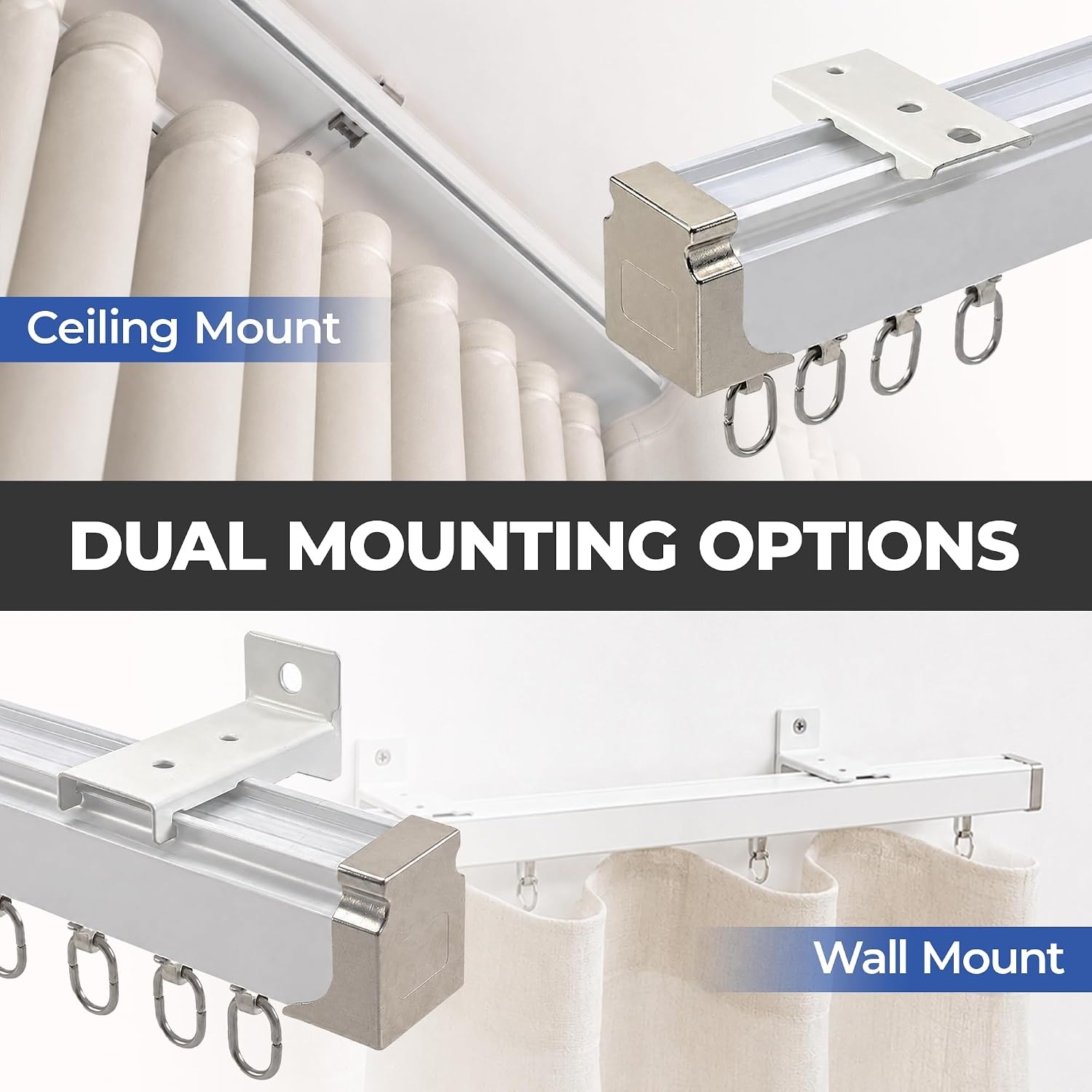
Having both bracket types supplied means you can decide once you are standing in the room, which is genuinely useful.
Ceiling mounting puts the track flush against the ceiling. Choose this when you want the curtain to run floor to ceiling, when you are dividing a room rather than dressing a window, or when you want to minimise the light gap above a blackout panel. It also keeps the wall above the window clear, which looks tidier in a small bedroom. The catch is that you need something solid overhead. Joists are ideal. A suspended or drop ceiling needs fixings that reach the grid or the structure above it.
Wall mounting brings the track out from the wall on brackets, usually above the window frame. Choose this when the ceiling is unsuitable, when you need the curtain to clear a deep sill or a radiator, or when you are fitting over an existing architrave. It is often the easier option in rented places because you are fixing into a wall you can see and understand.
If you cannot decide, think about where the curtain needs to stop at the bottom. Floor-length panels and room dividers usually suit ceiling brackets. Sill-length curtains over a window usually suit wall brackets.
Measuring before you order
Measure the full width you want the curtain to cover, not just the window opening. Most people add 4 to 6 inches on each side so the open curtain stacks off the glass and the closed curtain overlaps the frame. If the total comes in under 9.8 feet, you can cut the rail down with a fine-tooth hacksaw. If it comes in over, plan on two kits joined with the supplied joiners and extra brackets at the join.
Then look up. Find out what your ceiling is made of, because that decides your fixings more than anything else. Solid timber joists take a straight screw. Drywall with nothing behind it needs a proper cavity anchor rated for the weight. Concrete needs a masonry bit and a matching plug. Guessing here is how a track ends up on the floor at two in the morning.
Finally, weigh a curtain panel. Household scales are close enough. Compare the total against the 25 pound limit and leave some margin rather than running right at it.
Working out bracket spacing
Six brackets across 9.8 feet is roughly one every 20 inches. That spacing is what keeps the rail from flexing between supports, so resist the urge to use fewer because drilling is tedious.
Put a bracket reasonably close to each end so the tips do not droop under the weight of the stacked curtain. If you have joined two sections, put a bracket right beside the joiner. If your curtains are at the heavier end of the range, tighten the spacing in the middle where the load is greatest.
Where you can choose, line brackets up with joists or studs rather than spacing them perfectly evenly. A slightly uneven run of brackets fixed into solid timber beats a perfectly even run fixed into nothing.
Installing it
Mark a level line first. A spirit level or a laser line saves a lot of grief, because a track that is a quarter inch out over nine feet is obvious the moment the curtain hangs on it.
Mark your bracket centres along that line, drill, and fix the brackets. Then clip or screw the rail into the brackets, working from one end. Slide the runners into the channel before you push the end caps home, because fishing runners in afterwards means taking a cap off again. Count them out as you go if you are splitting the panels.
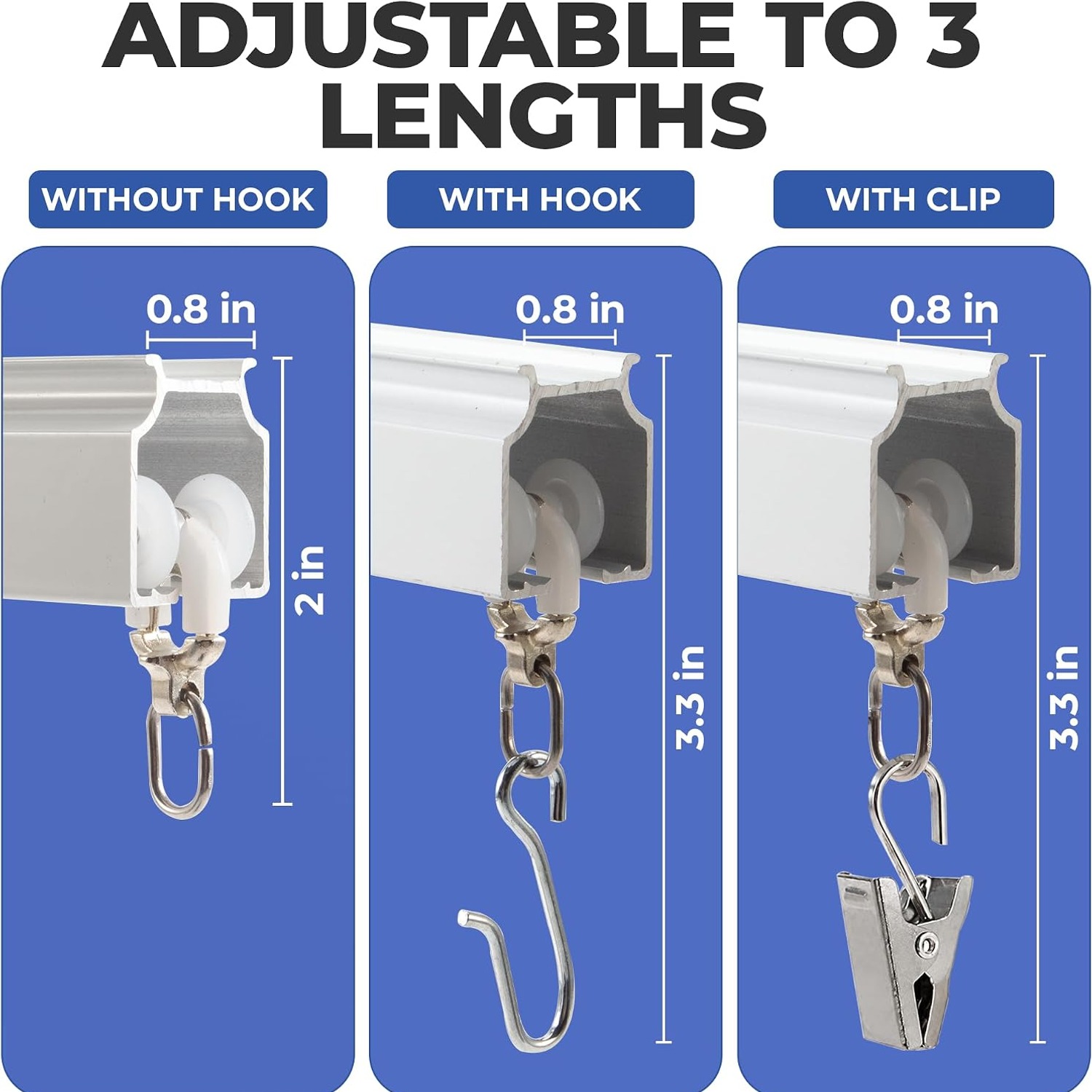
Hook the curtains on last. Clip each hook into a pocket on the curtain tape and then into a runner. For a pair that meets in the middle, overlap the last hook or two at the centre so there is no light gap when they are closed.
Rooms this suits
The listed uses are broad for a reason. Living rooms and bedrooms are standard. Showers and bathrooms work because aluminum handles damp air well. Drop ceilings, bay windows and RV interiors come up often, as do hotels, hospitals, classroom cubicles and office partitions.
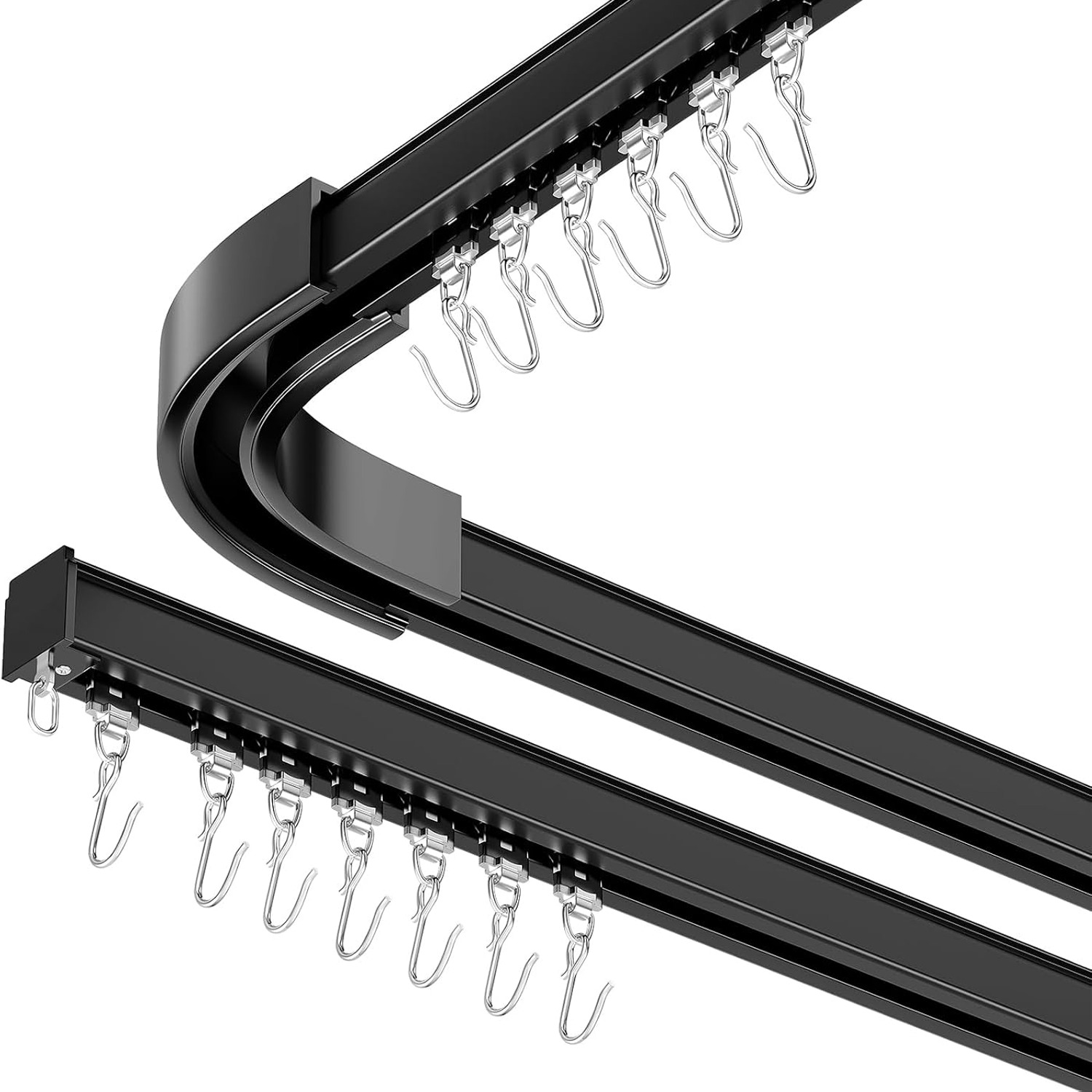
The common thread is a straight run of fabric that needs to move reliably and look neat when it is open. Studio apartments are a good example. A ceiling track across the middle of the room turns one space into two in about an hour, with no framing and no building work. People searching for the best privacy curtain track for a shared bedroom usually land on the same solution.
Looking after it
There is not much to do. Wipe the rail with a damp cloth and dry it. Skip the abrasive pads and the strong solvents, since they can mark the white finish.
If a runner starts to drag, the usual cause is dust in the channel. Pull the end cap, slide the runner out, wipe the channel with a dry cloth and put it back. Once or twice a year, run a screwdriver over the bracket screws and nip up anything that has worked loose. Curtains get pulled hundreds of times a year, and fixings do move.
The short version
This is a 9.8ft rigid aluminum track that mounts to a ceiling or a wall, comes with the runners and hooks already in the box, and carries up to 25 pounds. Measure your full curtain width, check what your ceiling or wall is made of, weigh your panels, and space the brackets about 20 inches apart.
Do those four things and the hard part is over. The rail is light, the kit is complete, and the result is a curtain that hangs on a straight line and slides when you pull it.